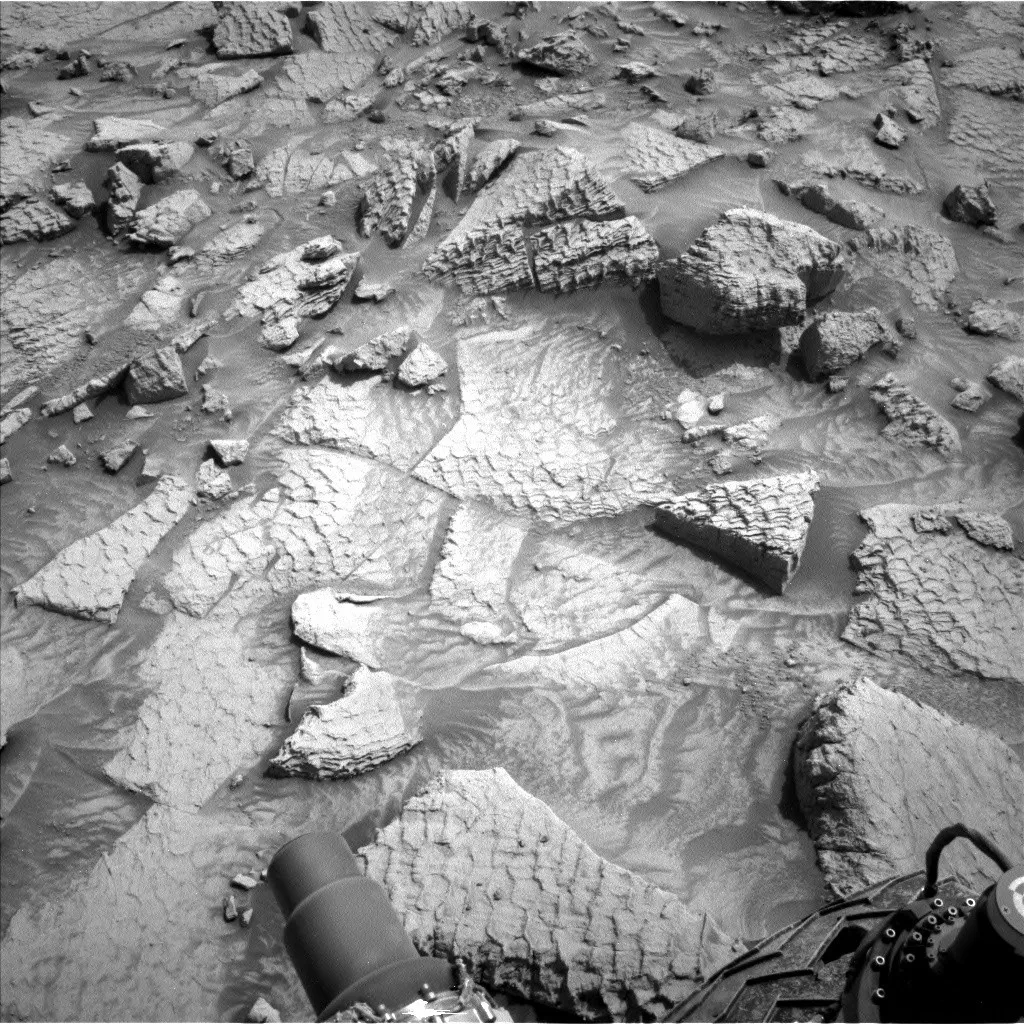
NASA's Curiosity rover, a plucky little robot that's been zipping around Mars since 2012, just pulled off a hat-trick: crossing the same bizarre "boxwork" terrain for the third time. Think of it as leaving a particularly tricky puzzle behind, only to find another, equally compelling one just around the corner.
Scientists are basically playing a galactic game of 'spot the difference' here, trying to figure out if the layered sulfate units south of this boxwork are chemically identical to the ones north of it. Because apparently, even on Mars, geological consistency is a big deal.

The rover's weekend drive, a modest but mighty 50 meters (that's about 164 feet for those of us still on Earth units), put it squarely in a new area. This place is packed with some seriously stunning sulfate bedrock, complete with resistant ridges that form these wild polygonal patterns. The science team is keen to compare these new shapes to the ones they've already seen in the boxwork and other transition zones. It's like comparing different styles of Martian modern art.
We're a new kind of news feed.
Regular news is designed to drain you. We're a non-profit built to restore you. Every story we publish is scored for impact, progress, and hope.
Start Your News DetoxBrushing Up on Martian Rocks
Curiosity, ever the diligent student, tried to brush some dust off the bedrock for a closer look. Mars, however, had other plans — the ground was too unstable. So, engineers did what engineers do: they repositioned the rover. This allowed the robot to safely deploy its arm, brush, and cameras, even giving a spot named "Santa Rosa" a good once-over with its APXS instrument. They also snagged some data on "Piedra Colgada," which sounds like a fancy dessert but is actually a cluster of fine nodules that probably eroded from the bedrock. Because who doesn't love a good rock nodule?
While all this geological detective work is happening, the environmental team is keeping an eye on the Martian weather report. They're checking everything from atmospheric opacity (how hazy it is) to potential dust devil dance parties. Because even a robot needs to know if it's going to be a good day for a drive, or if it should just stay inside and analyze some more rocks.