Scientists have found that "boring" ocean faults might be quietly storing vast amounts of Earth's carbon. This discovery points to a previously unknown process in Earth’s geological carbon cycle.
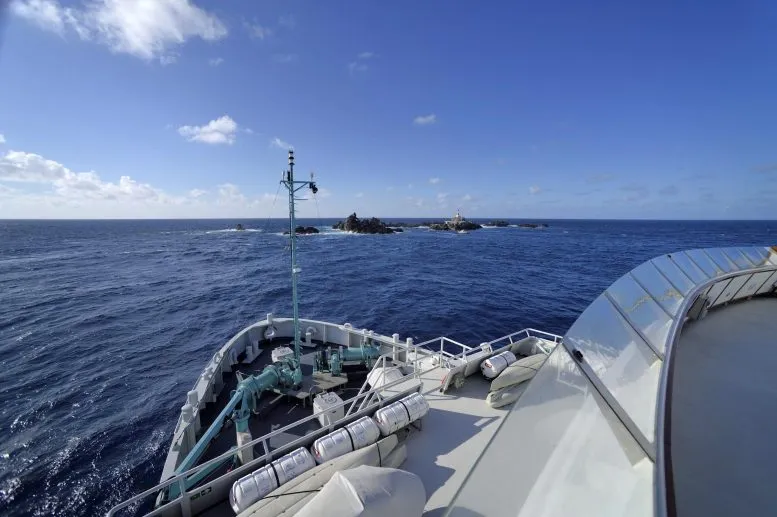
Frieder Klein, a scientist at the Woods Hole Oceanographic Institution (WHOI), explains that studying rocks is like reading a book with a story to tell. He and his team examined rocks from the St. Peter and St. Paul Archipelago, located in the St. Paul’s oceanic transform fault off the coast of Brazil.
Overlooked Ocean Faults Reveal New Clues
Transform faults are places where tectonic plates slide past each other. These faults stretch about 48,000 kilometers worldwide. For decades, scientists focused on carbon cycling at mid-ocean ridges and subduction zones, which are the other two main types of plate boundaries.
We're a new kind of news feed.
Regular news is designed to drain you. We're a non-profit built to restore you. Every story we publish is scored for impact, progress, and hope.
Start Your News DetoxOceanic transform faults received less attention because they have low volcanic activity. Klein noted they were long considered "somewhat boring." However, this view is now changing.
A Newly Discovered Carbon Sink
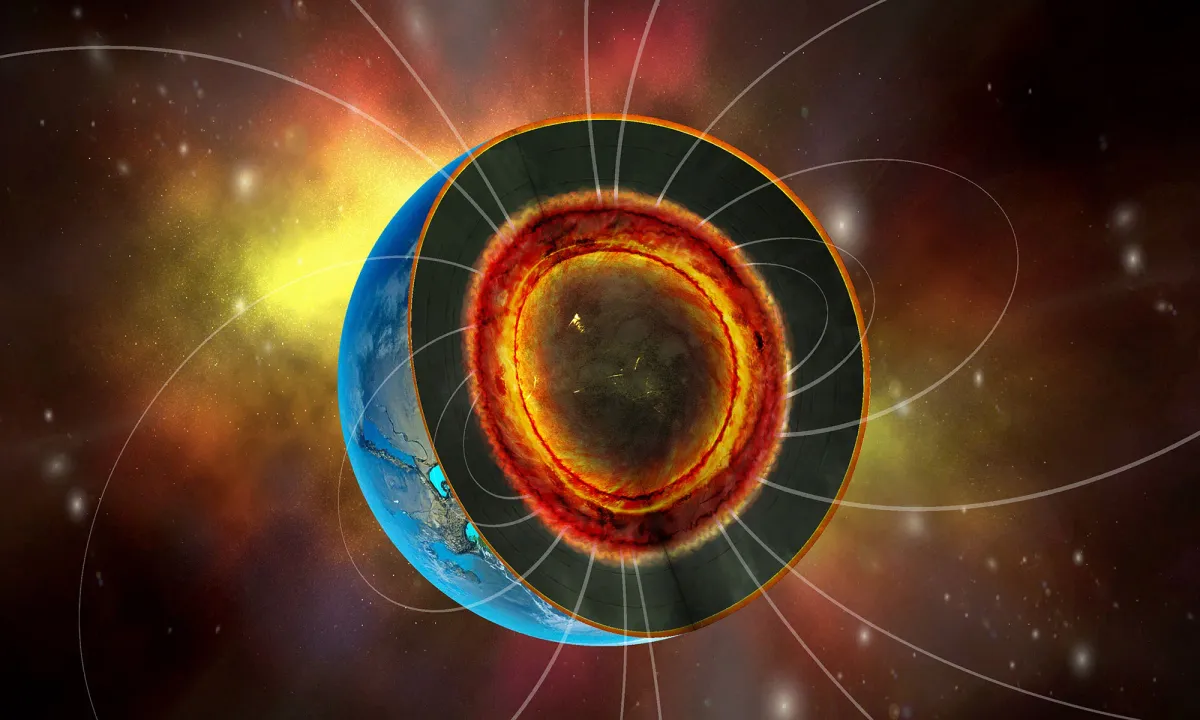
Klein explains that mantle rocks exposed along these ocean transform faults could be a huge storage area for carbon dioxide (CO2). When mantle material melts, it releases CO2. This gas mixes into hot fluids, reacts with nearby mantle rocks on the seafloor, and then gets stored there.
This process is a new part of the geological carbon cycle, according to Klein, who led the study published in the Proceedings of the National Academy of Sciences (PNAS). Because transform faults were not included in past global estimates of CO2 movement, the amount of carbon stored in the oceanic mantle and seawater might be higher than previously thought.
Small Today, Powerful Over Geological Time
Klein notes that the CO2 released at transform faults is tiny compared to human-caused CO2 emissions today. However, over long geological periods, before humans released so much CO2, geological emissions from Earth’s mantle, including from transform faults, were a major factor in Earth’s climate.
The study highlights that current human CO2 emissions are about 36 gigatons (Gt) per year. This dwarfs the estimated average geological emissions of 0.26 Gt per year. Yet, over millions of years, mantle-sourced CO2 emissions were crucial in regulating Earth’s climate and how livable it was. They also controlled carbon levels in the oceans, atmosphere, and land.
Why This Discovery Matters for Climate Science
Co-author Tim Schroeder from Bennington College explains that understanding natural climate changes in Earth’s past helps us fully grasp modern human-caused climate change. These past changes are linked to shifts in Earth’s natural carbon cycle. This research offers insights into how carbon moves between Earth’s mantle and the ocean/atmosphere system over long periods.
Schroeder adds that large changes in these carbon movements over millions of years have caused Earth’s climate to be much warmer or colder than it is today.
How Carbon Gets Locked Into Ocean Rocks
The researchers studied how soapstone and other minerals form when mantle peridotite rocks react with carbon in the St. Paul’s transform fault. Magma activity below the fault releases CO2. The fault then acts as a channel for CO2-rich fluids. The carbonation of peridotite rocks then stores this emitted CO2.
The team also points out that the combination of low melting, which creates melts rich in elements, gases, and CO2, along with the presence of peridotite at oceanic transform faults, creates ideal conditions for extensive mineral carbonation.
A Chance Discovery Years in the Making
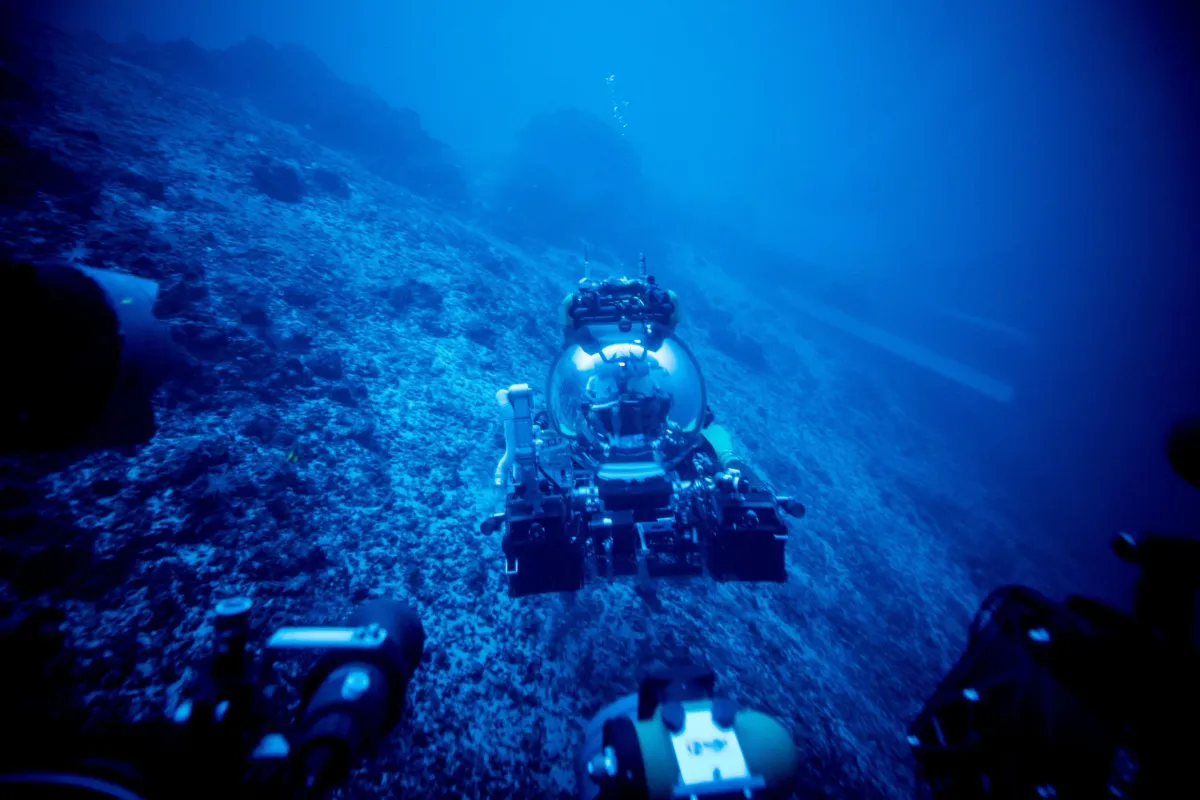
The rocks were collected during a 2017 expedition using human-occupied vehicles. Finding them was unexpected. Klein said it was a "dream come true" because they had predicted these carbonate-altered oceanic mantle rocks 12 years earlier but couldn't find them. They were actually looking for low-temperature hydrothermal activity and found the rocks by chance.
Deep Dive & References
Mineral carbonation of peridotite fueled by magmatic degassing and melt impregnation in an oceanic transform fault - Proceedings of the National Academy of Sciences, 2024