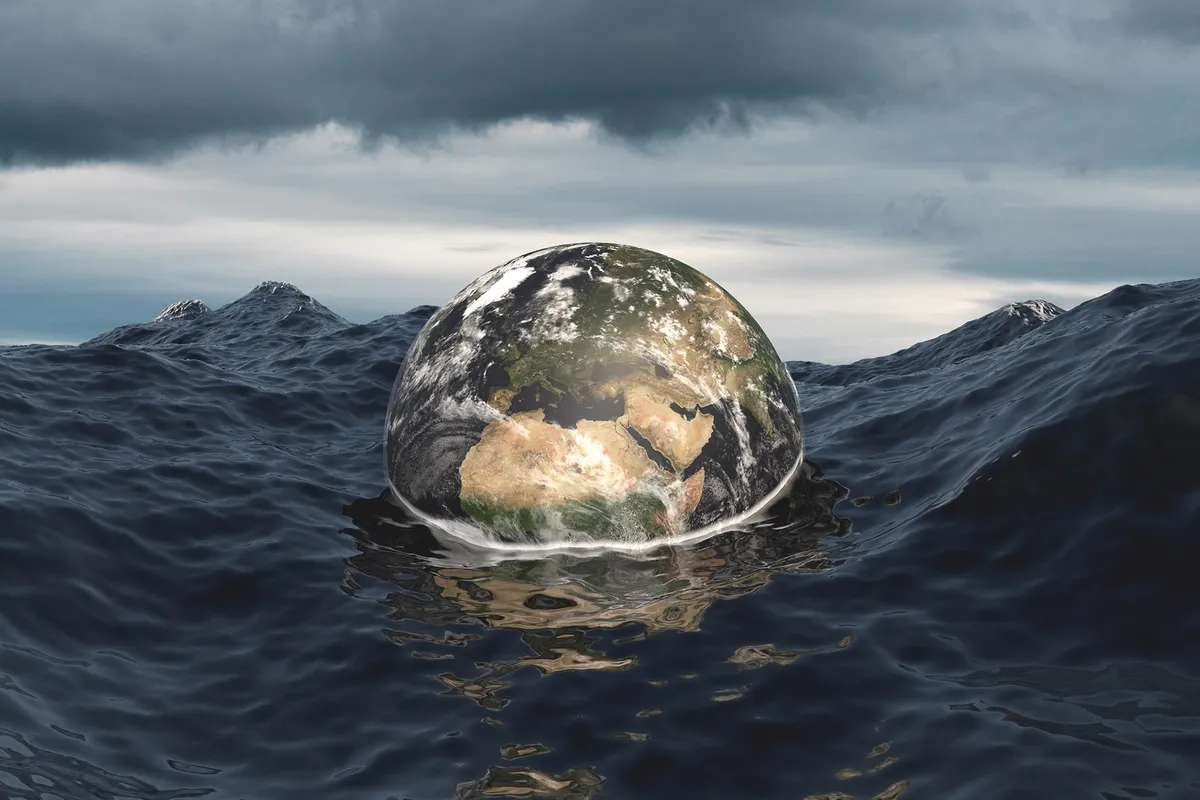
For millions of years, Earth has managed to keep its temperature in a remarkably cozy range, allowing life to do its thing without boiling or freezing. Scientists have long scratched their heads wondering how our planet’s natural thermostat actually works. Now, new research points to an unexpected power trio: sea level, a microscopic nutrient called phosphate, and a whole lot of carbon getting buried at sea.
Turns out, this elegant system has been subtly tweaking the amount of carbon dioxide in our atmosphere for eons. When temperatures shifted, so did polar ice and sea levels. And those sea level changes? They dictated how much phosphate was available to ocean critters, which then controlled how much carbon got locked away in the seafloor. Less carbon in the atmosphere, cooler planet. It's a surprisingly intricate dance.
The Unsung Hero: Phosphate
Zunli Lu, a professor at Syracuse University, co-authored the study (published in Proceedings of the National Academy of Sciences). He and his team looked back 60 million years, connecting sea levels and ocean oxygen to phosphate availability and, ultimately, atmospheric carbon dioxide.
We're a new kind of news feed.
Regular news is designed to drain you. We're a non-profit built to restore you. Every story we publish is scored for impact, progress, and hope.
Start Your News DetoxLead author Ros Rickaby from the University of Oxford noted that as Earth cooled over the last 60 million years, atmospheric carbon dioxide dropped. The big question was, where did it all go? This study suggests way more carbon was buried in marine sediments than anyone realized. And phosphate, a form of phosphorus crucial for marine life, was the previously 'invisible' piece of that puzzle.
Here’s how it works: When sea levels were high, vast continental shelves acted like giant sponges, trapping phosphate in shallow sediments and keeping it from reaching the open ocean. Less phosphate meant less marine life. Less marine life meant less organic carbon sinking to the bottom and getting buried. Oxygen levels stayed high in the water, and carbon dioxide stacked up in the atmosphere. Warm times.
But when sea levels dropped, those continental shelves shrank. Suddenly, a flood of phosphate hit the open ocean, boosting marine growth like crazy. All that extra life eventually died and decomposed, sucking oxygen out of the water and creating low-oxygen zones. These low-oxygen zones then hit organic-rich sediments on the shelves, releasing even more phosphate in a positive feedback loop. More phosphate, more life, more carbon buried. Less carbon in the atmosphere. Cool times.
Professor Lu mentioned that a co-author, Christian Bjerrum, actually modeled this connection two decades ago. Now, they've finally found the geological receipts to prove it.
The Carbon Burial Sweet Spot
It turns out the biggest carbon burial bonanza happened when sea levels were just 10 to 40 meters higher than they are today. This was the "sweet spot" where those oxygen-depleted zones perfectly aligned with the organic-rich sediments on the continental shelves. This feedback loop hummed along for millions of years, regulating Earth’s climate.
To confirm this, researchers dug through 60 million years of geological data. They analyzed carbon isotopes, phosphorus in deep-sea sediments, and — this is the clever bit — used a new iodine-to-calcium method to estimate ancient ocean oxygen levels. Professor Lu’s lab at Syracuse University, funded by the National Science Foundation, measured those iodine-to-calcium levels by examining the chemistry of foraminifera, tiny marine organisms preserved in seafloor sediments. Because apparently, even tiny dead sea bugs can tell us a lot about our planet’s past.
High Seas, High CO2
The Eocene epoch (56 to 34 million years ago) offers a stark example of what happens when this system goes sideways. Sea levels were sky-high, flooding continental shelves and locking away phosphate. The open ocean was flush with oxygen, and that crucial carbon burial process slowed to a crawl. With less carbon being tucked away, CO2 built up in the atmosphere, keeping Earth nice and toasty.
Over geological time, the conditions for carbon burial became more specific as low-oxygen zones moved into deeper waters. This gradual shift helped stabilize atmospheric oxygen and carbon dioxide. The swings in ocean carbon burial and atmospheric carbon became less extreme, making Earth’s climate system a bit more chill. Which, if you think about it, is pretty good news for anyone who enjoys, you know, existing.