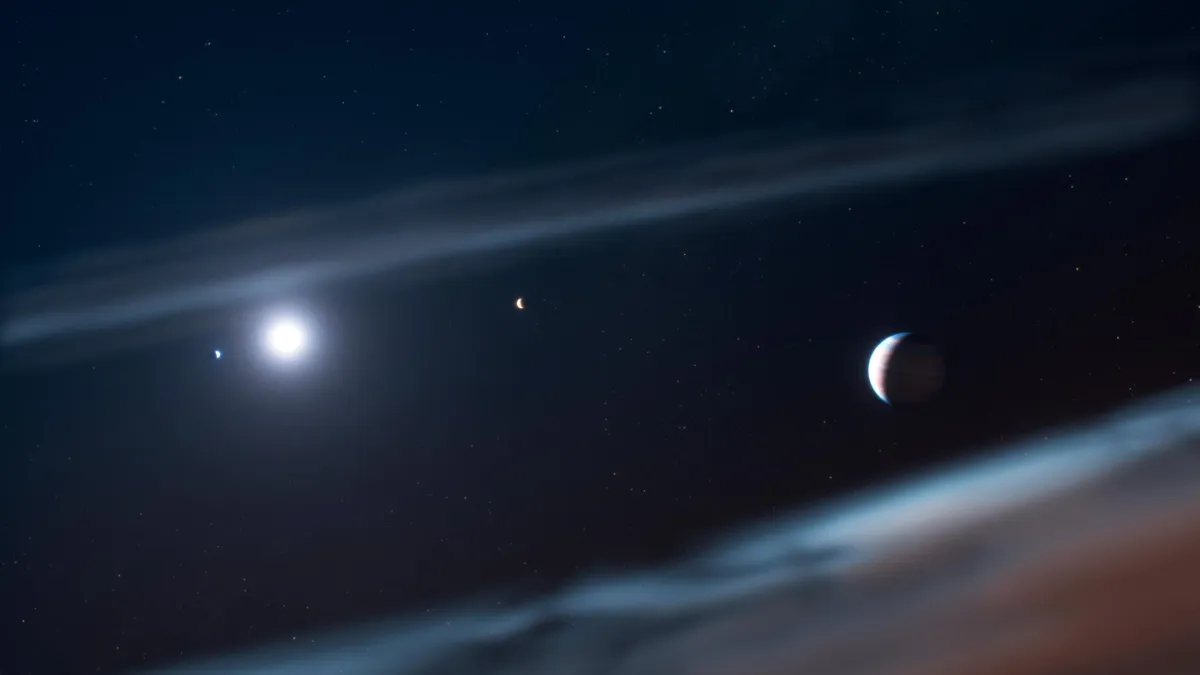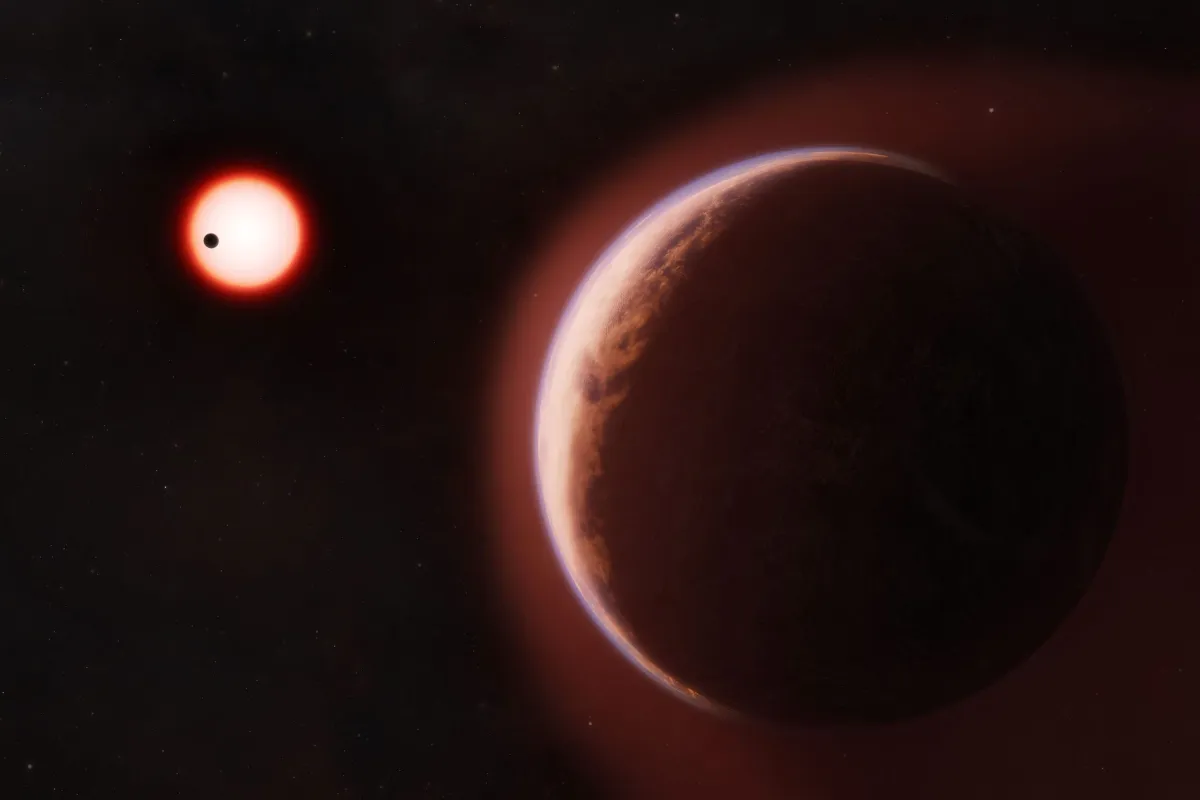
Imagine finding your phone, but it's 48 light-years away and happens to be a planet. That's essentially what astronomers just pulled off, detecting a faint whisper of helium that confirms a distant, rocky world, LHS 1140 b, still has an atmosphere. Which, if you're keeping score, is a pretty big deal for the whole 'is there life out there?' question.
This isn't just any old rock. LHS 1140 b is hanging out in its star's habitable zone, that Goldilocks region where temperatures aren't too hot, not too cold, but just right for liquid water. And an atmosphere? That's the bouncer at the club of life, keeping all the good stuff in and the bad stuff out.
The Helium Leak That Shook the Cosmos
The trick was catching the planet leaking. Specifically, helium. Lead author Collin Cherubim and his team developed a model predicting that LHS 1140 b's upper atmosphere would be gently shedding helium into space. It's like finding a tiny, persistent drip that tells you the whole plumbing system is still intact.
We're a new kind of news feed.
Regular news is designed to drain you. We're a non-profit built to restore you. Every story we publish is scored for impact, progress, and hope.
Start Your News DetoxPrevious searches for atmospheres on rocky exoplanets in habitable zones mostly came up empty, leaving scientists wondering if these planets could hold onto their gaseous blankets for billions of years. Turns out, at least one can.
Then came the moment of truth. Using the WINERED Spectrograph on Chile's Magellan Clay telescope, they got lucky when LHS 1140 b transited its star. No signal on a neighboring planet, but around LHS 1140 b? A clear detection of escaping helium. Cherubim's advisor, David Charbonneau, was a skeptic until the data rolled in, saying the detection was "very clear."
This isn't just a win for LHS 1140 b; it's a new playbook for ground-based observatories. Instead of just looking for planets, they can now hunt for the subtle signs of their atmospheres, specifically those escaping gases. And this atmosphere? It's been around for over three billion years. Let that number sink in.
Now the real fun begins. Cherubim wants to know what else is in that atmosphere, if there are oceans, and basically, what makes this ancient world tick. Because if it can hold onto an atmosphere for that long, who knows what else it's holding onto? Suddenly, 48 light-years doesn't seem quite so far after all.