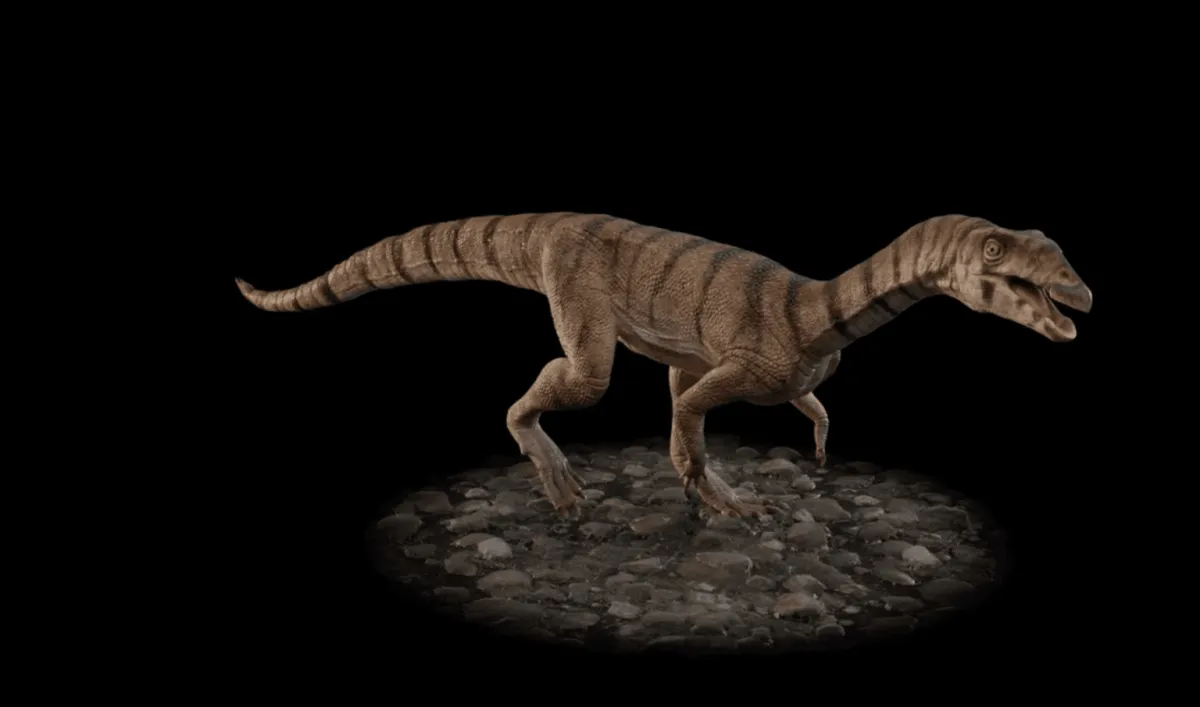
Turns out, bipedalism wasn't just for the cool kids like T. rex. While dinosaurs were busy perfecting their two-legged swagger, a distant relative of today's crocodiles was also strutting around on two feet, 212 million years ago. And just to really stand out, it rocked a beak instead of teeth. Because apparently that's where we were at in the Late Triassic.
Meet Labrujasuchus expectatus, a newly identified shuvosaurid that weighed in as a croc cousin but acted more like a bird. Picture this: a prehistoric creature with a beak, two tiny arms (presumably for dramatic gesturing), and a penchant for walking upright. If you're imagining a feathered velociraptor with a snout, you're not far off, and also, welcome to the weirdness of ancient New Mexico.
The Witches' Crocodile
Researchers unearthed the fossilized bones of L. expectatus at the Hayden Quarry, a prime spot within the legendary Ghost Ranch site. This place is basically the VIP lounge for well-preserved fossils, so it's no surprise they found this oddball alongside actual bipedal dinosaurs. Talk about a crowded prehistoric sidewalk.
We're a new kind of news feed.
Regular news is designed to drain you. We're a non-profit built to restore you. Every story we publish is scored for impact, progress, and hope.
Start Your News DetoxThe name Labrujasuchus is a nod to the area's history, drawing from "Ranchos de los Brujos" – the "Ranch of the Witches" in old Spanish. "Suchus" is Greek for crocodile, because apparently, even ancient witch ranches had crocodiles. The "expectatus" part is a delightful inside joke among paleontologists. The very first shuvosaurid ever described was Shuvosaurus inexpectatus, named for how unexpected such a bizarre creature was. So, calling this new find expectatus is a playful wink, acknowledging that after the first shocker, they actually did expect to find more of these delightful oddities at Hayden Quarry. Because once you've seen a two-legged, beaked croc relative, you kind of start looking for them everywhere.