For two decades, a tiny, mouse-like carnivore has been quietly existing in Australia's Northern Territory, completely unknown to science. Turns out, it was hiding in plain sight—or rather, in museum drawers.
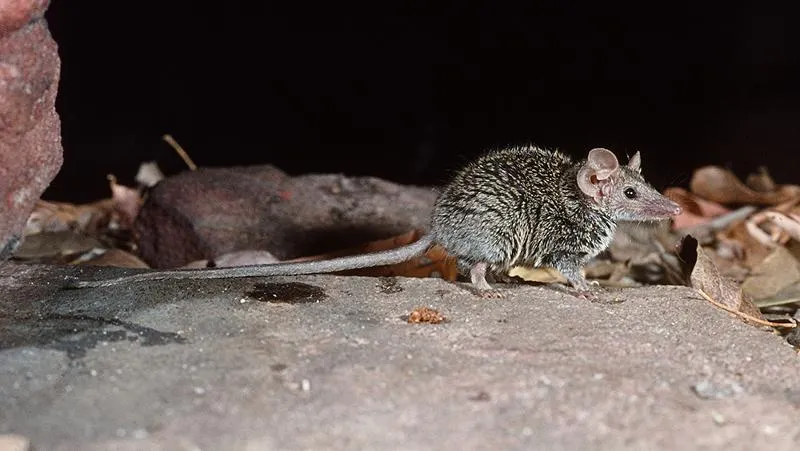
Meet the Arnhem Plateau planigale (Planigale petrophila), a newly confirmed marsupial species whose scientific name rather adorably translates to "rock lover." Which, if you're going to spend your life scampering around the Arnhem Plateau, is a pretty fitting moniker.

Planigales are already the smallest marsupials on Earth, some weighing a mere few grams. To put that in perspective, a U.S. penny weighs 2.5 grams. So, basically, we're talking about a marsupial that could easily be mistaken for loose change in your pocket.
We're a new kind of news feed.
Regular news is designed to drain you. We're a non-profit built to restore you. Every story we publish is scored for impact, progress, and hope.
Start Your News DetoxBefore this discovery, scientists recognized only seven species of these miniature predators. But, as often happens when you start digging through old boxes (or, in this case, museum collections), things get a little more complicated—and a lot more interesting.
The Case of the Mistaken Identity
Researchers had long suspected that Planigale ingrami, a previously known Australian species, was actually a bit of a party crasher, with several distinct species masquerading under its name. For example, the cracking-clay Pilbara planigale from Western Australia was only officially recognized as its own species in 2023, after years of being lumped in with P. ingrami.
Now, a new study has blown the case wide open. Scientists meticulously analyzed DNA from over 220 specimens labeled P. ingrami in various Australian museums. The verdict? What we thought was one species is actually four. And the Arnhem Plateau planigale is one of the fabulous new additions.
This particular newcomer stands out, relatively speaking. It's the largest of the four, sporting dark-gray fur and the longest tail. So far, only three specimens have been found—two males, one female—all collected suspiciously close to each other on the plateau. Which, if you think about it, is both impressive and slightly terrifying for a species that managed to elude official recognition for so long.
It seems this rock-loving marsupial is a bit of an exclusive club member, known only from a small, rocky slice of Kakadu National Park. Which means, for now, its secret life among the sandstone slopes remains mostly its own. But at least now, it has a name.