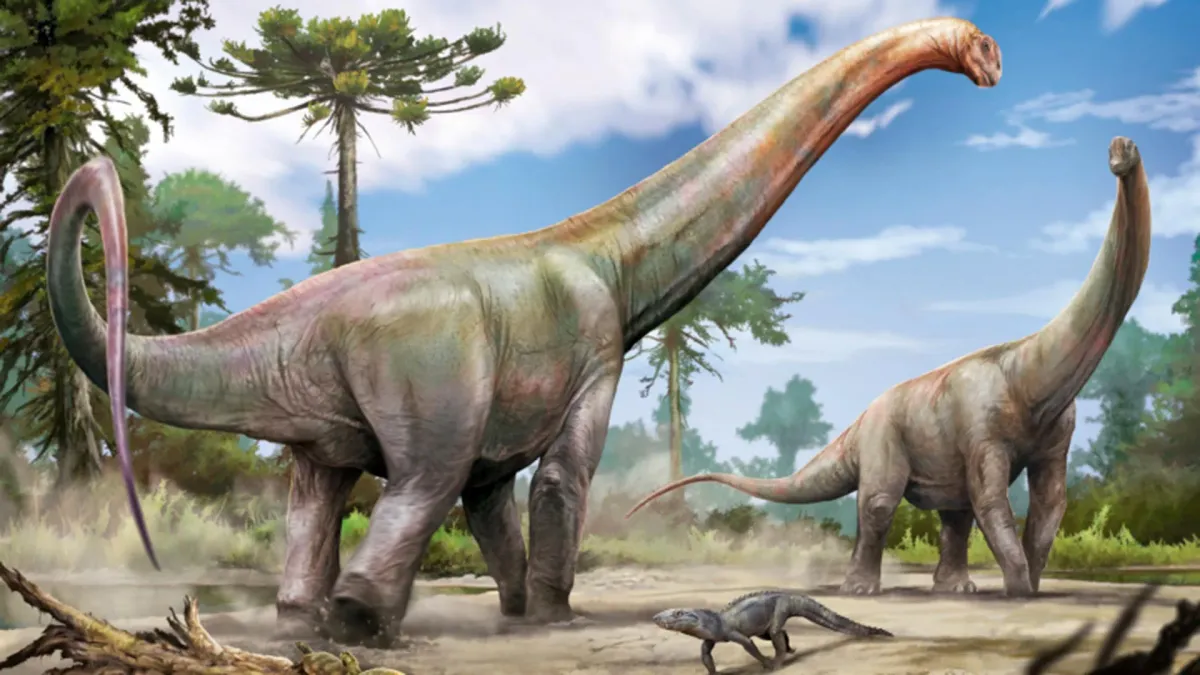
Imagine you're digging a road, minding your own business, and suddenly you hit… a 20-meter-long dinosaur. That's essentially what happened in Davinópolis, Brazil, where construction workers stumbled upon a new species that's now rewriting the ancient travel plans of giant reptiles.
Meet Dasosaurus tocantinensis, a creature roughly the length of two school buses end-to-end, which sauntered across the landscape about 120 million years ago. Its discovery isn't just cool because it's big; it's a prehistoric passport linking South America to Europe, suggesting these colossal critters were far more well-traveled than we thought.
The Unlikely Paleontologist
When the first bones surfaced, archaeologists on site for a rail terminal project initially thought they were dealing with big, old mammals. Enter Elver Luiz Mayer, a professor who usually focuses on much more recent animal history. But a quick look at the bones' depth (a solid eight meters down) and the geological formation's age told him otherwise. These weren't just old; they were ancient—120 million years ancient.
We're a new kind of news feed.
Regular news is designed to drain you. We're a non-profit built to restore you. Every story we publish is scored for impact, progress, and hope.
Start Your News DetoxMayer quickly assembled a team, and what they found was remarkable: a surprisingly complete skeleton for a dinosaur of its type, including tail vertebrae, ribs, foot bones, and a 1.5-meter-long femur. It's now the largest dinosaur ever found in Maranhão state, dwarfing the previously known 10-meter Amazonsaurus maranhensis.
Now, about that European connection. The Dasosaurus tocantinensis's closest known relative lived in Spain. Researchers believe its ancestors took a scenic route through North Africa to get to South America somewhere between 140 and 120 million years ago. Back then, these landmasses were still snuggled together as the supercontinent Gondwana. So, less a transatlantic flight, more a very long, very slow stroll across a land bridge that no longer exists. Let that sink in.
A Name with Roots and a Growth Spurt
The name Dasosaurus comes from "Daso," meaning "forest," a nod to the dense woods early Portuguese colonizers called "maranhão." "Tocantinensis" points to the Tocantins River, near where the fossils were found. Because even giant dinosaurs need a good, descriptive address.
Beyond its impressive size and surprising travel history, the Dasosaurus is also giving scientists new insights into how sauropods—the group of long-necked, long-tailed plant-eaters it belongs to—grew so enormous. Its bone structure shows a mix of older sauropod features and those of titanosaurs, a related, even more massive group. This suggests that some of the growth patterns that led to truly gargantuan sizes appeared earlier in dinosaur evolution than previously believed.
This discovery highlights a curious paradox: construction projects, while potentially destructive to ancient sites, can also be paleontologists' best friends. Brazil's dense vegetation often keeps geological secrets buried, so sometimes, you need a road crew to accidentally unearth a 65-foot-long mystery. Researchers are now working with the construction company for permission to go back and see what other secrets are hiding beneath the ground. Because when you find one giant dinosaur, there's always a chance there's more to the story.