Quantum computers are still mostly theoretical, but the promises they hold are wild: instant drug discovery, unbreakable encryption, the kind of scientific leaps that make your brain tingle. The catch? They're about as fragile as a house of cards in a hurricane, thanks to something called decoherence.
That's when the delicate quantum information, stored in qubits, basically evaporates if it so much as looks at its surroundings funny. Even a tiny bit of noise can scramble everything. It's why building a truly robust, large-scale quantum computer has felt like trying to perform brain surgery with oven mitts.
Enter the "giant superatom." Researchers at Chalmers University of Technology in Sweden just dropped a new theory that could solve this monumental problem. They’ve figured out a way to combine two existing quantum concepts – giant atoms and superatoms – into one Frankenstein-esque (but in a good way) structure designed to protect, control, and share quantum information. Because apparently that’s where we are now.
We're a new kind of news feed.
Regular news is designed to drain you. We're a non-profit built to restore you. Every story we publish is scored for impact, progress, and hope.
Start Your News DetoxLei Du, the lead author, sums it up perfectly: quantum systems are powerful, but also very fragile. The trick is to control their interactions with the environment, and that's precisely what these new theoretical behemoths aim to do.
Atoms on Steroids, with Memory
So, what exactly are we talking about? Imagine an atom, but engineered by scientists, not nature. That’s a giant atom. Unlike your garden-variety atom, it connects to light or sound waves at multiple, separate points. This multi-point connection is key; it allows the atom to interact with its environment in several places at once, which helps it hold onto quantum information.
Anton Frisk Kockum, a co-author, describes it like this: waves leaving one point can actually return to affect the atom at another point. It’s like hearing your own echo before you've even finished speaking. This self-interaction doesn't just sound trippy; it helps reduce decoherence and gives the system a kind of memory.
But giant atoms had a limitation: entanglement. That's the magical quantum property where multiple qubits share a single state and act as one. Essential for powerful quantum computing, but tricky to scale. So, the Chalmers team brought in the superatom.
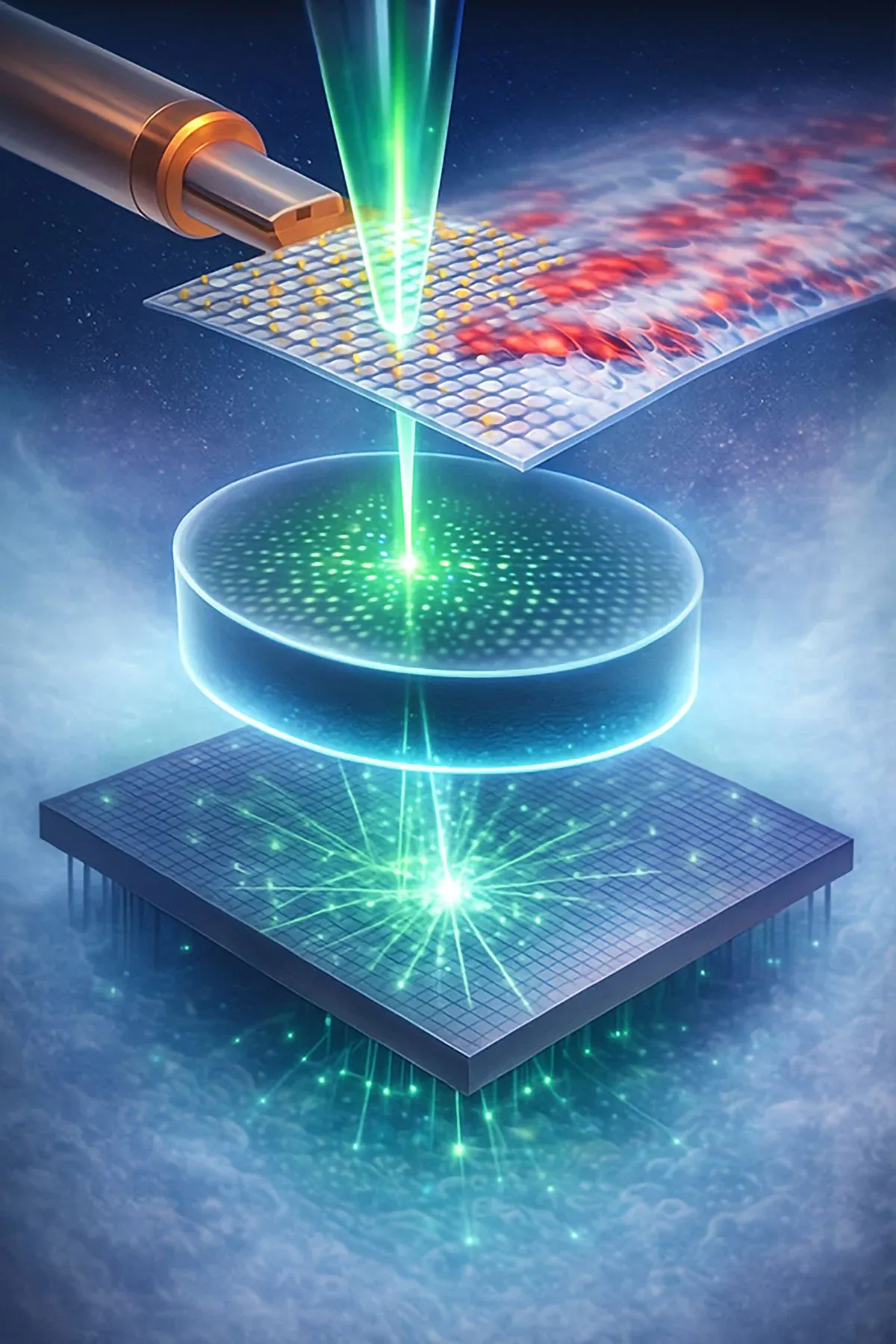
Think of a superatom as a collective: several natural atoms sharing the exact same quantum state, effectively acting as one larger atom. Combine this with the multi-point connection of a giant atom, and you get the giant superatom. It’s many giant atoms working together as a single unit, allowing quantum information from multiple qubits to be stored and controlled in one place, sidestepping the need for increasingly complex circuits. Which, if you think about it, is both impressive and slightly terrifying.
This isn't just theoretical navel-gazing. The researchers believe this design could be a foundational building block for connecting different types of quantum platforms, moving us closer to scalable, reliable quantum systems. Their next step? Actually building the things. Because what’s a mind-bending theory without some real-world application to show for it?
They even showed how these giant superatoms can be linked up. In one setup, they're close, passing quantum states without loss. In another, they're farther apart but connected in a way that keeps waves synchronized, allowing entanglement to be shared over long distances. So, not only do they protect information, they can share it across the room. Or, theoretically, across the lab.
Suddenly, the future of quantum computing feels a little less fragile, and a lot more… giant.