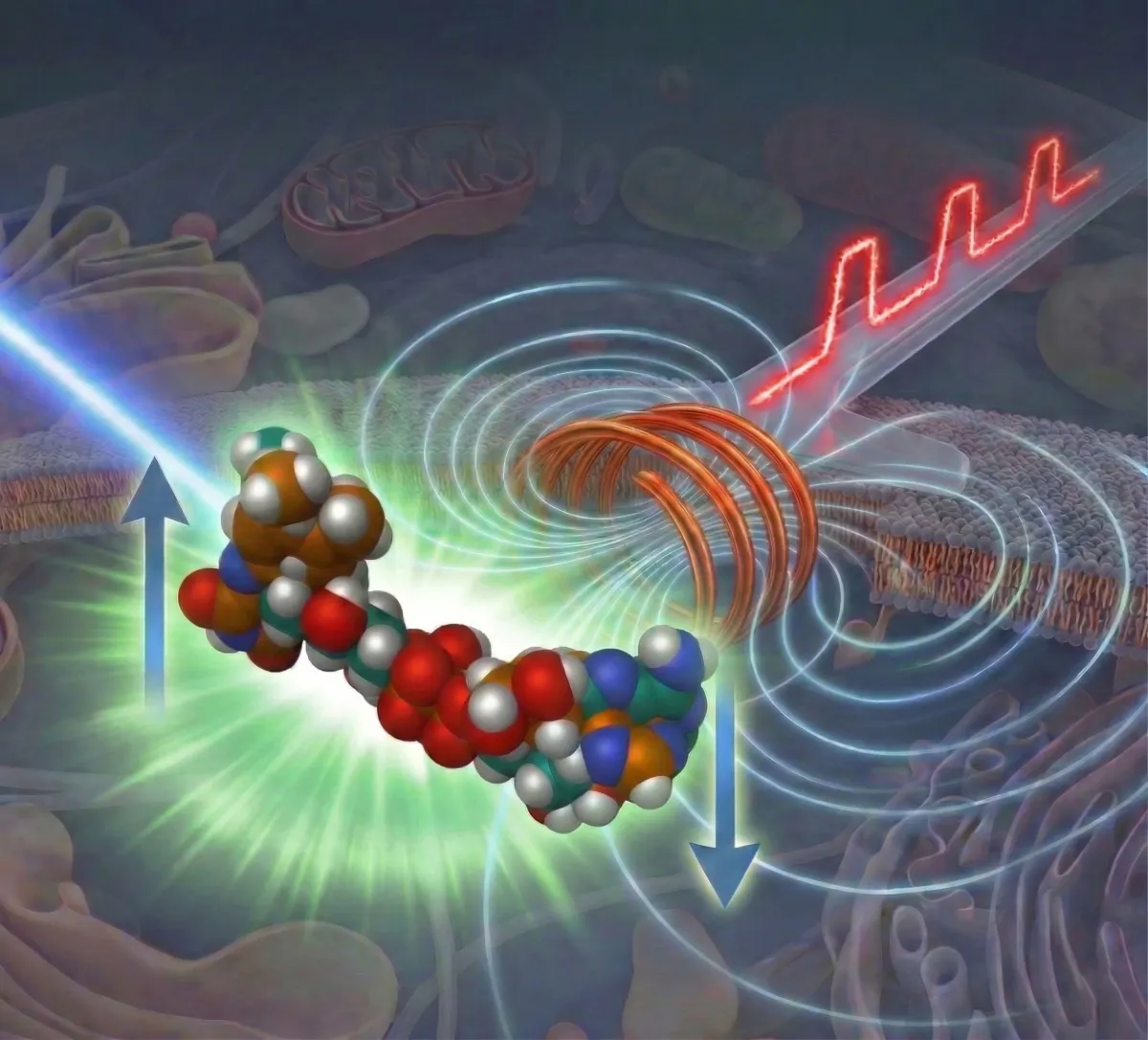
Electronic patterns in quantum materials don't always behave smoothly. Instead, they can form complex, patchy designs that shift in space. One example is the charge density wave (CDW), where electrons arrange themselves in repeating patterns at cold temperatures. For decades, scientists have struggled to see how these patterns grow, fade, and lose their order during changes in material states.
Now, a team led by Professor Yongsoo Yang at KAIST, along with colleagues from Stanford University, has captured this process in amazing detail. Their work shows how electronic order changes inside a quantum material, giving a clearer view of something previously only guessed at.
Seeing Electronic Order Up Close
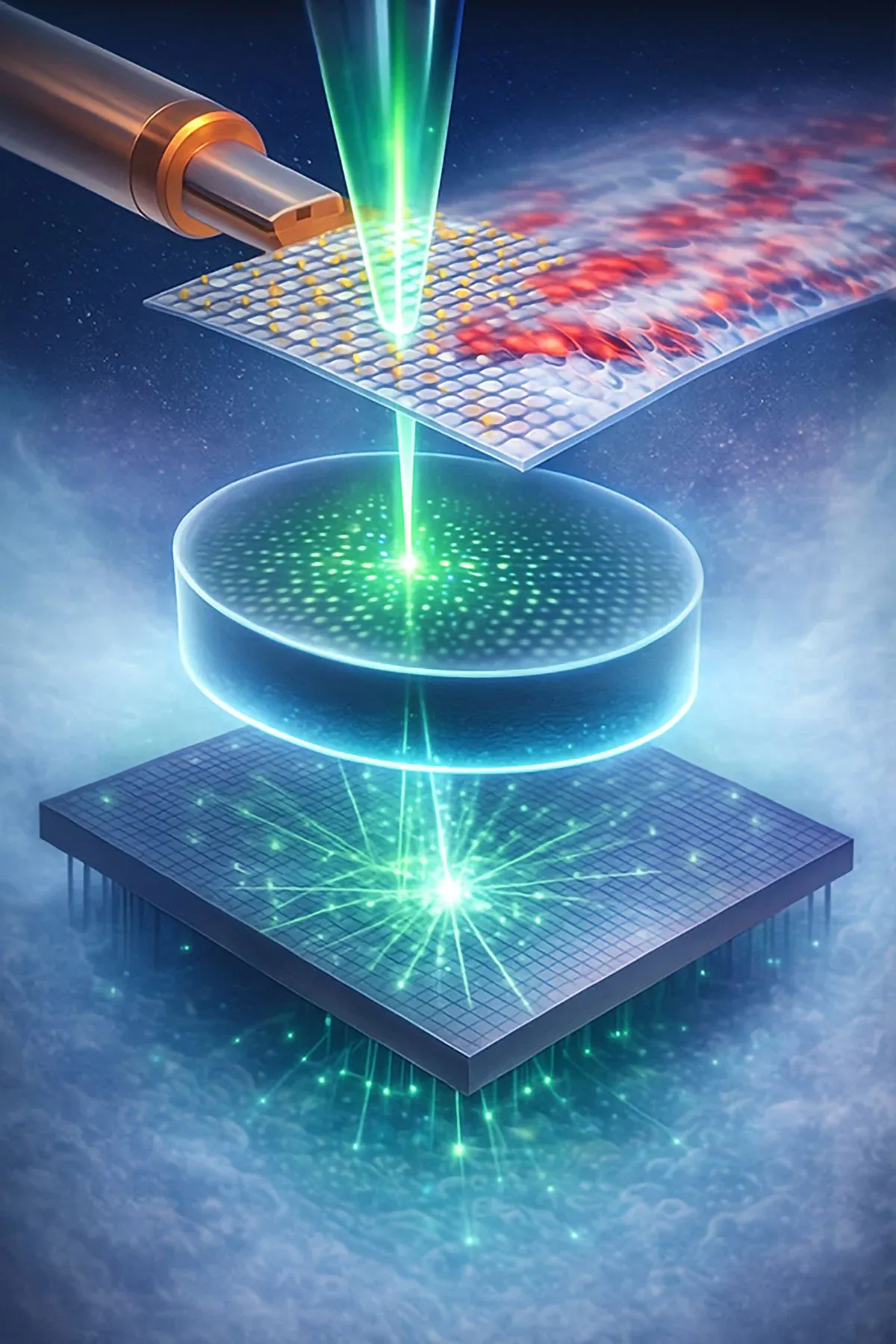
The researchers used a special electron microscope cooled by liquid helium. They combined this with a technique called four-dimensional scanning transmission electron microscopy (4D-STEM). This allowed them to watch how CDW order forms, weakens, and breaks apart as the temperature changes.
We're a new kind of news feed.
Regular news is designed to drain you. We're a non-profit built to restore you. Every story we publish is scored for impact, progress, and hope.
Start Your News DetoxThis method created detailed maps at the nanoscale. These maps showed not only where CDW order existed, but also how strong it was and how different areas connected.
Imagine recording ice crystals forming as water freezes with a super powerful camera. In this experiment, electrons were seen arranging themselves at about -253°C (-423°F). The instrument could see features about one hundred thousand times smaller than a human hair.
The images revealed that these electronic patterns are not spread out evenly. Some areas had clear, well-defined structures, while nearby regions had none. This is like a lake that freezes unevenly, with patches of ice mixed with liquid water.
How Electronic Order Breaks Down
The team found that this patchy behavior is strongly linked to tiny stresses within the crystal. Even very small distortions, too subtle for regular optical tools to see, could significantly weaken the CDW signal. This shows that small changes in the material's structure play a big role in shaping these patterns.
The researchers also found that small pockets of CDW order can remain even above the temperature where the overall order is expected to disappear. This suggests that the change doesn't happen all at once. Instead, it involves a gradual loss of coordination across the material.
Another key achievement was the first direct measurement of how CDW strength relates across different points. By looking at how the strength of electronic order in one spot connects to another, the study showed how overall order breaks down while local order can still exist. Older methods couldn't provide this level of detail.
A New Way to Study Quantum Materials
Charge density waves are important in many quantum materials and often interact with other electronic states. By directly mapping their structure and connections in space, this work offers a new way to study how collective electronic behavior forms and changes in real systems.
Dr. Yongsoo Yang, who led the study, emphasized its importance. He noted that before, the spatial order of charge density waves was mostly guessed at. Their new method allows them to directly see how electronic order changes across space and temperature. It also helps identify what makes it stable or suppresses it in different areas.
Deep Dive & References
Spatial Correlations of Charge Density Wave Order across the Transition in 2H−NbSe2 - Physical Review Letters, 2026
The National Research Foundation of Korea (NRF) mainly supported this study.