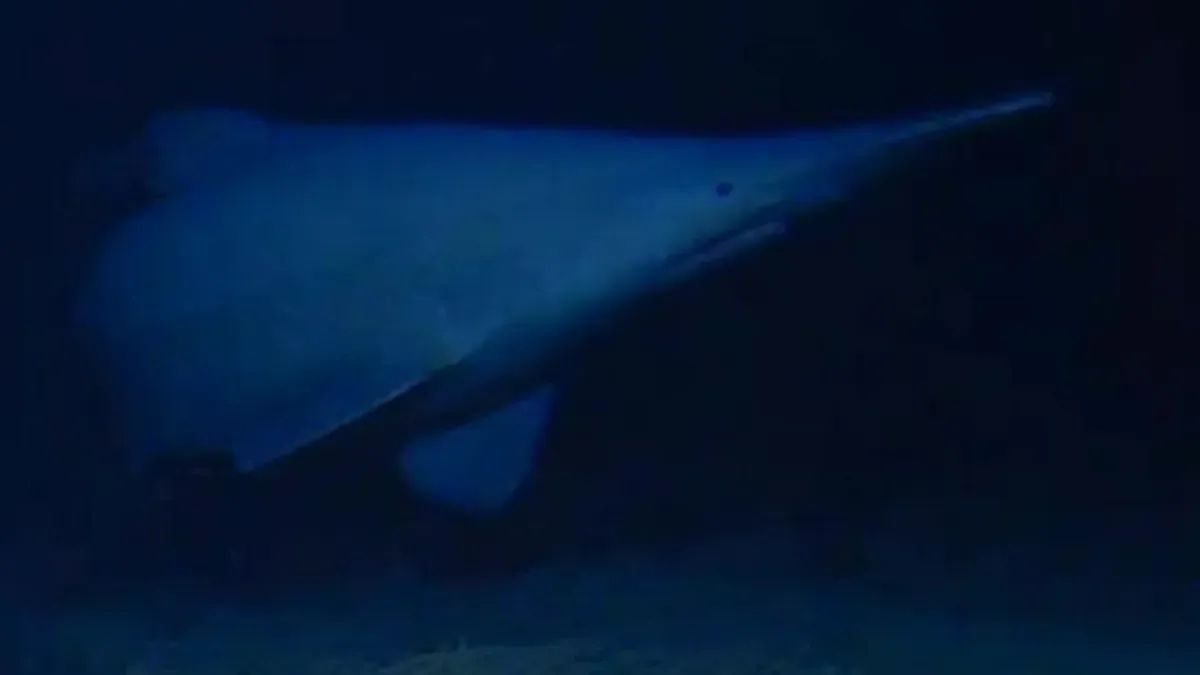
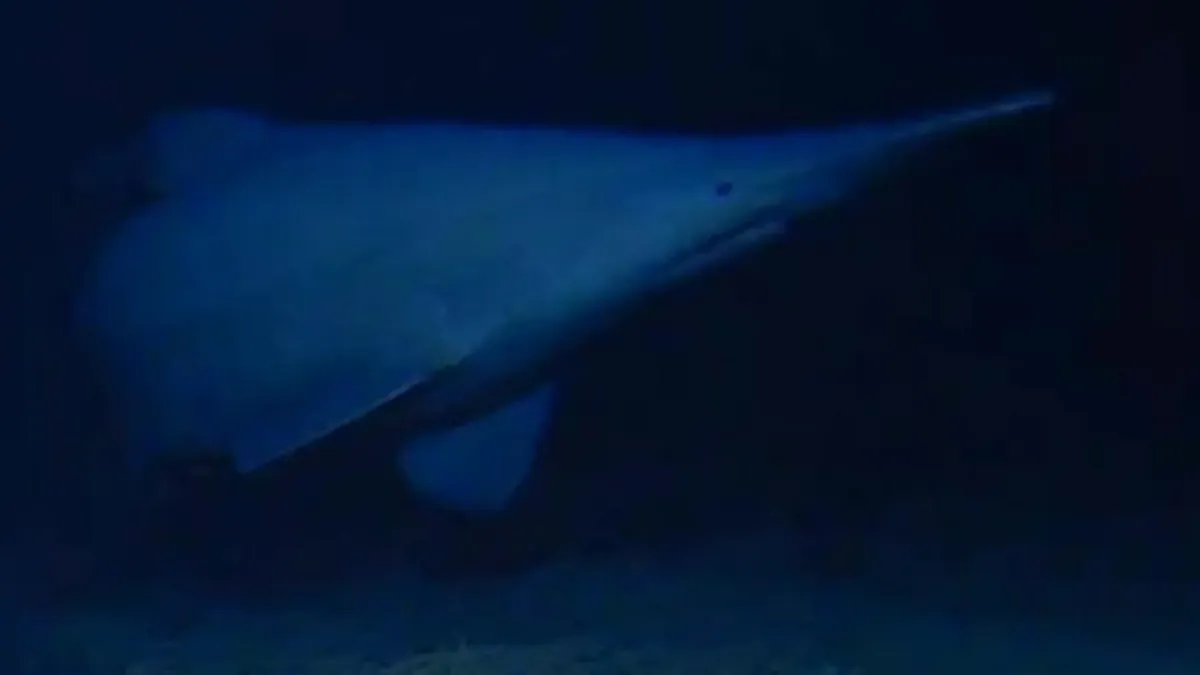
Imagine a shark that looks like it lost a fight with a cartoon anvil, painted pink, and then decided to live exclusively in the inky blackness of the deep ocean. Meet the goblin shark, a creature so rare and bizarre, it makes other sharks look like goldfish.
This "living fossil" boasts a horn-like snout and jaws that launch forward like a spring-loaded trap. It's also the last remaining member of a family line stretching back a cool 125 million years. Basically, it's a dinosaur with fins and a serious case of resting weird-face.
Finally, A Home Video
For most of its known existence since 1898, the goblin shark has been a ghostly legend, dwelling around 3,000 feet deep. When one accidentally surfaces, it usually doesn't last long, making proper observation nearly impossible.
We're a new kind of news feed.
Regular news is designed to drain you. We're a non-profit built to restore you. Every story we publish is scored for impact, progress, and hope.
Start Your News DetoxBut now, marine biologists from the University of Hawaii at Mānoa have pulled off a cinematic coup: they filmed two of these elusive creatures in their natural habitat. The footage, part of a study in the Journal of Fish Biology, offers the first real glimpse into the goblin's deep-sea life.
One shark was spotted near Jarvis Island, a speck between Hawaii and the Cook Islands. The other, perhaps feeling adventurous, was cruising the slopes of the Tonga Trench, southeast of Fiji. Oceanographer Aaron Judah, a co-author, described it as a "unique honor" to witness these deep-sea icons thriving.
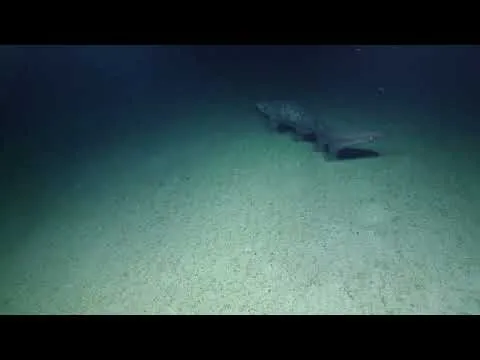
These videos, captured during separate expeditions in 2024 and 2025, are already rewriting the goblin shark's real estate profile. The Jarvis Island sighting confirms their territory extends into the Central Pacific, which is a nice update for their dating profiles. Even more surprising: the Tonga Trench shark was found nearly 2,300 feet deeper than anyone expected.
Alan Jamieson, who spotted the Tonga Trench resident, admitted he never thought he'd see a live one. And then his Hawaiian colleagues casually mentioned they'd seen another. Because apparently, that's where we are now: goblin sharks are suddenly trending.
Which, if you think about it, is both incredibly exciting for science and slightly terrifying for anyone planning a casual deep-sea swim.