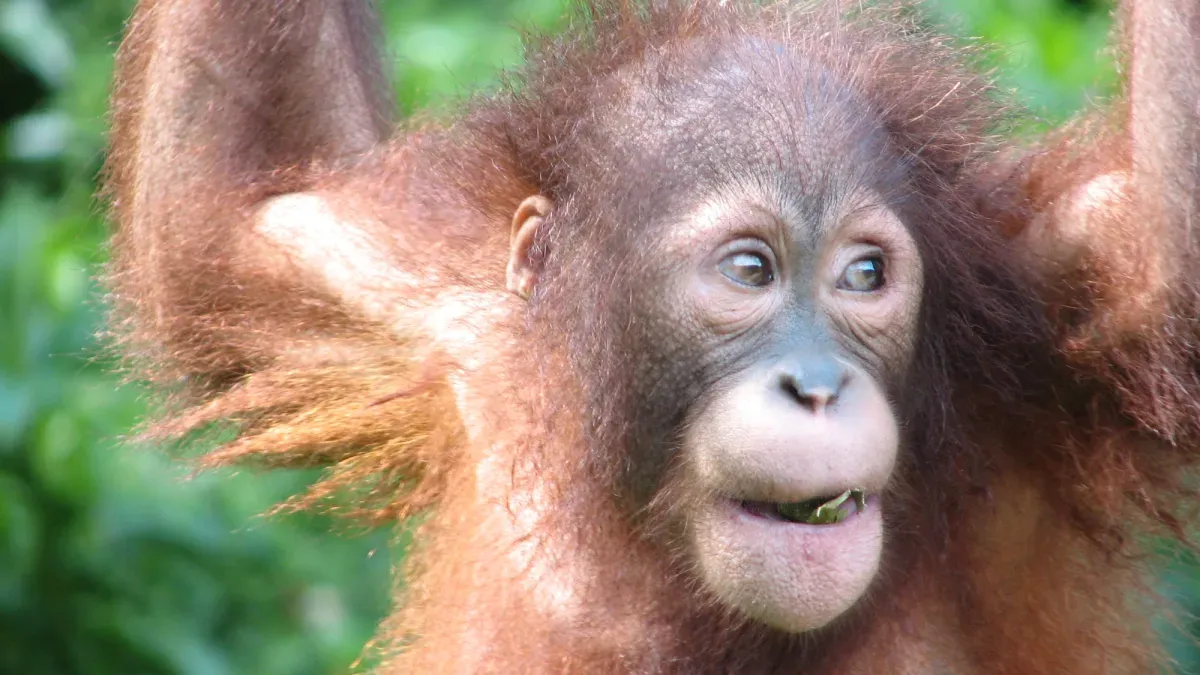
Turns out, humans and great apes share more than just 98.9% of their DNA. They also share a laugh. A new study suggests that the ancestors of modern humans and great apes have been cackling, chortling, and generally having a good time for at least 15 million years.
These findings, published in Communications Biology, offer some surprisingly deep clues about how human speech — you know, that thing we do now — actually evolved.
The Original Stand-Up Routine
Dr. Chiara De Gregorio, a primatologist and co-author from the University of Warwick, points out the obvious: speech doesn't fossilize. Which is a bummer for historians, but great for primatologists looking for other ways to track ancient communication. Complex language might be a human-only club, but laughter? That's a 15-million-year-old clue just waiting to be analyzed.
We're a new kind of news feed.
Regular news is designed to drain you. We're a non-profit built to restore you. Every story we publish is scored for impact, progress, and hope.
Start Your News DetoxEvery living great ape — orangutans, bonobos, chimpanzees, gorillas, and us — laughs. But scientists weren't sure how that laughter changed over the eons, or how it connected to our fancy human speech.
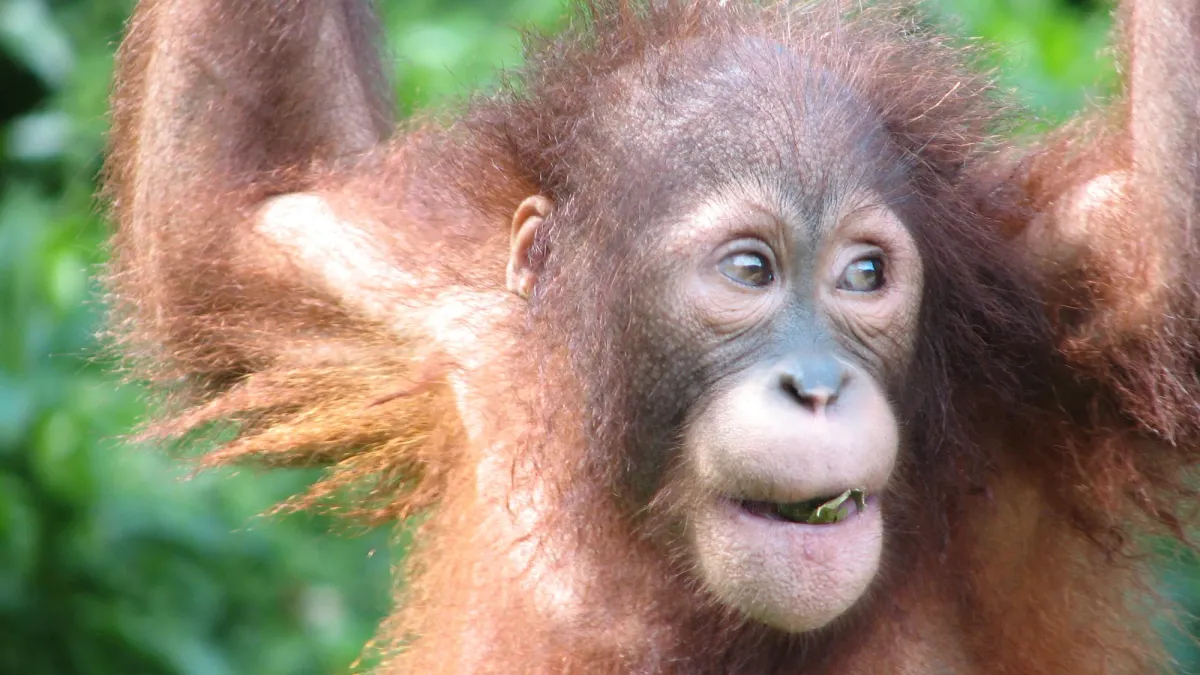
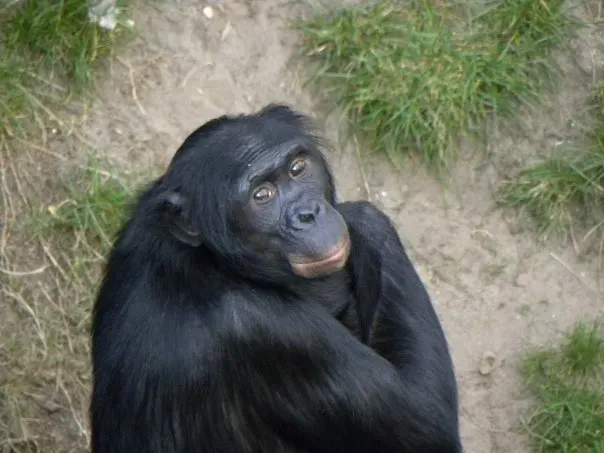
So, a team from the University of Warwick got to work, analyzing recordings from a diverse group: four orangutans, two gorillas, four chimpanzees, three bonobos, and four humans. What they found across 14 laughter sequences was a consistent pattern: all six species laugh with the same evenly spaced, rhythmic intervals between sounds.
This basic rhythmic structure was likely present in a common ancestor 15 million years ago. It's stuck around, showing the same underlying speech pattern. "Extraordinary," De Gregorio called it. Which, if you think about it, is both impressive and slightly terrifying. Imagine an ancient ape ancestor, cracking wise, and the whole jungle just gets it.
The Evolution of the Polite Giggle
While the basic rhythm stayed constant, human laughter took a few detours. It got faster, more varied. And crucially, humans gained sophisticated control over their laughter, depending on the situation. Because apparently, that's where we are now.
We're the only great apes who can mostly control when and how we laugh. The uncontrollable belly laugh from a tickle is a world away from the polite chuckle in a boring meeting. And that's different again from the infectious guffaw during a movie, or the nervous giggle after accidentally insulting your boss. The underlying rhythm of our laughter is shaped by conscious control, allowing us to signal different emotions and intentions.

These findings suggest that our ancestors didn't just wake up one day with a fully formed vocabulary. Instead, they gradually developed more control over their vocalizations, including laughter. Scientists see this sophisticated vocal control as a fundamental building block of speech itself.
Laughter, with its deep evolutionary roots and shared history across all living great apes, makes it a surprisingly good way to study how vocal changes happened across hominid evolution. Dr. Adriano Lameria, another co-author, noted that humans didn't suddenly get vocal control. Instead, laughter shows we're part of a continuous process, with vocal control capacities gradually refined over 15 million years. So, next time you hear someone genuinely laughing, remember: that's a 15-million-year-old tradition right there. And probably a sign they're not trying to sell you something.