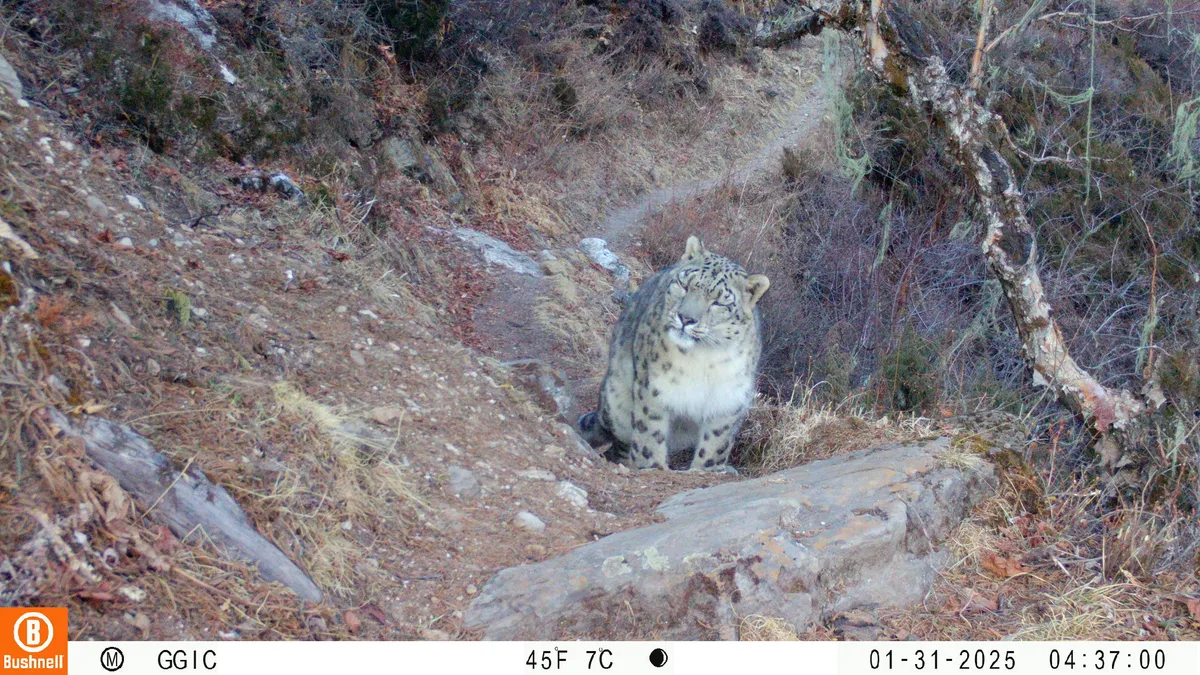
Imagine a shared apartment with three roommates, all apex predators, and somehow, they’re not constantly tearing each other apart. That's essentially what's happening in a secluded Himalayan valley, where snow leopards, common leopards, and Himalayan wolves have figured out a surprisingly chill way to coexist.
A new study reveals their secret isn't about setting up hunting schedules or divvying up turf. It's far simpler: they just don't go for the same snacks. Turns out, a diverse menu is the key to avoiding a three-way rumble at the top of the food chain.

Researchers spent over six years playing wildlife detective in Nepal's Lapchi Valley, part of the Gaurishankar Conservation Area. They sifted through thousands of camera trap photos and, perhaps less glamorously, analyzed animal droppings. Because nothing says "science" like scrutinizing scat.
We're a new kind of news feed.
Regular news is designed to drain you. We're a non-profit built to restore you. Every story we publish is scored for impact, progress, and hope.
Start Your News DetoxWho's Eating What?
By pulling DNA from the droppings and examining stray hairs under a microscope, they pieced together each predator's preferred cuisine. And the results are a masterclass in polite dining etiquette:
-
Snow leopards are the gourmands of the group, sticking mostly to wild hoofed animals. Think blue sheep (nearly half their diet), musk deer, Himalayan tahr, and Himalayan serow. Basically, anything that looks good with a mountain backdrop.

-
Common leopards, ever the opportunists, have a taste for the domesticated. They're often found munching on livestock and, rather unexpectedly, dogs. They'll also dabble in barking deer and goral if the mood strikes.
-
Himalayan wolves are the flexitarians, happy with a mix. Blue sheep and musk deer are on their wild menu, but they're equally content with a goat, horse, or even a yak from a nearby farm. Variety, after all, is the spice of life.
While snow leopards and wolves had some overlap in their wild prey choices, the common leopards largely kept to their own dietary lane. What's truly wild is that all three species were active mostly at night and used the exact same areas. No awkward run-ins, no territorial disputes, just a silent agreement on who gets the blue sheep and who gets the farmer's lost goat.

As lead author Narayan Prasad Koju put it, the biggest surprise wasn't what they did, but what they didn't do. No complicated time-sharing. No invisible fence lines. Just a clear understanding of who's bringing what to the potluck. Which, if you think about it, is a lesson many human roommates could probably learn from.