Animals from different species often work together in surprisingly complex ways. New research shows that communication is key to these partnerships. Animals use movements, sounds, and other signals to coordinate their actions and maintain helpful relationships across species.
How Animals Talk Across Species
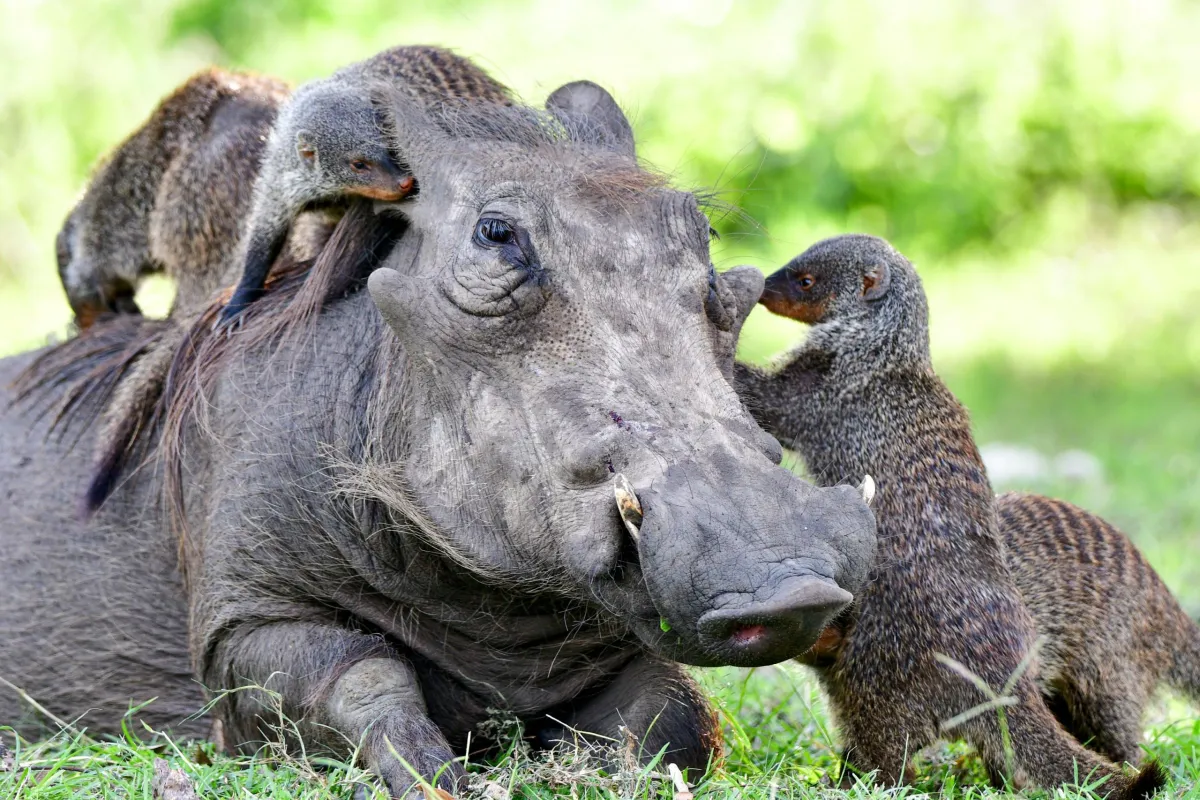
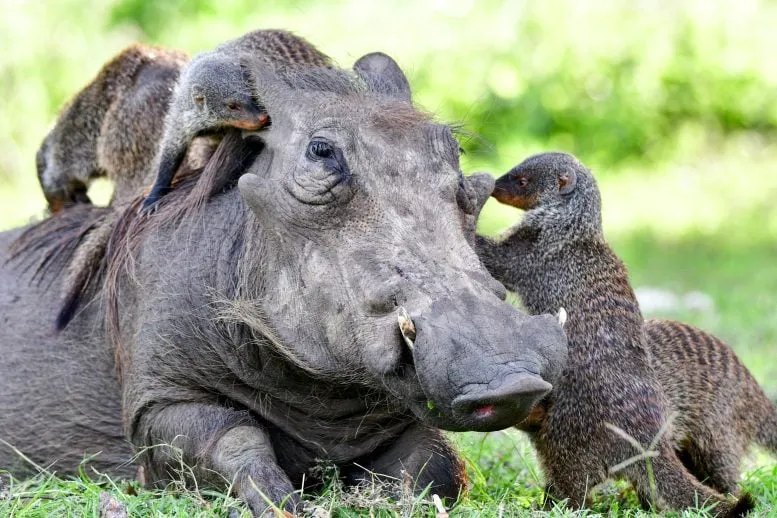
Cooperation requires animals to sync their behavior, even if they experience the world differently. For example, greater honeyguide birds use special calls to lead humans to bee nests. Humans then respond with their own calls. Warthogs use specific body poses to ask birds and other animals to clean parasites off them.
Dr. Katie Dunkley, a lead researcher from the University of Oxford, explained that animals coordinate to get shared resources like food or to exchange services, such as protection from predators. She noted that sharing information allows for this close coordination between species.
We're a new kind of news feed.
Regular news is designed to drain you. We're a non-profit built to restore you. Every story we publish is scored for impact, progress, and hope.
Start Your News DetoxManaging Risks and Rewards Through Communication
Communication helps animals find partners and start interactions. It also helps them coordinate and lowers the risk of being taken advantage of.
Interactions between different species can be risky, so clear signals are very important. Cleaner fish and shrimp, for instance, use bright colors and distinct movements to show they are cleaners. This allows them to approach predatory fish without being eaten. Lycaenid butterfly larvae produce chemical and vibration signals that encourage ants to protect them instead of eating them.
Researchers also found that many animals use multiple senses to communicate. Focusing only on obvious visual signals might cause scientists to miss other important ways animals share information.
Flexible Signals in Different Places
Some signals stay the same in all situations. Fish wanting to be cleaned often use specific head or tail postures. Other signals can change based on the local environment. Fishermen working with dolphins might interpret certain dolphin behaviors as signs of the best time to cast their nets.
Dr. van der Wal, a senior author from UCT’s FitzPatrick Institute of African Ornithology, noted that signals vary depending on the environment, the species involved, and whether the signal is learned or inherited. This shows how flexible cross-species communication can be.
How Cross-Species Communication Develops
Researchers also looked at how communication systems between species might evolve. Some signals may start as simple cues, which are behaviors that affect another animal's response even if they weren't meant for communication. Over time, these cues can become more specialized signals.
Other signals might begin as behaviors used for different reasons, like resolving conflicts or caring for young. These behaviors can then be adapted to help different species cooperate. Dr. Dunkley said that studying how information flows between species helps us understand how communication systems start, change, and sometimes evolve together.
A Collaborative Research Effort
This review came from a workshop on cross-species cooperation held in Cambridge in July 2023. Many researchers from different fields, including anthropology, biology, and linguistics, discussed examples of cooperation between species. The paper has 58 authors and includes experts on animal cooperation, mixed-species interactions, and systems where humans train animals.
Future Research Questions
The authors believe their review highlights how important cooperation between species is. It also opens new avenues for studying how communication evolves across species. They suggest more research is needed on different animal groups and more experiments to understand how signals appear, last, and affect cooperative behavior.
Dr. van der Wal concluded that there is still much to learn about how these systems work and evolve. He looks forward to future research revealing more interactions and other forms of cross-species cooperation.
Deep Dive & References
The ecology and evolution of cues and signals in animal interspecies cooperation - Animal Behaviour, 2026