For anyone who's ever tried to follow a conversation in a noisy coffee shop (so, everyone), you know the struggle of selective spatial attention. Our brains are constantly sifting through a tsunami of information, trying to latch onto what matters and politely ignore the rest. Turns out, some very old brain cells are doing a lot of the heavy lifting.
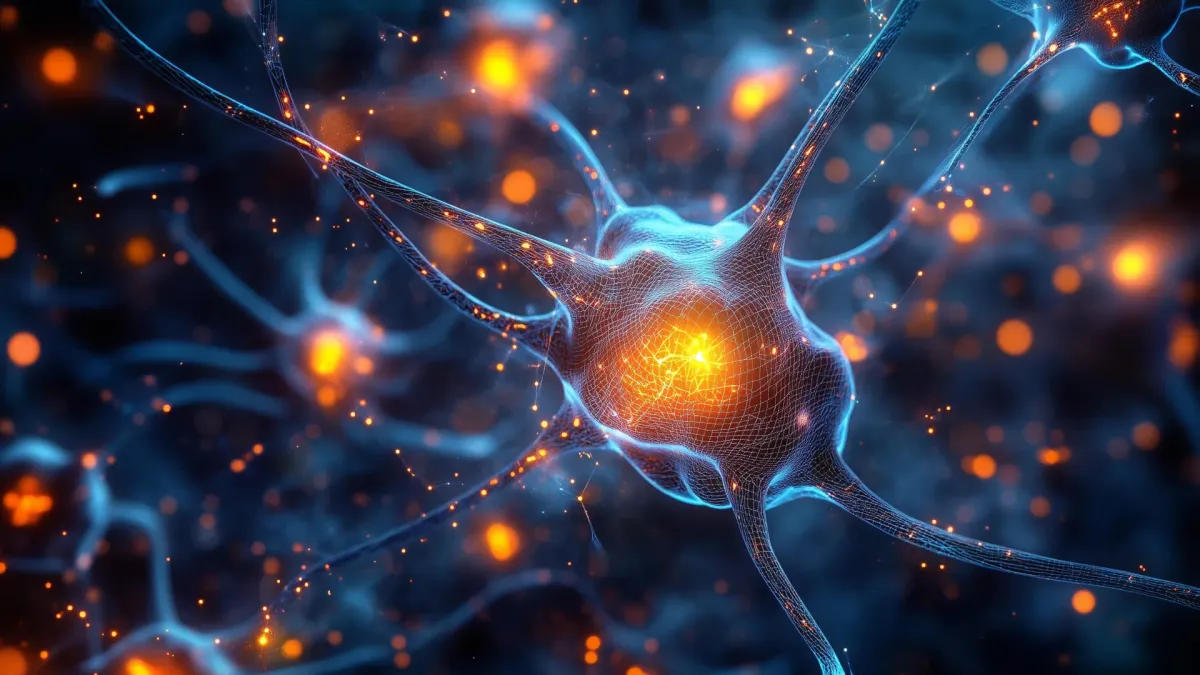
Researchers at Johns Hopkins University have pinpointed a group of neurons in an ancient part of the brain that acts like a built-in 'focus filter.' This discovery, made in mice, suggests a shared system across all vertebrates – from fish to humans – and could one day lead to new approaches for conditions like ADHD.
The Brain's Original Attention Span
For ages, the prefrontal cortex — that highly evolved, front-and-center part of the human brain — got all the credit for our ability to pay attention. But then scientists started wondering: how do birds and fish, who manage to focus just fine without a super-sized prefrontal cortex, pull it off? As researcher Ninad Kothari put it, they've had this skill for millions of years. Someone else had to be in charge.
We're a new kind of news feed.
Regular news is designed to drain you. We're a non-profit built to restore you. Every story we publish is scored for impact, progress, and hope.
Start Your News DetoxThe answer, it seems, is a network of neurons tucked away in the brainstem. This is an older, more fundamental part of the brain that's been around for a while. Think of it as the original attention-control module, running quietly in the background.
To test this, the team put mice through a task: respond to visual cues directly in front of them while ignoring flashing distractions to the side. The mice, as you'd expect, did pretty well. Until, that is, the researchers temporarily switched off those brainstem neurons. Kothari noted that the mice became, and we quote, "very easily distracted."
It wasn't that they suddenly couldn't see or move. They just lost the knack for comparing information and picking out the most important bits. Shreesh Mysore, a neuroscientist on the study, described this brain region as an "attentional selection engine" — the thing that decides what absolutely demands your focus right now.
Now, the big question is how these ancient neurons operate in humans. If they're indeed the unsung heroes of our attention spans, understanding how they might function differently in conditions like ADHD and autism could open doors to much more targeted, and perhaps more effective, treatments. Because sometimes, the oldest solutions are the best ones.
The study's authors include Arunima Banerjee, Qingcheng (Jessica) Zhang, and Wen-Kai You of Johns Hopkins University.