Imagine digging through dirt for decades, finding animal bones and ancient tools by the tens of thousands. Then, one sweltering July day, you unearth a jawbone. Not just any jawbone, but one belonging to an 8-year-old girl who walked the Earth 127,000 years ago.
That's precisely what happened in Sclayn, a sleepy Belgian village, after speleologists stumbled upon a cave in 1971. The initial find near the entrance was a few carved tools, which, you know, is pretty cool on its own. But the real story was still buried.
Sclayn's Child Emerges
By 1978, the University of Liège joined the party, and they haven't stopped digging since. To date, they've pulled out a staggering 120,000 animal bones and 20,000 artifacts from the Middle Paleolithic. Someone's got a very patient backhoe operator.
We're a new kind of news feed.
Regular news is designed to drain you. We're a non-profit built to restore you. Every story we publish is scored for impact, progress, and hope.
Start Your News DetoxBut the big moment, the one that probably had champagne corks popping, arrived on July 16, 1993. That's when they found the human jawbone. Over time, more pieces emerged: 16 teeth, another jaw fragment, and a right lower jaw. These weren't just any old bones; they were the first Neanderthal remains discovered in Belgium since the late 1800s. Let that satisfying number sink in.
Scientists meticulously pieced together the puzzle, confirming all 19 bones belonged to a single individual, affectionately dubbed "Sclayn's Child." This was an 8-year-old Neanderthal, most likely a girl, who lived a truly impressive 127 millennia ago. They even managed to extract DNA from a molar, making it the oldest human DNA ever sequenced at the time. Which, if you think about it, is both impressive and slightly terrifying.
A Time Capsule Underfoot
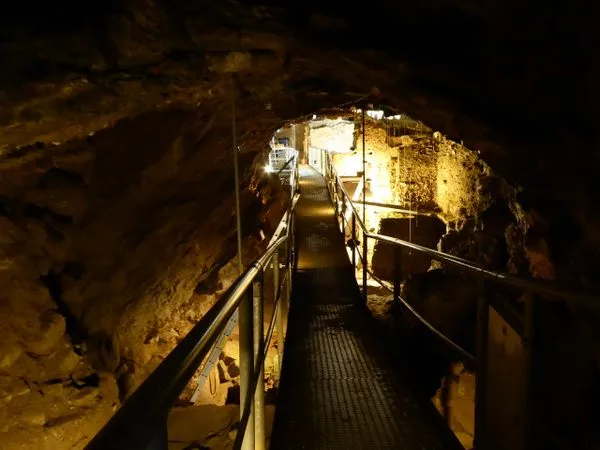
The cave itself is a geological marvel, boasting nearly 15 meters of accumulated sediments, neatly organized into 28 distinct layers. This makes it Belgium's most comprehensive timeline for studying the Upper Pleistocene climate. Researchers from around the globe still request samples, because apparently, this dirt is that good.
Thanks to Sclayn's Child and these invaluable layers, the cave was officially designated an archaeological site in 1996. It was listed as exceptional heritage in Wallonia in 2016 and, since 2019, has been on UNESCO's provisional World Heritage List. Because, apparently, that's where we are now: putting ancient children on UNESCO lists.
Grotte Scladina remains the only Belgian cave that's still under active excavation and open to the public. So, you can literally watch history being unearthed, while pondering what other secrets might be hiding underfoot.