For a century and a half, if you pointed to a pit viper slithering through the Himalayas, scientists would confidently tell you it was the Himalayan pit viper. One snake, one name, spread across Pakistan, India, and Nepal. Simple. Neat. And, as it turns out, wildly incorrect.
A new study has revealed that what we thought was a single species is actually five distinct ones. And three of those five? Completely new to science. Apparently, these snakes have been living their best lives, unbothered by our taxonomic assumptions, for quite some time.

Researchers didn't just trek through the Himalayas (which they did, because commitment). They also went full detective, digging into old museum specimens. You know, the ones that have been sitting there for decades, labeled as the one-and-only Himalayan pit viper. They extracted DNA from these historical samples, giving us a genetic peek into the past.
We're a new kind of news feed.
Regular news is designed to drain you. We're a non-profit built to restore you. Every story we publish is scored for impact, progress, and hope.
Start Your News DetoxBy cross-referencing body measurements, skeletal structures, and that crucial DNA, they unmasked the true identities of these slithery residents. Turns out, the Himalayas are a bit more crowded than we thought:
-
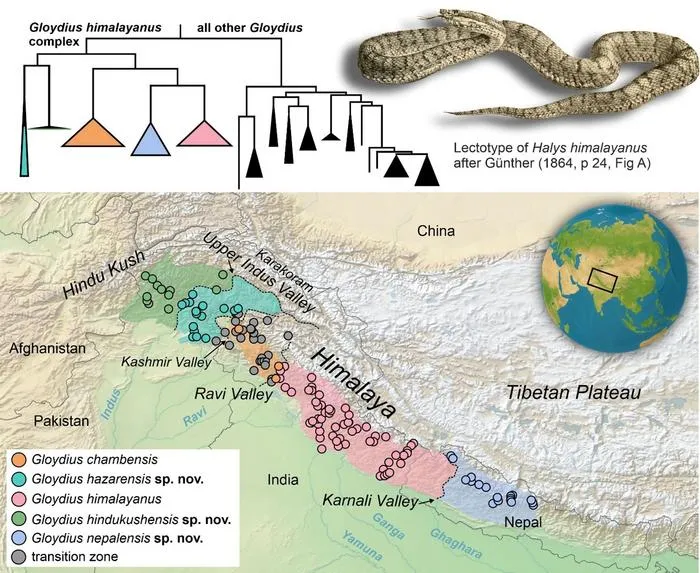
The OG Himalayan pit viper (Gloydius himalayanus): First identified in 1864, it's now known to be a bit of a homebody, sticking to northwestern India at elevations from 1,000 to 3,500 meters.
-
The Chamba pit viper (G. chambensis): Originally described in 2022, this study found it also stretches west into the Kashmir Valley, chilling out between 400 and 2,500 meters.
-
The Hazara pit viper (G. hazarensis): One of the new kids on the block, found in the Hazara region of northeastern Pakistan, from 1,630 to 2,900 meters high. Because apparently that's where we are now: naming snakes after regions that sound like they're from a fantasy novel.
-
The Hindu Kush pit viper (G. hindukushensis): Another fresh face, hanging out in the eastern foothills of the Hindu Kush Mountains in northwestern Pakistan, at heights between 1,660 and 2,888 meters.

-
The Nepali pit viper (G. nepalensis): The third new species, making its home across western and west-central Nepal. Because Nepal clearly needed its own special pit viper, and who are we to argue?
So, next time you're admiring a snake in the Himalayas, remember: it's probably not the Himalayan pit viper. It's one of five, three of which we literally just met. Talk about a glow-up for some very patient reptiles.