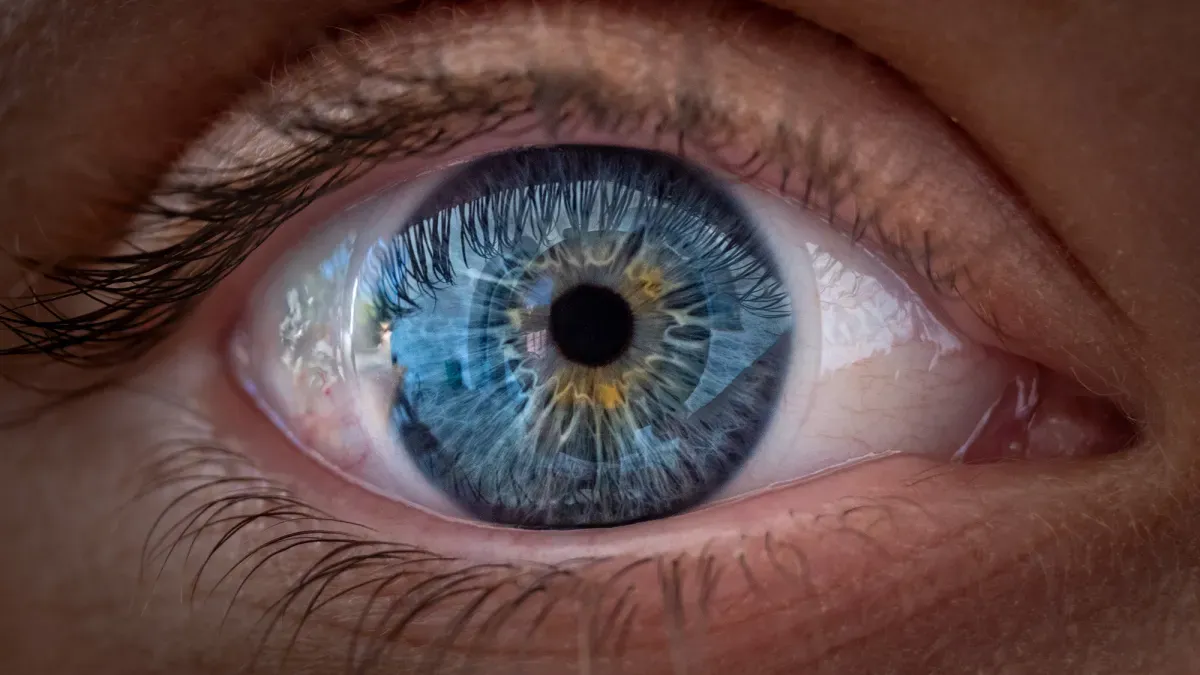
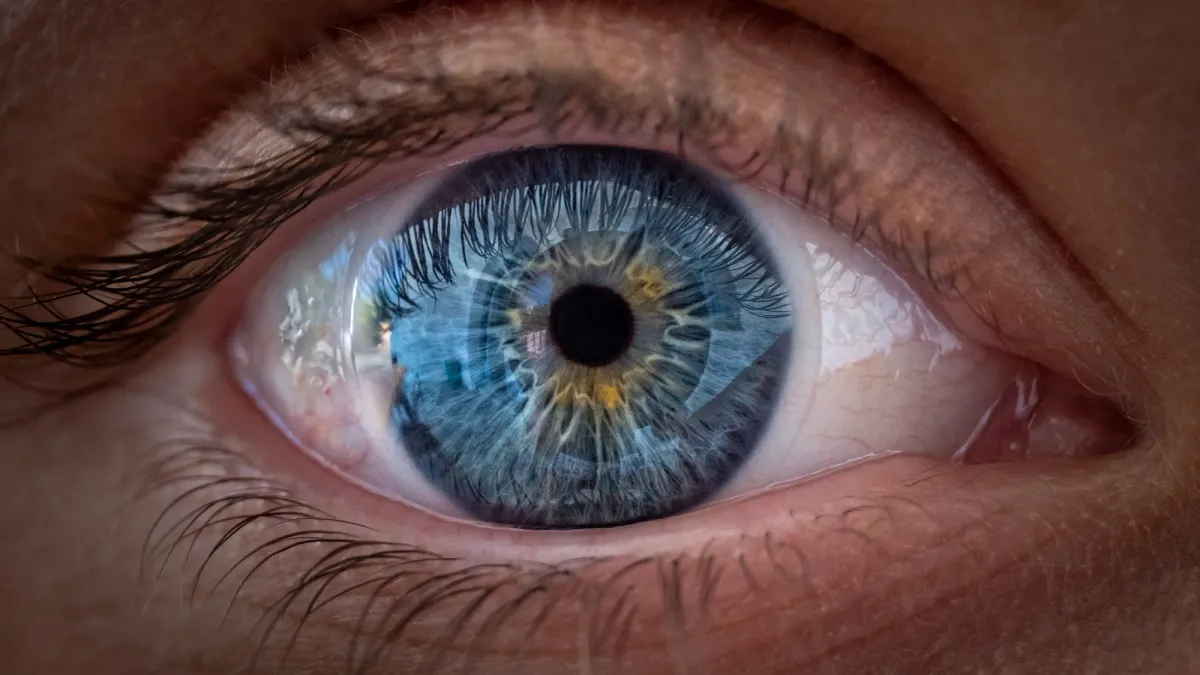
Ever notice how most mammals have eyes that are basically a giant, dark pupil? You can't tell where they're looking unless they swivel their whole head. Then there are us humans, with our strangely prominent, bright white sclera — the part of the eye that makes us look like we're constantly surprised.
Turns out, that little bit of ocular drama isn't just for aesthetics. It's a full-blown communication hack, helping us connect, cooperate, and even judge if someone's had enough sleep.
The Original Eye-Opener
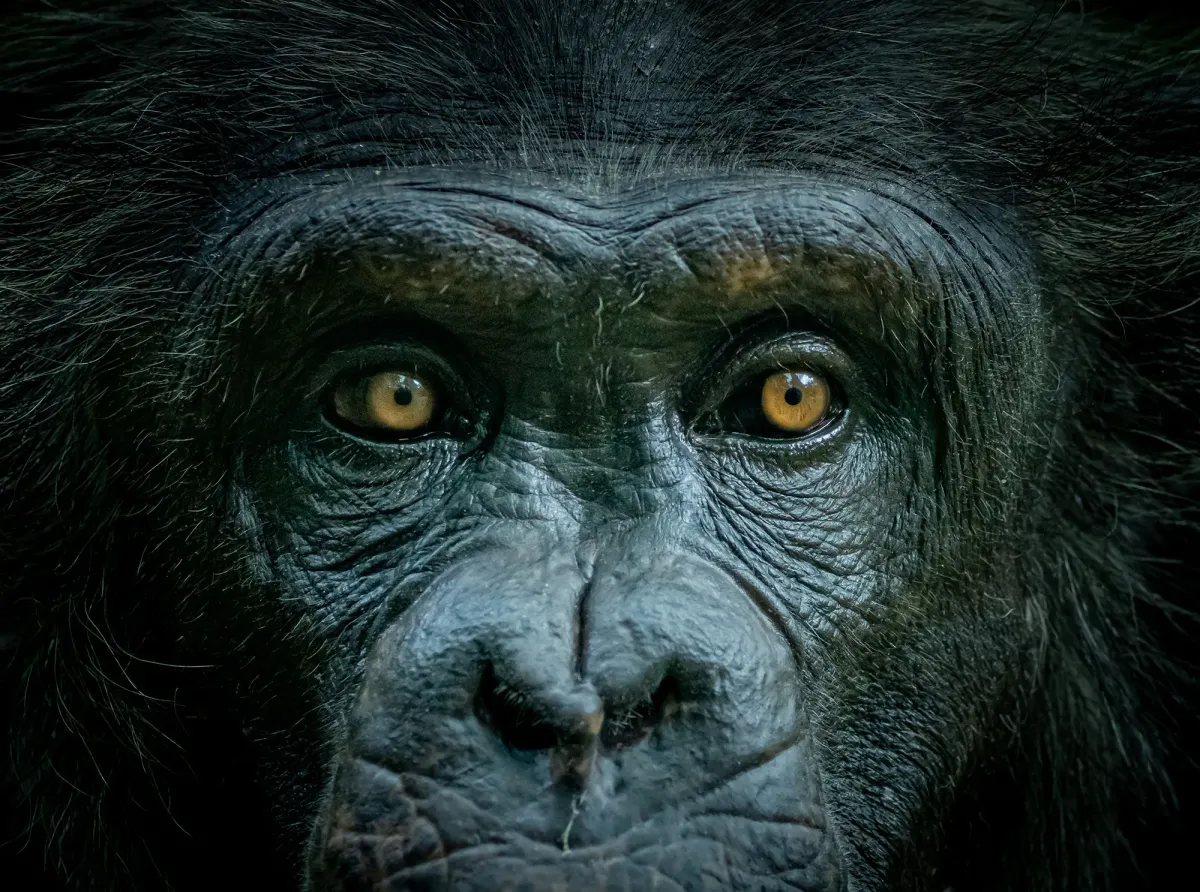
For decades, scientists mostly ignored the sclera, probably figuring it was just, you know, there. Then, in 1997, Japanese biologist Shiro Kohshima went on an eye-gazing spree, studying nearly half of all primate species. His big reveal? Only humans sport those bright white sclera.
We're a new kind of news feed.
Regular news is designed to drain you. We're a non-profit built to restore you. Every story we publish is scored for impact, progress, and hope.
Start Your News DetoxKohshima theorized that this stark contrast between the white and our dark pupils is a giant neon arrow, pointing exactly where we're looking. Our eyes are also more elongated than, say, a chimp's, further amplifying the effect. Suddenly, a quick glance could convey more than a thousand words – or at least, more than a grunting sound.
This makes sense. Following someone's gaze is a surprisingly powerful thing. It can signal honesty, draw attention to a lurking predator (or a really good donut), and even forge a bond. Because, let's be honest, language is messy. A quick visual cue? Priceless.
The Cooperative Eye Hypothesis
Fast forward to 2007, and psychologist Michael Tomasello took Kohshima's idea and ran with it, coining the "cooperative eye hypothesis." His theory: those white sclera are an evolutionary gift for teamwork.
Imagine our ancestors hunting. A quick dart of the eyes could tell the entire party, without a sound, where the saber-toothed tiger was headed. Or where the juiciest berries were hiding. It's all about our hypersensitivity to where others are looking.
To test this, Tomasello did a genius experiment with human babies, gorillas, chimpanzees, and bonobos. A scientist would look at the ceiling, either just with their eyes, just with their head, or both. The results were pretty telling:

- Human babies overwhelmingly followed the scientist's eye direction — almost three times more often when only the eyes moved.
- Apes? They were all about the head movement, looking up 2.5 times more often when the researcher lifted their head, even if their eyes were closed.
Basically, apes are terrible poker players. Humans, on the other hand, are reading the subtle cues from birth.
More Than Just a Pretty White Part
That eye-gaze sensitivity starts incredibly early. Newborns, barely five days old, will stare longer at faces whose gaze is directed at them. By eight months, actively following someone's gaze is standard operating procedure. It's a natural pointer, like a built-in laser pen for understanding.
This isn't just cute; it's crucial for development. White sclera make it easier for infants to follow an adult's eyes to an object, hear its name, and expand their vocabulary. Studies show that babies who are better eye-gazers at ten months often have a larger vocabulary later on. Who knew your eyes were a language tutor?
Now, not everyone agrees that the whiteness itself is the sole hero here. Evolutionary biologist Juan Perea-García points out that some other primates actually have white sclera, and some humans (from parts of South Asia, Africa, and Australia) have more pigmented sclera. He argues it's the contrast between the iris and sclera that matters, not just pure white.
However, even if the sclera isn't always snow-white, we still show way more of it than most primates. And when scientists digitally gave chimpanzees white sclera, their gaze-following abilities improved immediately. So, it seems the combo of contrast and overall eye visibility is what gives us our communicative edge.
Your Eyes Are Also a Health Report
Beyond communication, those white eyes serve another fascinating purpose: they're a quick diagnostic tool. A subtle yellowing? Could be fatty deposits or increased blood vessels, signaling age or diet issues. A sudden, deep yellow? Jaundice, liver trouble. Acute redness? Infection.
Researchers even tested this, digitally altering eye pictures to be redder or yellower. Unsurprisingly, people with discolored eyes were perceived as less healthy, older, and less attractive. Which, if you think about it, is both impressive and slightly terrifying.
So, the next time you lock eyes with someone, remember that you're not just looking at them. You're participating in a millennia-old, deeply ingrained communication system, all thanks to that oddly white part of your eye. Let that sink in.