Imagine a material that doesn't just manage heat, but remembers how to do it. A material that can direct thermal radiation, flip its heat-handling modes on and off, and then keep those settings without needing constant power. That's precisely what an international team, spearheaded by Osaka Metropolitan University, just pulled off.
Traditionally, how a material soaks up heat and how it spits it back out are locked in a thermal tango known as reciprocity. Think of it this way: if a surface is great at absorbing heat from a certain direction, it's equally great at emitting it the same way. This fundamental rule has, until now, made it incredibly tricky to independently control heat's grand entrance and dramatic exit from a material.
But what if you could break that rule? What if you could tell a material, "Hey, absorb heat from here, but send it out over there"? The possibilities for energy systems, super-sensitive infrared sensors, and even a whole new kind of memory device are, well, hot.
We're a new kind of news feed.
Regular news is designed to drain you. We're a non-profit built to restore you. Every story we publish is scored for impact, progress, and hope.
Start Your News DetoxThe Heat Whisperers
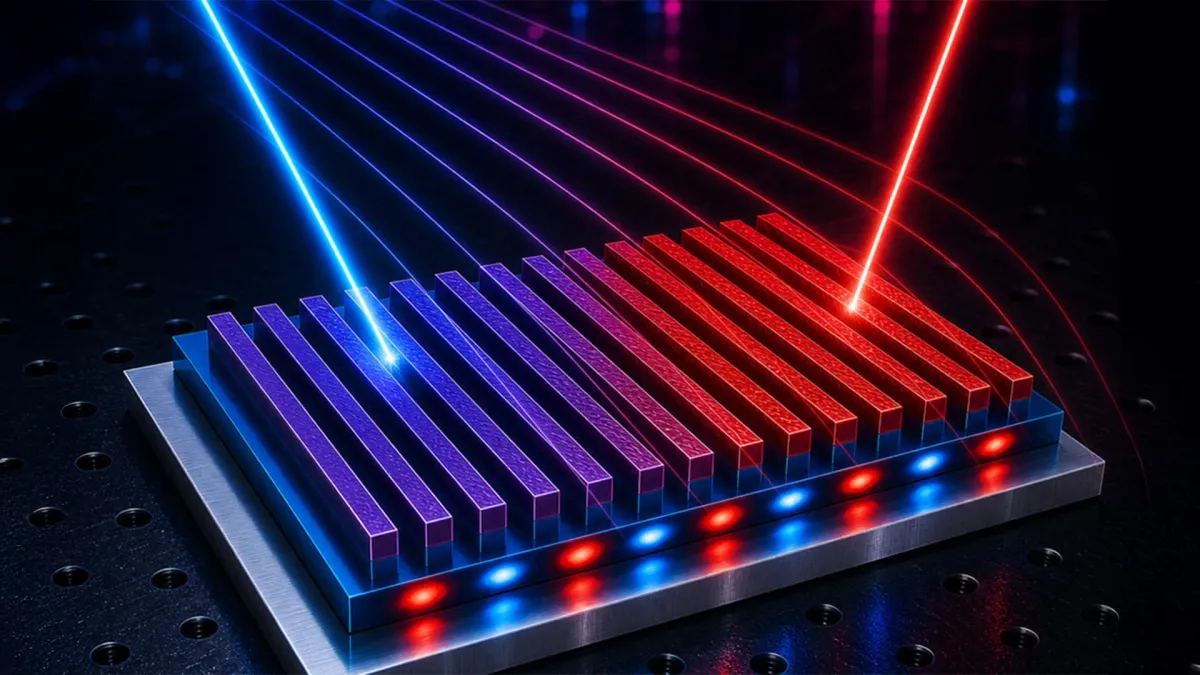
The solution came from combining two clever materials. First, a magneto-optical material, which is basically a shape-shifter for light (and thus heat) when a magnetic field is applied. Then, they added a phase-change material called GST. The result? A device that can not only direct thermal radiation but also switch its behavior on or off and, crucially, remember that state even after the power's gone.
It's like programming heat itself, much like how a computer chip stores data. Dr. Shunsuke Murai, one of the lead researchers, put it rather succinctly: they've made heat radiation "smarter." Which, if you think about it, is both impressive and slightly terrifying. Your phone already knows too much, now your walls might, too.
Previous attempts to achieve this kind of heat control often required light to hit the material at extreme, impractical angles, which meant a significant drop in efficiency. And those older systems? They were a bit forgetful, losing their settings the moment power was cut. This new material, however, reliably switches and holds its state, making it far more practical for real-world applications.
Professor Koichi Okamoto envisions a future where tiny devices actively control heat radiation, much like electronic circuits manage electricity. Smarter infrared sensors, more efficient energy systems, and even new types of photonic memory – storing information with light and heat instead of electrical charges – could all be on the horizon. Because apparently, that's where we are now: programming heat to remember things. What a time to be alive.