Imagine hitting snooze for 321 days straight. That's essentially what NASA's New Horizons spacecraft just did. After its longest hibernation ever, nearly a year orbiting the sun in a very deep sleep, the plucky little explorer is awake, healthy, and ready to beam back all the cosmic secrets it's been quietly collecting from the distant Kuiper Belt, far beyond Pluto.
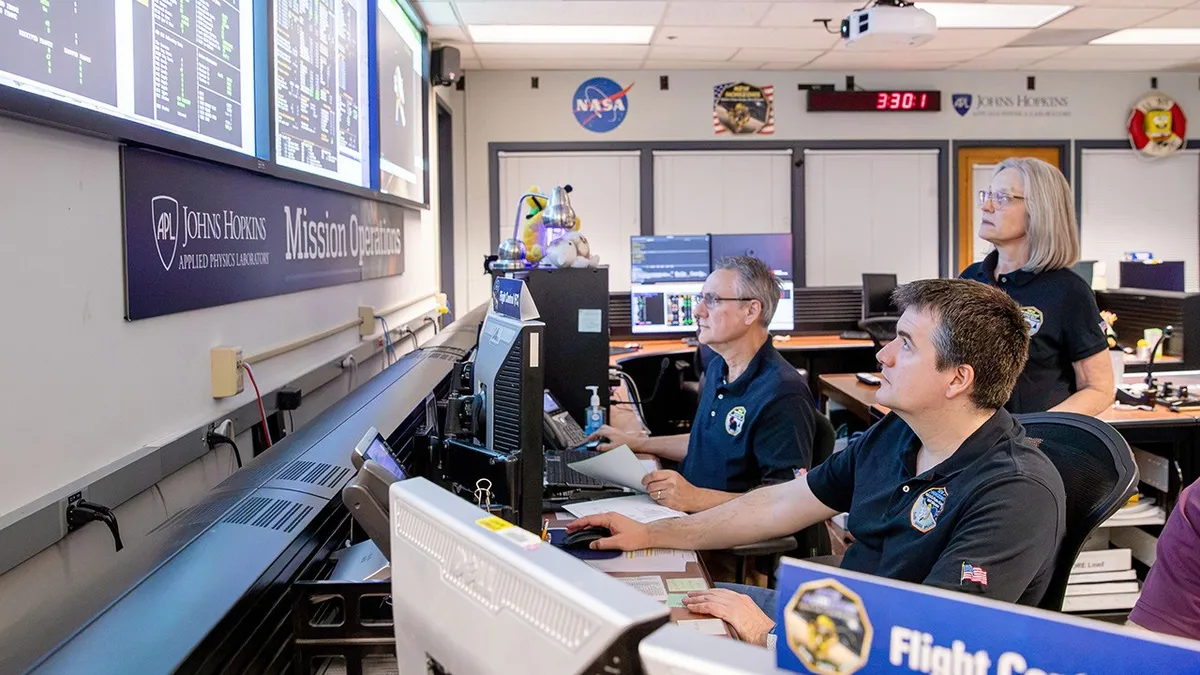
Flight controllers at Johns Hopkins Applied Physics Laboratory (APL) confirmed the wake-up call on June 23. New Horizons, ever the obedient machine, followed commands sent to its computer way back in July. It had been in hibernation since August 7, just chilling out in the cold vacuum of space, 5.9 billion miles from Earth.
Those radio signals, confirming its return to consciousness, took about 8 hours and 52 minutes to make the journey back to APL, pinging through NASA’s Deep Space Network station in Madrid, Spain. Let that satisfyingly precise number sink in.
We're a new kind of news feed.
Regular news is designed to drain you. We're a non-profit built to restore you. Every story we publish is scored for impact, progress, and hope.
Start Your News DetoxThe mission team tucks New Horizons into these long naps to conserve resources on its epic journey. But 'hibernation' isn't exactly 'doing nothing.' The spacecraft was still diligently gathering and storing data using its heliospheric plasma sensors, the Solar Wind at Pluto, the Pluto Energetic Particle Spectrometer Science Investigation, and the Venetia Burney Student Dust Counter. Because apparently, even robots need to multitask in their sleep.
Alice Bowman, the mission operations manager at APL, confirmed that New Horizons sent weekly status reports throughout its slumber. "Every status report through this hibernation period was ‘green,’" she noted, which means everything was working perfectly. No space-age alarm clock needed a second hit.
Now that it's back in business, the team will start downloading all that health and safety data, followed by the juicy scientific bits from its three instruments. In about three weeks, the spacecraft's Alice ultraviolet spectrograph will get to work, studying hydrogen gas in the outer heliosphere. Other instruments will keep measuring away, while the ground team performs checks and upgrades its own software to make managing a spacecraft billions of miles away just a tad easier.
New Horizons is also running on updated logic, specifically designed for operating so far from the Sun. Less power, longer signal travel times – it’s like upgrading your phone’s OS for a cross-country road trip, but the road trip is across the solar system and your phone is a highly sophisticated, nuclear-powered probe.
Launched in January 2006 with the fastest launch ever, New Horizons has been busy. It zipped past Jupiter in 2007, explored the Pluto system in 2015, and made history again in 2019 by exploring Arrokoth, the first Kuiper Belt object. This latest wake-up is just another chapter in its ongoing quest to explore the distant reaches of our solar neighborhood. Imagine the stories it could tell, if it wasn't a robot.