Ancient deep-sea organisms found in Canada are changing what we know about early animal life. These fossils suggest that movement, sexual reproduction, and complex animal traits started earlier than scientists thought.
Uncovering Early Animal Complexity
Every animal today, from jellyfish to humans, comes from a time when complex life first appeared. Before this, simple microbes ruled the Earth. The fossil record from this key evolutionary period is hard to find. This makes it tough to know when early animals developed important features and how they spread.
Researchers found a rich fossil site in Canada's Northwest Territories. It holds fossils of the mysterious Ediacaran biota. These fossils show that some animal traits, like movement and sexual reproduction, might have evolved 5 to 10 million years earlier than thought. Scott Evans, a lead author from the American Museum of Natural History, noted that life was dominated by microbes for 3 billion years. Then, marine animals appeared that were large and capable of familiar behaviors.
We're a new kind of news feed.
Regular news is designed to drain you. We're a non-profit built to restore you. Every story we publish is scored for impact, progress, and hope.
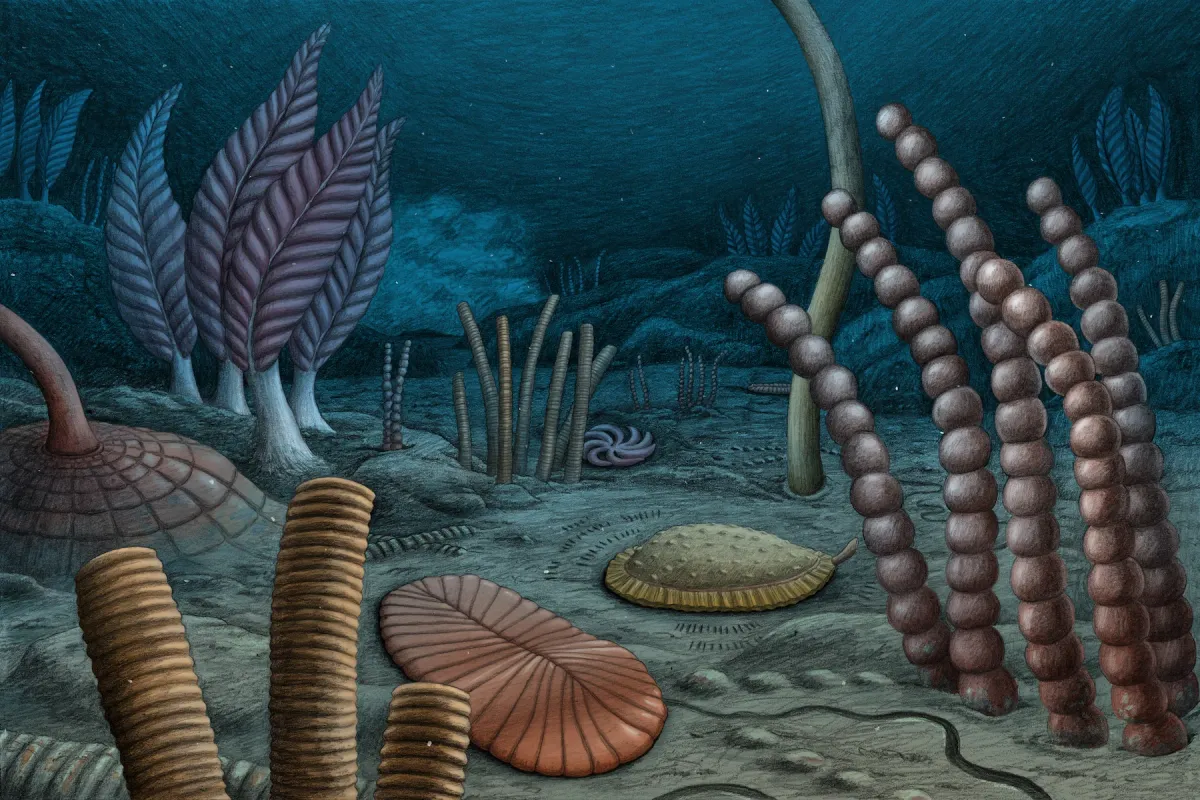
Start Your News DetoxEdiacaran fossils come in many shapes, like flat disks, leaf-like fronds, and ribbed ovals. They are the earliest direct fossil proof of multicellular animal life. Some Ediacaran species are linked to modern animal groups like mollusks, nematodes, comb jellies, and jellyfish. Others have no clear modern relatives. However, they include the oldest known animals that moved to find food or reproduced sexually.
These soft-bodied organisms lived before most animals had shells or bones. This makes their fossils rare and hard to preserve. Ediacaran fossils have been found on every continent except Antarctica. Only a few sites have more than ten species. These rare places offer the best evidence from a crucial 40-million-year period in Earth's history.
North America's New Fossil Discoveries
Scientists divide Ediacaran life into three main groups, or assemblages. These mark different periods in the fossil record. They are the Avalon assemblage (575-559 million years ago), the White Sea assemblage (559-550 million years ago), and the Nama assemblage (550-538 million years ago). Before this new discovery, White Sea assemblage fossils were found in Europe, Asia, and Australia, but not North America.
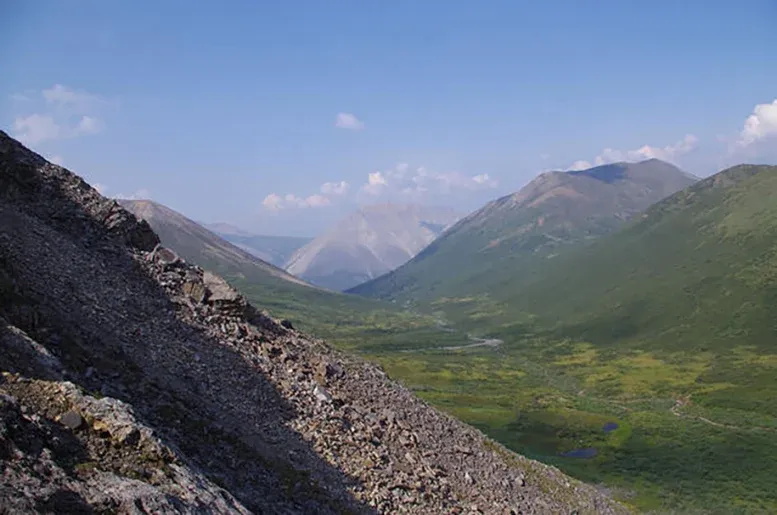 In this study, the researchers found clear evidence of the White Sea assemblage in ancient rocks of Canada’s Mackenzie Mountains in the Northwest Territories, on the traditional lands of the Sahtú Dene and Métis, who provided the research team with guidance and permission to access the site. Credit: Scott Evans/© AMNH
The new study found clear White Sea assemblage fossils in the Mackenzie Mountains of Canada. This area is the traditional land of the Sahtú Dene and Métis, who gave permission and guidance to the research team. The scientists found over 100 fossils, including six groups never before seen in North America.
The most surprising part was their age. Some fossils are about 567 million years old. This makes them 5 to 10 million years older than other White Sea fossils. This places them partly in the time of the older Avalon assemblage. Justin Strauss, a co-author from Dartmouth, noted that this new site is diverse and fills a gap in the rock record.
Among the discoveries reported for the first time in North America are:
- Dickinsonia, a flat organism that moved across the sea floor. It absorbed food through its underside.
- Funisia, a tube-shaped organism that lived in clusters. It shows the oldest fossil evidence of sexual reproduction, similar to corals.
- Kimberella, an organism with a muscular foot that scraped the sea floor for food. It might be the oldest known bilaterian, an animal with distinct front, back, top, bottom, and left-right symmetry. Bilaterians make up over 99% of known animal species.
- Eoandromeda, possibly a comb jelly with eight spiral arms.
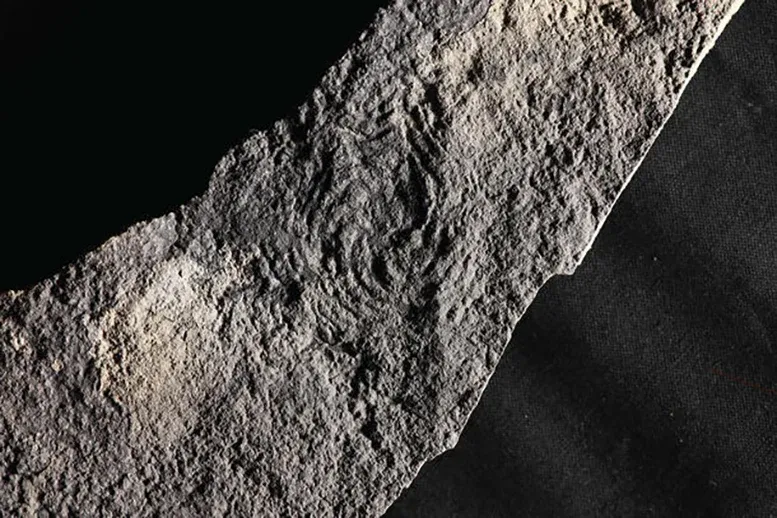 A fossil of Eoandromeda, a possible comb jelly with eight spiral arms. Credit: Scott Evans/© AMNH
These organisms also lived in deeper water than previously thought for the White Sea assemblage. This supports the idea that early animals might have first developed in deep marine areas before moving to shallower waters. This pattern is different from how animal evolution usually happens. Evans suggested that the deep ocean, though dark, is stable. This stability might have provided key opportunities for early animal life.
Deep Dive & References
Discovery of White Sea assemblage fossils from Laurentia - Science Advances, 2026