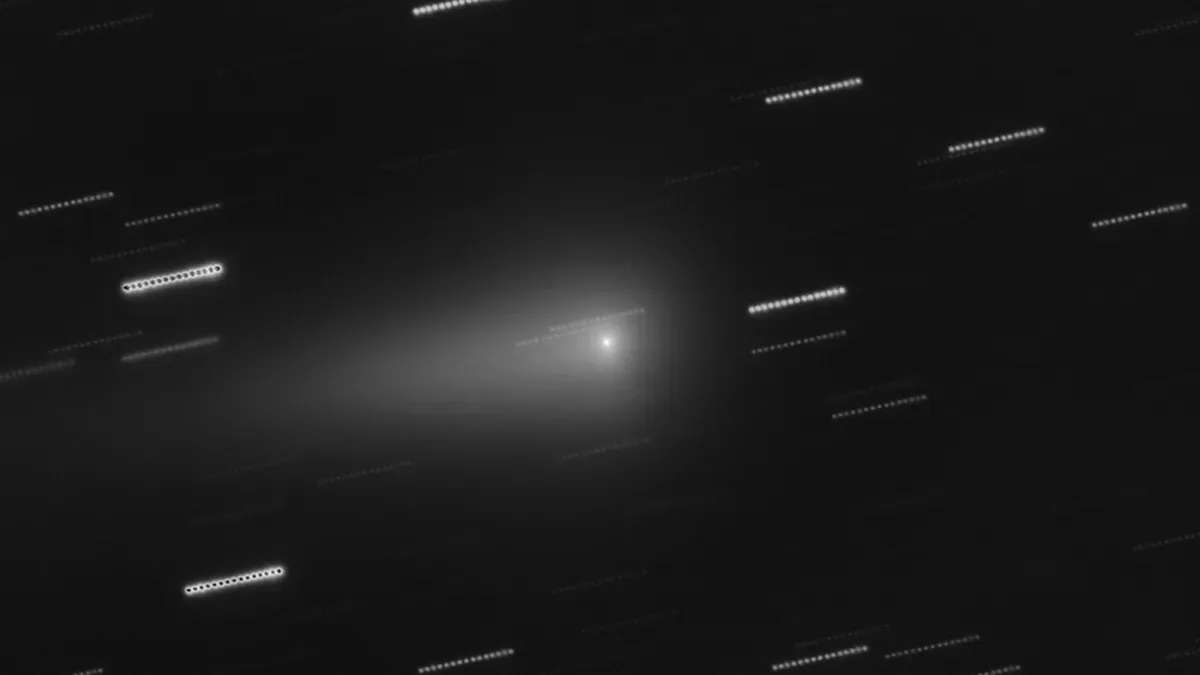
Astronomers just got a rare peek at Comet 3I/ATLAS, which, if you're keeping score, is only the third known object from outside our solar system to swing by Earth. And apparently, it's making the most of its visit, spilling secrets about the deep cosmic past.
Turns out, this ancient space traveler is loaded with alcohol and ice volcanoes. Because why not? Now, scientists have also figured out its age, and it's less of an age and more of an eon. Chemical clues, published in Nature Astronomy, suggest 3I/ATLAS is seriously old.
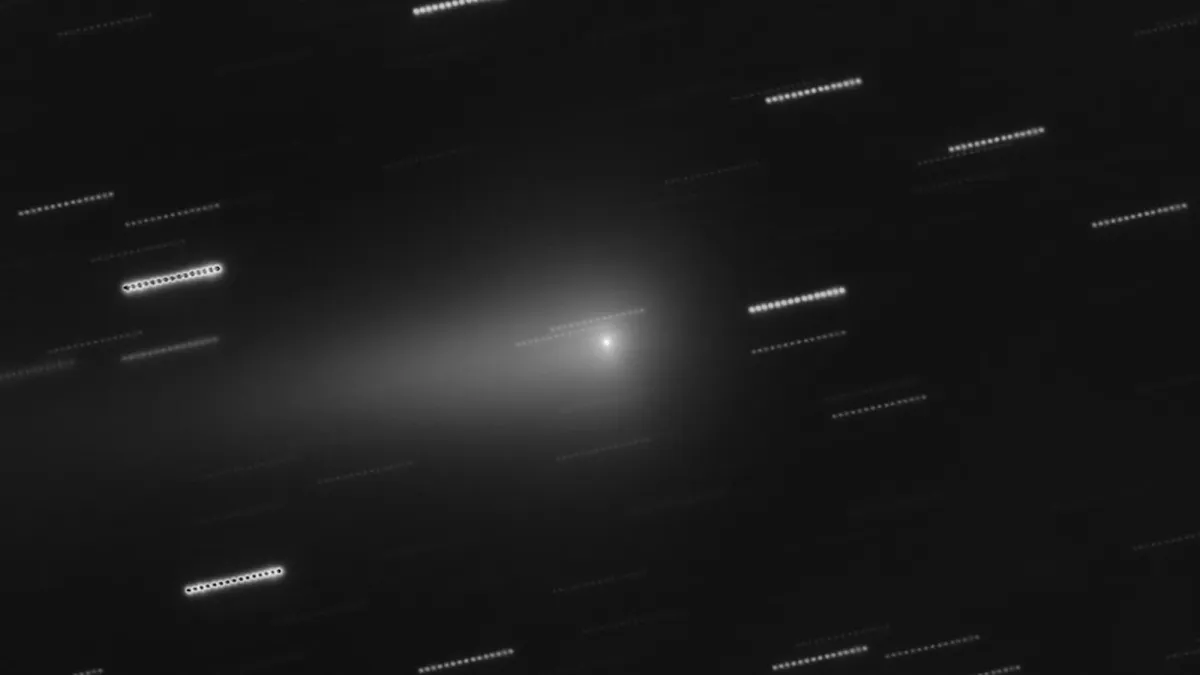
A Glimpse into an Ancient System
Rosemary Dorsey, an astrophysicist at the University of Helsinki and co-author, put it simply: 3I/ATLAS is a thrilling chance to study a planetary system that formed long before our Sun was even a twinkle in the universe's eye. Talk about a glow-up.
We're a new kind of news feed.
Regular news is designed to drain you. We're a non-profit built to restore you. Every story we publish is scored for impact, progress, and hope.
Start Your News DetoxWhen 3I/ATLAS approached Earth in July 2025 (yes, we're talking about a future event that scientists are already buzzing about, because that's how comets work), it was remarkably bright. Unlike its predecessors, 1I/ʻOumuamua and 2I/Borisov, this one put on a show. Its luminosity allowed Dorsey and her team to examine its isotopic ratios — basically, different forms of the same element.
Using the European Southern Observatory's Very Large Telescope, they zoomed in on carbon and nitrogen isotopes within cyanide molecules in the comet's gas cloud. These tiny traces are like time capsules, revealing the conditions when the comet first formed, largely unchanged by its mind-boggling journey across the cosmos.

Older Than Our Sun
Unlike the local comets we're used to, 3I/ATLAS boasts unusually high nitrogen and carbon isotopic ratios. This suggests the comet wasn't born in our neighborhood but rather in the chilly, outer reaches of an ancient, low-metallicity star. Translation: these stars have very few elements heavier than helium, meaning they popped into existence when the universe was a much younger, less chemically diverse place. A cosmic minimalist, if you will.
Combine this with other recent studies, and it seems 3I/ATLAS began its journey long, long before the Sun even existed. The comet could be more than twice the age of our Sun, clocking in at over nine billion years old. Let that satisfying number sink in.
Cyrielle Opitom, an astronomer at the University of Edinburgh and another co-author, calls interstellar comets "fossils." They're relics from planetary formation processes that happened light-years away, yet here we are, getting to study them up close. Which, if you think about it, is both impressive and slightly terrifying.
3I/ATLAS is now making its graceful exit from our solar system, becoming harder to spot. But don't fret — the sheer volume of data astronomers collected will keep them busy for years. At least until the next interstellar visitor decides to drop by.