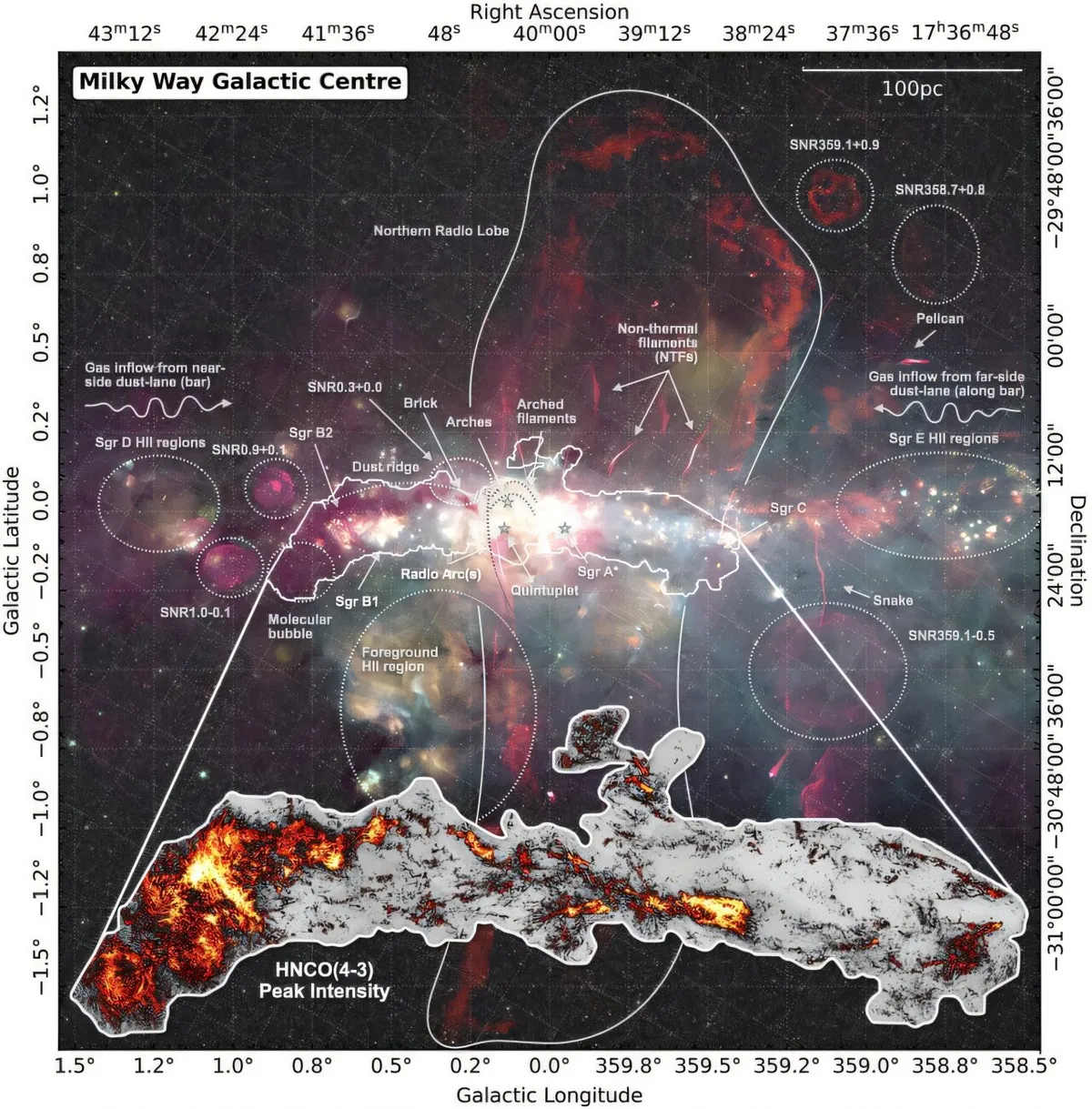
Where do stars begin? You might not guess the center of the Milky Way. This area is the most violent part of our galaxy. It's a swirling mess of gas moving so fast that it seems nothing could settle there.
Yet, stars do form in this chaos. Astronomers have now found an unexpected calm spot within this turbulent region. This discovery helps explain how stars are born even in such extreme conditions.
Finding Calm in the Chaos
The problem at the galactic center is extreme turbulence. The gas in the Central Molecular Zone, a huge cloud around the Milky Way's middle, moves faster than the speed of sound. This wild motion usually prevents gravity from pulling gas together into dense knots where stars can form. Imagine a river with white-water rapids; nothing can stay still long enough to gather.
We're a new kind of news feed.
Regular news is designed to drain you. We're a non-profit built to restore you. Every story we publish is scored for impact, progress, and hope.
Start Your News DetoxA team led by Rojita Buddhacharya used the ALMA array in Chile to map this turbulent region. They created the largest image ever made by the telescope. This map charted many different molecules across the chaotic center.
Inside this noisy region, they found a small, quiet area. Here, the gas had slowed down below the speed of sound. It was drifting gently and smoothly, like a still pool in the middle of rapids.
A Universal Recipe for Star Birth
Within this calm pocket, a long filament of gas was present. These slender structures allow material to clump together. Here, gravity was strong enough to hold the gas in place. Gentle motion and strong gravity are exactly what a cloud needs to start forming a star.
Astronomers were surprised by how quickly the gas changed from chaotic to calm. This shift happened over very short distances.
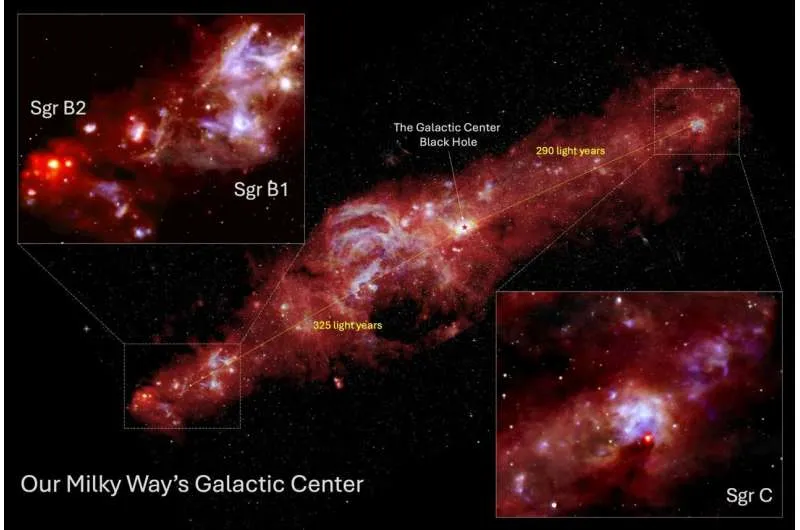
Before this discovery, such calm star nurseries were only seen in the quieter outer parts of the galaxy. Finding these same calm conditions in the turbulent core suggests that stars might form in a similar way everywhere. This points to a single, universal recipe for star birth. The gas that formed our own sun billions of years ago likely went through a similar quiet phase. This makes such a corner a glimpse into our own beginnings.
Now, scientists are searching for more of these hidden calm islands. They plan to use machine learning to analyze the huge maps ALMA is creating. This will help them find many more pockets of stillness scattered throughout the galaxy's chaos. It seems that even in the wildest parts of the Milky Way, the universe still finds a quiet place to make its stars.