Flowering plants might have started making large, fleshy fruits much earlier than scientists thought. They likely depended on plant-eating dinosaurs to help spread their seeds. This new idea comes from a study published in Science.
Today, flowering plants, called angiosperms, make up about 80% of all land plants. Their fruits, like peaches and watermelons, are eaten by many animals. These animals then spread the seeds through their droppings.
A New Look at Ancient Plants
About 136 million years ago, during the Early Cretaceous period, the first flowering plants appeared. These were small and weedy. They had tiny seeds that spread by falling or blowing in the wind. The old belief was that angiosperms only started making larger, fleshy fruits after the Chicxulub impact killed off non-bird dinosaurs about 66 million years ago. This was when fruit-eating mammals began to thrive.
We're a new kind of news feed.
Regular news is designed to drain you. We're a non-profit built to restore you. Every story we publish is scored for impact, progress, and hope.
Start Your News DetoxHowever, new plant fossils found in south-central New Mexico challenge this idea. The findings suggest that flowering plants were making large fruits nearly 75 million years ago. This is about ten million years earlier than previously thought.
These fossils came from the Jose Creek Formation. They were preserved in a layer of hardened ash called Dori’s tuff. This ash settled after a volcanic eruption about 74.6 million years ago. It captured a tropical forest, much like Pompeii.
Cindy Looy, a paleobotanist at the University of California, Berkeley, said the ash layer is "a snapshot in time." She noted that ground cover plants are at the bottom, and higher up, leaves are scattered in all directions from the ashfall.
For 30 years, researchers have studied this deposit to understand the ancient forest. It had many flowering trees, conifers, and palms. During the Late Cretaceous, the site was about 125 miles from the Western Interior Seaway, which once split North America.
Dinosaurs as Seed Spreaders
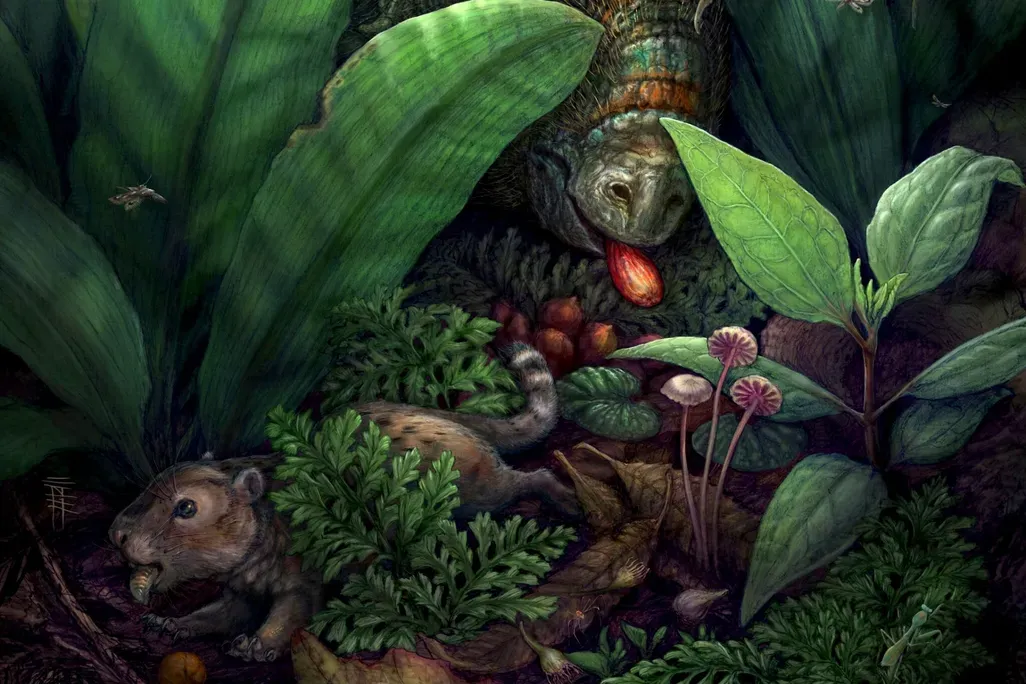
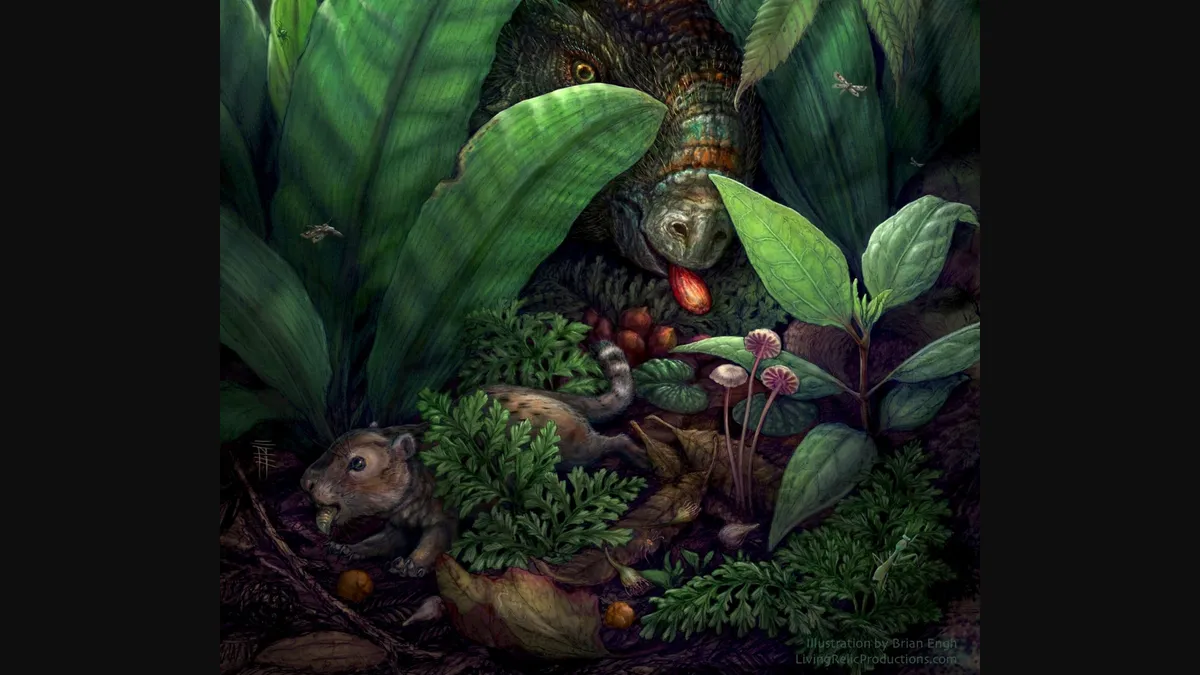
Scientists found hundreds of fossilized plant parts, including 77 types of diaspores (plant dispersal units like fruits and seeds). They analyzed these for the study. Five percent were "winged," likely spread by wind. Another 34% were "fleshy," suggesting they were eaten by plant-eating dinosaurs and other animals.
Jaemin Lee, a paleoecologist at the University of California, Berkeley, told New Scientist that scientists didn't have botanical proof that Mesozoic animals ate angiosperm diaspores. "Now we have," Lee said.
The fossilized diaspores from the Jose Creek Formation are "pretty sizable," Lee noted. They are about the size of a blueberry or a large acorn. This is much bigger than the poppy seed-sized fruit and seed fossils found in other Cretaceous sites. These discoveries suggest that some flowering plants were already making large fruits before dinosaurs died out.
This fits with other plant changes during the Cretaceous period. Plants were becoming more diverse in size, leaves, and flowers. They were becoming more efficient and specialized. Selena Smith, a paleobotanist at the University of Michigan, told Science News that it makes sense their reproductive parts would also be evolving.
Deep Dive & References
- New fossils upend catastrophist narrative that flowering plants flourished only after dinosaur extinction - Berkeley News, 2026
- Fossil fruits show flowering plants flourished in time of dinosaurs - New Scientist, 2026
- Flowering plants may have relied on dinosaurs to spread their seeds - Science News, 2026
- Early angiosperm fruit and seed dispersal by dinosaurs and other animals - Science, 2026