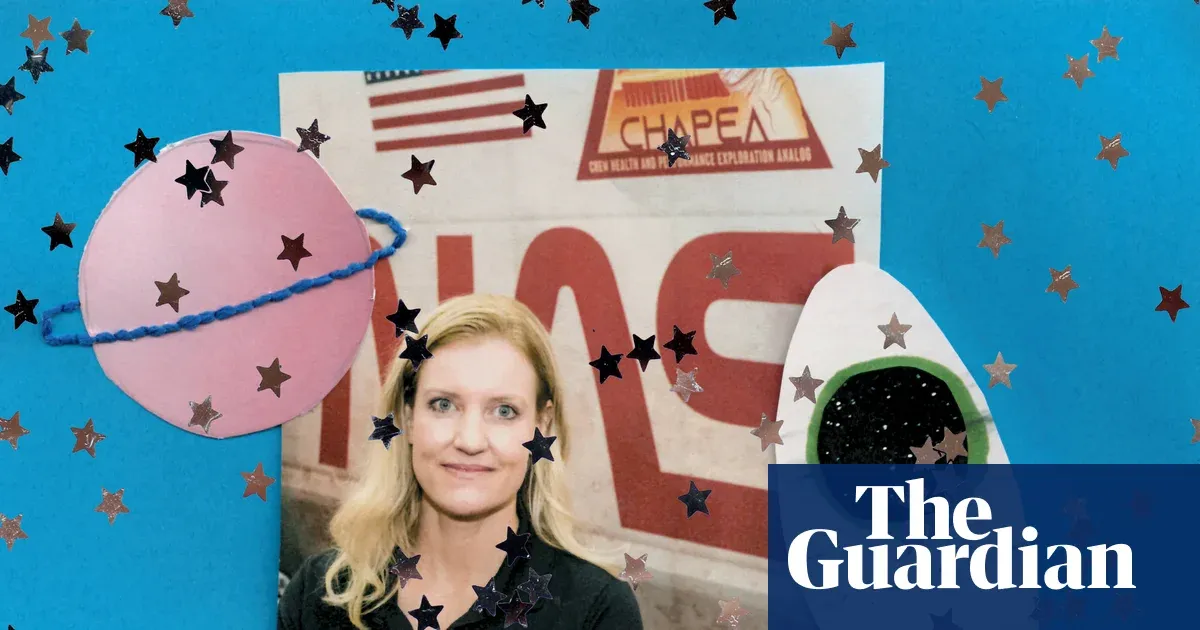
Ever wonder who makes sure astronauts don't lose their minds hurtling through the cosmos? Meet Dr. Suzanne Bell. She's not an engineer calculating trajectories, but an organizational psychologist leading NASA's Behavioral Health and Performance Laboratory. Her job? Making sure the humans in the spacecraft are as robust as the machines.
Turns out, even folks who send people to the moon have extremely relatable morning routines. Dr. Bell is up by 5 AM, no alarm needed, because apparently that's just what happens when you're a high-achieving NASA scientist. From 5 to 7:15 AM, she sips a latte and enjoys what she calls "two hours of uninterrupted time." For the rest of us, that's called a dream.
Moon Missions and Salad Lunches
Her main gig right now is the Artemis missions. Specifically, making sure the crew's mental game is strong for deep space. Her team just wrapped up data collection for Artemis II (which sent humans beyond low-Earth orbit for the first time in 50 years — NBD). Now, they're briefing folks on what needs to happen before Artemis III launches.
We're a new kind of news feed.
Regular news is designed to drain you. We're a non-profit built to restore you. Every story we publish is scored for impact, progress, and hope.
Start Your News DetoxNext up: helping design a moon base. Because if anyone knows how to keep people sane in a confined, high-stress environment far from home, it's the behavioral health experts. Forget the blueprints; they're figuring out the human element.
Dr. Bell's lunch? Often a salad, grabbed between meetings, because even at NASA, the grind is real. She follows a strict "daily dozen" diet, avoiding flour and sugar, except for, you know, when a giant leap for mankind calls for a celebratory cupcake. Priorities.
Evenings are strictly family time. She's out by 5 PM to hang with her two teenage sons, one of whom apparently lifts weights with his NASA-scientist mom. The other's into indoor climbing. Dr. Bell is in bed by 9:30 PM. Her secret to staying refreshed? "It's not rocket science," she says. Which, for a NASA scientist, is both a humble understatement and a perfect punchline.