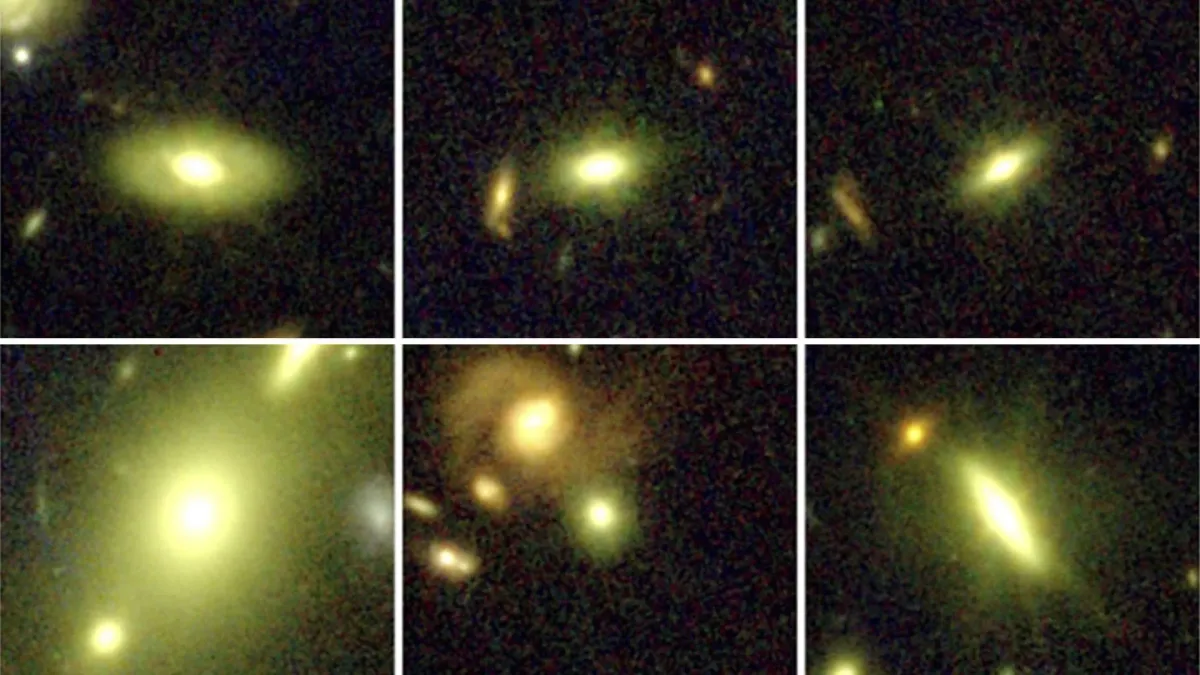
Astronomers using the James Webb Space Telescope (JWST) have found that massive galaxies in the early universe contain many more small, faint stars than expected. This hidden population means these ancient galaxies could be three to four times more massive than earlier estimates.
This discovery makes it harder to explain how such large, mature galaxies formed so soon after the Big Bang. It also suggests that planets around low-mass stars might have been more common in the early universe.
JWST Reveals Hidden Stars in Ancient Galaxies
An international team, including Penn State researchers, studied nine massive, mature galaxies. These galaxies stopped forming stars billions of years ago. The team used JWST observations of the distant universe along with data from the Very Large Telescope.
We're a new kind of news feed.
Regular news is designed to drain you. We're a non-profit built to restore you. Every story we publish is scored for impact, progress, and hope.
Start Your News DetoxFor the first time, they could reliably estimate the number of small, faint stars compared to larger, brighter stars in these distant galaxies.
Joel Leja, a professor at Penn State and coauthor, noted that these galaxies are "really challenging to understand." He added that they are "three or four times more massive than we expected."
Astronomers measured this by splitting each galaxy's light into a spectrum. Small color changes in the spectrum show which types of stars are present. Large, bright stars usually dominate the light, making smaller, dimmer stars hard to spot. Penn State researchers helped model the light from these galaxies.
Bright Stars Can Mask Many Smaller Stars
Chloe Cheng, the lead author from Leiden University, explained that bright stars are like "skyscrapers" that catch your eye. She said that many more low-mass stars are "concealed by those rare, bright stars, like houses hidden between skyscrapers." This means the galaxy is much more massive than thought.
Scientists usually assume stars form in similar proportions throughout the universe. These new findings challenge that idea. The research shows that the most massive galaxies in the early universe seem to have a much larger share of low-mass stars than smaller galaxies like the Milky Way.
Martje Slob, a doctoral candidate at Leiden University, highlighted one galaxy that formed less than 1.5 billion years after the Big Bang. It could be four times more massive than previous estimates. Slob noted that such measurements were impossible until recently, requiring powerful telescopes, high-quality spectra, and new analysis methods.
A Deeper Puzzle for the Early Universe
These findings have big implications for understanding how galaxies developed in the young universe. Since JWST launched, astronomers have found surprisingly massive and mature galaxies existing soon after the Big Bang. These discoveries already strain current galaxy formation models.
Leja explained that if these galaxies have up to four times more stars, it "sharpens these tensions further." Theories of galaxy formation must now explain how so many small stars could have appeared so early in cosmic history.
More Hidden Stars Could Mean More Early Planets
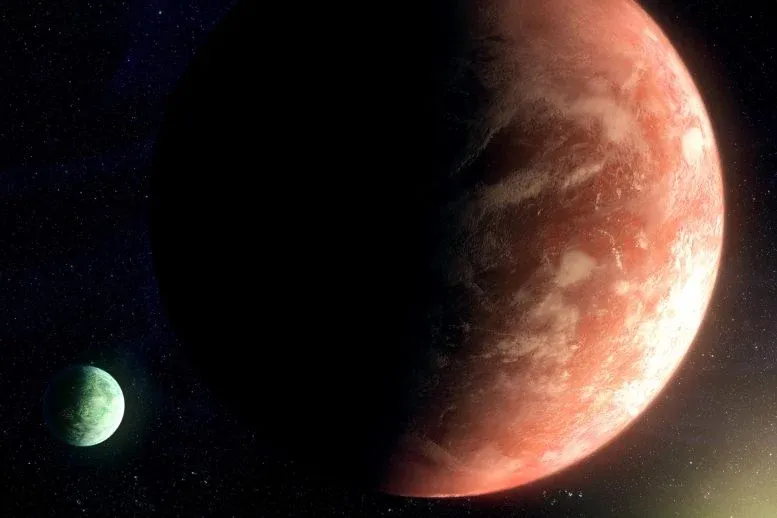
The impact might go beyond galaxy formation. Mariska Kriek, who led the research at Leiden Observatory, said this result shows "much more mass than previously thought is hidden in low-mass stars." She added that this could mean "more planets formed in the early universe than we had previously assumed," as many planets orbit low-mass stars.
The researchers plan to use this technique to study even earlier galaxies in the coming years. They aim to observe closer to the time when the first stars and galaxies emerged.
Deep Dive & References
- Hidden mass in early galaxies revealed by bottom-heavy initial mass functions - Nature Astronomy, 2026