Researchers now have a better way to test new treatments before trying them on animals. They are using lab-grown canine muscle cells. These cells help figure out which treatments work and which don't.
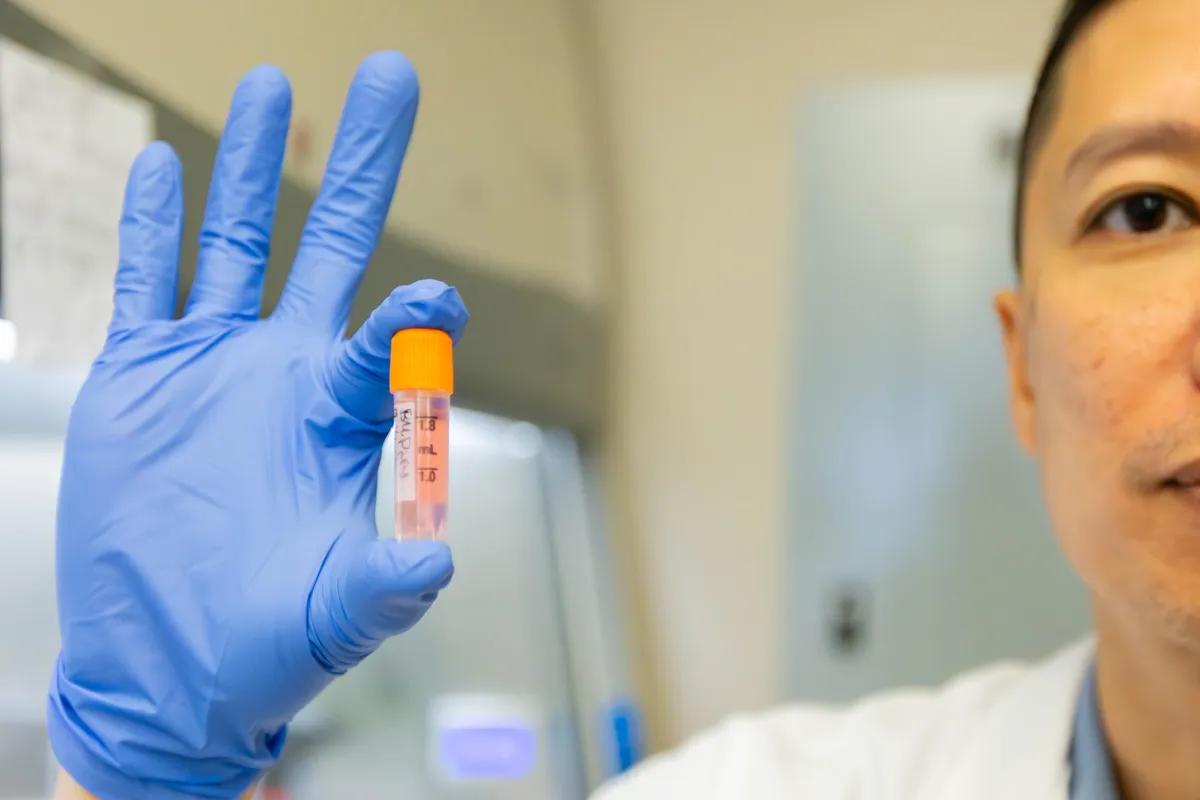
The Myok9 cell line was created at the Texas A&M College of Veterinary Medicine and Biomedical Sciences (VMBS). It's a model of canine muscle cells grown in a lab. This allows scientists to test treatments in a controlled setting. Then, they can decide if further animal studies are needed.
This method helps reduce the number of animals used in research. It still allows for scientific progress, especially when developing new therapies.
We're a new kind of news feed.
Regular news is designed to drain you. We're a non-profit built to restore you. Every story we publish is scored for impact, progress, and hope.
Start Your News DetoxDr. Peter Nghiem, an associate professor at VMBS, leads this project. He explained that the goal is to reduce animal use. It also creates a model that researchers can easily use to test therapies.
A Better Way to Study Muscle
The Myok9 cell line comes from canine myoblasts. These are primary cells that help muscles repair and grow. This makes them important for studying muscle diseases. In the body, these cells naturally turn into muscle tissue.
Normally, researchers use primary cells taken directly from animals or people. But these cells don't last long in the lab. They usually divide only a few times before they stop and die.
Dr. Nghiem noted that when primary cells die quickly, it limits how many treatments researchers can test. It also limits how long they can study them. This can slow down the early steps of developing new therapies.
To fix this, researchers "immortalized" the Myok9 cells. They added a protein that lets the cells divide much longer than usual. This makes the cells tougher and easier to use in the lab.
One key use for Myok9 cells is early testing of therapies. They help researchers find the most promising treatments before animal studies begin. Testing therapies in the lab first means fewer animals are needed in the early stages.
These cells are also less sensitive to handling. This allows researchers to test treatments more consistently.
Dr. Nghiem said, "You can give them treatments like gene editing or gene therapy to see if it actually works." If it does, then researchers can move to the next testing phase.

Reducing Animal Research
The Myok9 cell line also supports a wider effort by federal agencies. They want to reduce animal use in research when possible.
Dr. Nghiem explained that the NIH and the federal government are pushing to reduce animal research. Tools like Myok9 help by letting researchers test therapies in a dish first. This happens before they move to animal studies.
When developing new drugs or gene therapies, researchers need to answer several questions. They need to know if a treatment works at a molecular level, if it's safe, and if it improves the disease.
"With Myok9, we can reduce some of the animals used for earlier testing," Dr. Nghiem said. This is especially true when checking if a therapy works as planned at the molecular level. However, animal testing is still needed to fully check safety and how well the therapy improves disease.
Making Research Tools More Available
Dr. Nghiem is excited about the cell line's potential to help discoveries beyond his own lab. Myok9 gives researchers a reliable, easy-to-access, and ethical tool. It shows a new way to do biomedical and veterinary research, balancing new ideas with responsibility.
More people are looking for alternative research models. Tools like Myok9 are expected to become more important in both academic and industry settings.
He believes that a cell line developed in their small lab could lead to a scientific breakthrough anywhere in the world.