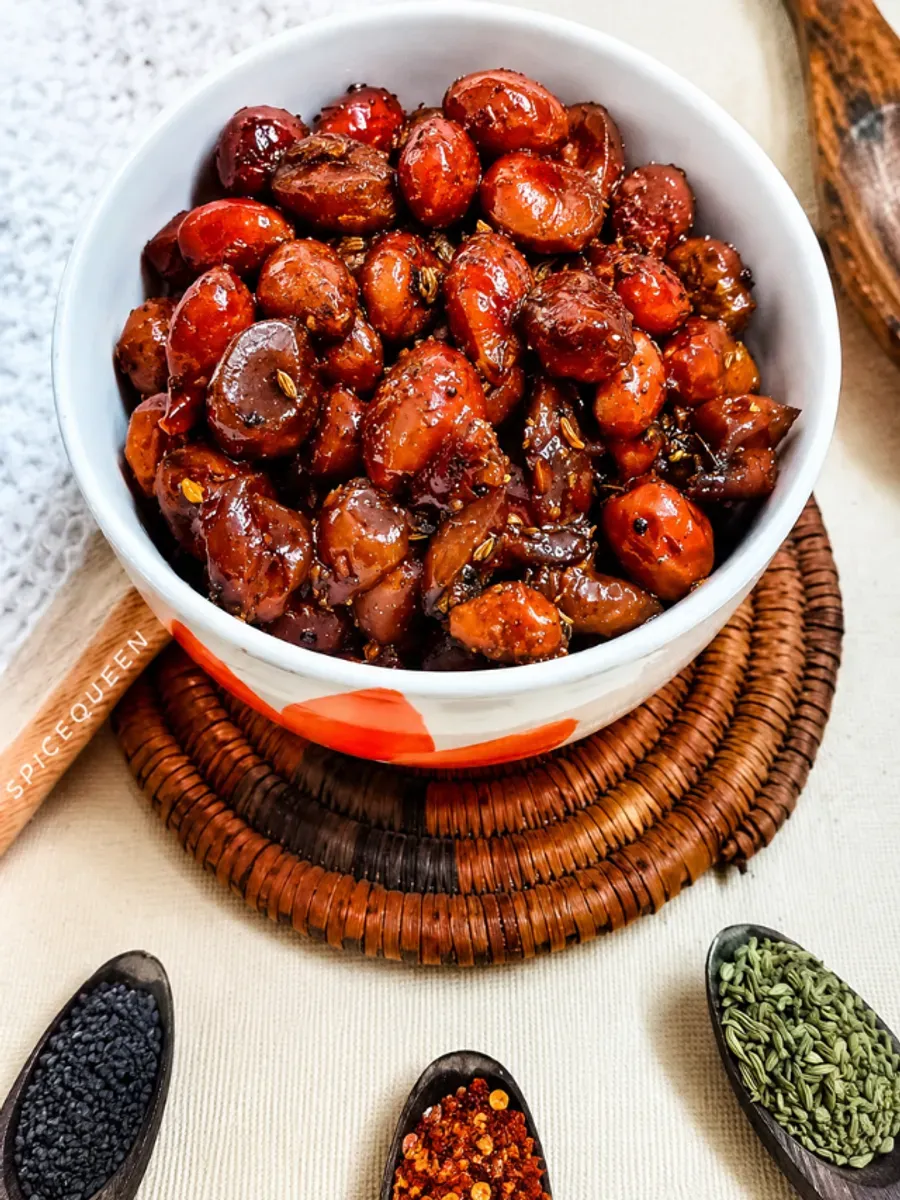
For generations, Indian communities have turned wild and local fruits into pickles. These unique flavors come from local plants and old traditions.
Karonda (Carissa carandas)
Karonda is found in central, western, and northern India, especially in Rajasthan, Madhya Pradesh, Uttar Pradesh, and Maharashtra. It tastes tart, like a cranberry. This makes it a popular choice for spicy pickles in many rural homes.
Lasora (Cordia myxa)
Lasora has a sticky texture. Its pickle is a traditional treat in Rajasthan and parts of North India.
We're a new kind of news feed.
Regular news is designed to drain you. We're a non-profit built to restore you. Every story we publish is scored for impact, progress, and hope.
Start Your News Detox
Mahua Fruit
Mahua fruit grows in the forests of Jharkhand, Chhattisgarh, Odisha, Madhya Pradesh, and Maharashtra. While mahua flowers are often used for food and drinks, some local groups also pickle the fruit.

Kokum (Garcinia indica)
Kokum is from the Western Ghats. It is famous for refreshing summer drinks. Many Konkan and coastal communities also make tangy pickles from kokum, sometimes called Amsul pickle or Kokum no Achar.

Chalta (Elephant Apple)
Chalta grows in Assam, Meghalaya, Tripura, West Bengal, and other parts of Northeast India. To make the pickle, the fruit is boiled and mixed with mustard oil, jaggery or sugar, and spices.

Ber (Jujube)
Ber pickle is a popular local food. It is usually cooked with jaggery, mustard oil, and spices. You can find it in West Bengal, Jharkhand, Assam, Punjab, and Uttar Pradesh.

Timru Berry
Timru berries are gathered from forests in Uttarakhand and other Himalayan areas. Mountain communities traditionally forage for them. They are sometimes preserved with salt and spices to make them last longer.

These pickles are more than just a side dish. Long before bottled pickles were common, communities across India used these local pickles to save the flavors of their forests, hills, and wild places.