Quantum entanglement: it's when particles get all buddy-buddy, their properties intertwined even when miles apart. Think of it as a cosmic connection where if you tickle one, the other giggles. So far, this party trick has been mostly confined to tiny quantum systems, mostly for storing and processing quantum information. But what if we could scale that up?
That's the question Rice University's Qimiao Si has been pondering. He's looking to expand entanglement into much larger, multi-particle systems. And his team just dropped a theory that might make it happen.
The Quantum Critical Point
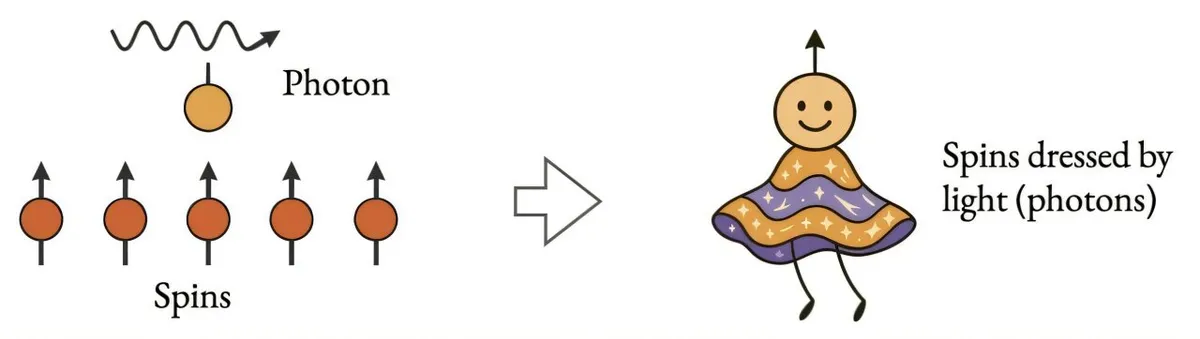
Si's new method, published in Nature Communications, suggests a surprisingly elegant workaround: connecting quantum materials with quantum light. The gist? You stick some matter into a tiny mirrored cavity. Then, you gently nudge that matter towards a "quantum critical point." This isn't a physical location; it's a state where a material is teetering on the edge, ready to flip between two quantum phases. It's like a choose-your-own-adventure book where the material hasn't quite decided which path to take yet.
We're a new kind of news feed.
Regular news is designed to drain you. We're a non-profit built to restore you. Every story we publish is scored for impact, progress, and hope.
Start Your News DetoxTraditionally, getting light and matter to entangle has been a bit of a brute-force operation, requiring super-strong interactions. But Si's theory says we can dial down that effort considerably. How? By bringing the material right up to its quantum critical point.
Let the Entanglement Begin
When a material is on the brink, its quantum fluctuations are amplified, making it incredibly sensitive to external influences. Introduce photons into that cavity at just the right moment – when the material is near its critical point – and bam. Entanglement should happen much more easily.
This isn't just about making things simpler; it's about opening up new possibilities. As former Rice fellow Shouvik Sur points out, once light and matter are entangled, their fates are linked. If the material hits its critical point and changes phase, the light will follow suit. Which, if you think about it, is both impressive and slightly terrifying.
This non-thermal approach – using pressure or chemical tweaks instead of heat to push the material to its critical state – could be a game-changer for experimental physicists. It offers a fresh way to study entangled particles in different phases using existing tools. And it could be the secret sauce for new quantum technologies, like super-sensitive quantum sensors.
Last year, Si's team found that entanglement was stronger in "strange metals," which are quantum critical materials. The challenge was figuring out how to extract that entanglement. This new theory provides a way to do just that, using quantum light as the vehicle. Entangle the light and matter, then simply remove the light from the cavity, carrying the entanglement with it. Because apparently, that's where we are now.
It's a clever bit of quantum mechanics that could unlock a whole new world of applications, turning theoretical potential into real-world function. Let that sink in.