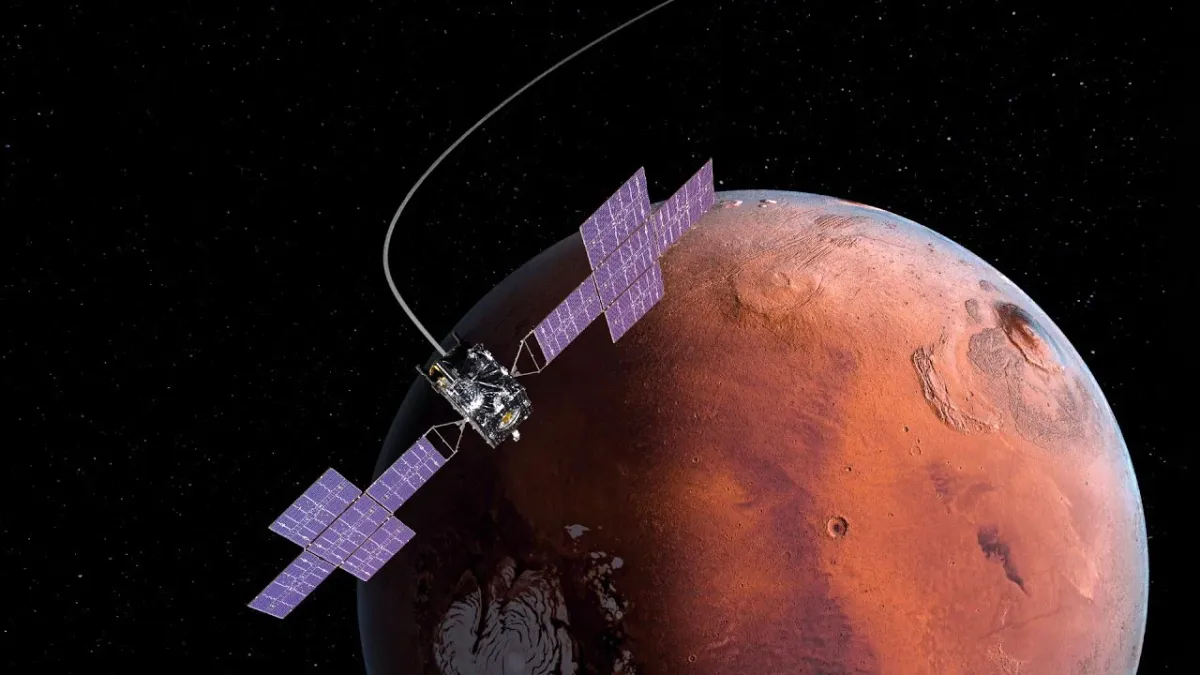
NASA's Psyche spacecraft recently completed a close flyby of Mars. It used the planet's gravity to get a powerful "slingshot" boost. This maneuver helps send the spacecraft toward its main target: the metal-rich asteroid Psyche.
The spacecraft passed just 2,864 miles (4,609 kilometers) above Mars on May 15. This gravity assist increased its speed and slightly changed its path without using any onboard fuel.
On Course for Asteroid Psyche
After the flyby, engineers used radio signals from NASA's Deep Space Network (DSN) to confirm Psyche was on track. The spacecraft is now heading directly for the asteroid, which is in the main asteroid belt between Mars and Jupiter.
We're a new kind of news feed.
Regular news is designed to drain you. We're a non-profit built to restore you. Every story we publish is scored for impact, progress, and hope.
Start Your News DetoxDon Han, Psyche's navigation lead at NASA's Jet Propulsion Laboratory, shared the excitement. He noted that Mars gave the spacecraft a 1,000-mile-per-hour boost. It also shifted its orbital plane by about 1 degree relative to the Sun. The mission is now set to arrive at asteroid Psyche in the summer of 2029.
Rare Views and Instrument Tests
During the flyby, Psyche's scientific instruments were activated for calibration. These included its cameras, magnetometers, and a gamma-ray and neutron spectrometer. This Mars encounter was a valuable practice run for operations at the asteroid. It also provided scientists with unique views of the Red Planet.
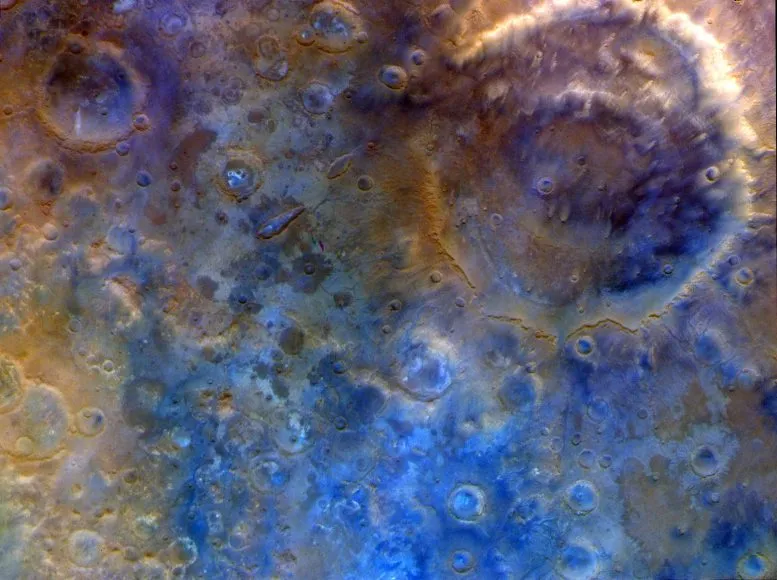
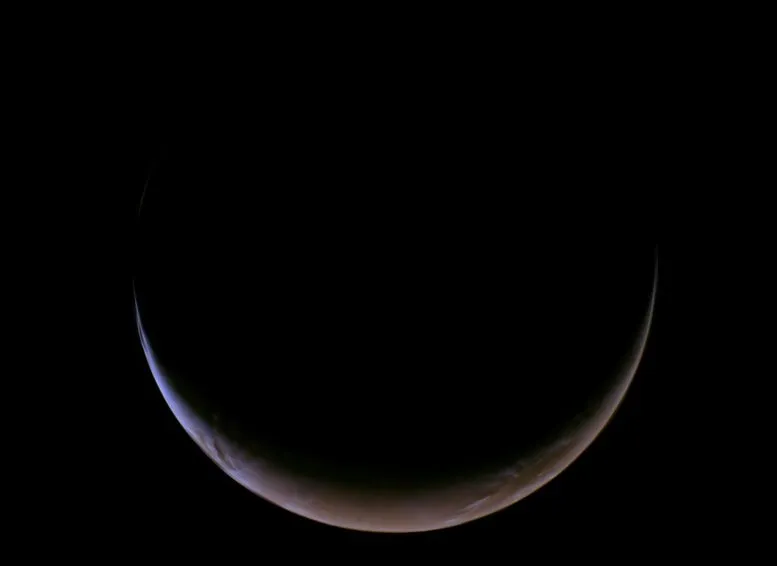
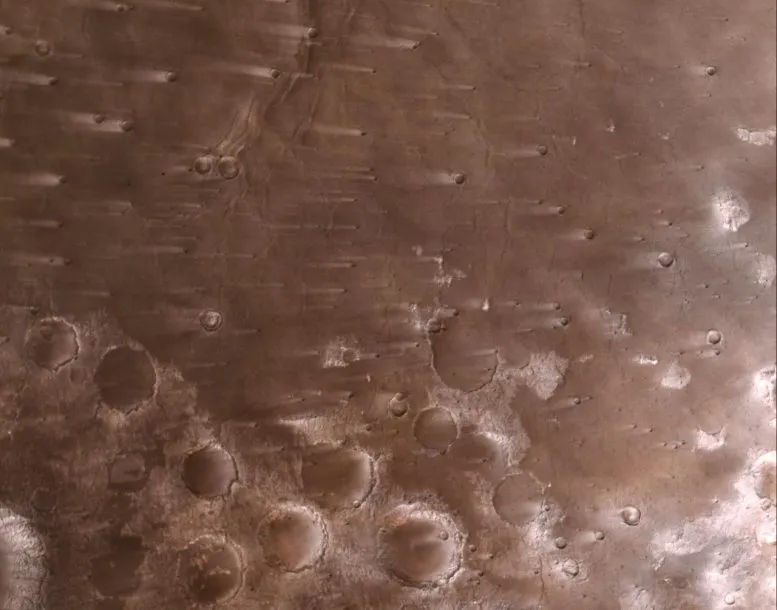
Because Psyche approached Mars from a steep angle, the planet appeared as a thin crescent. Images from the spacecraft's multispectral imager showed this crescent extending further than expected. Researchers believe this was due to sunlight scattering through Mars' dusty atmosphere. As Psyche moved from Mars' night side to its day side, it quickly photographed the surface.
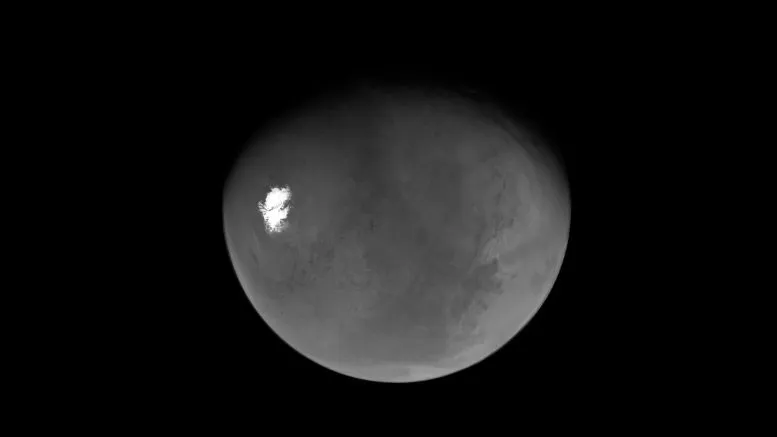
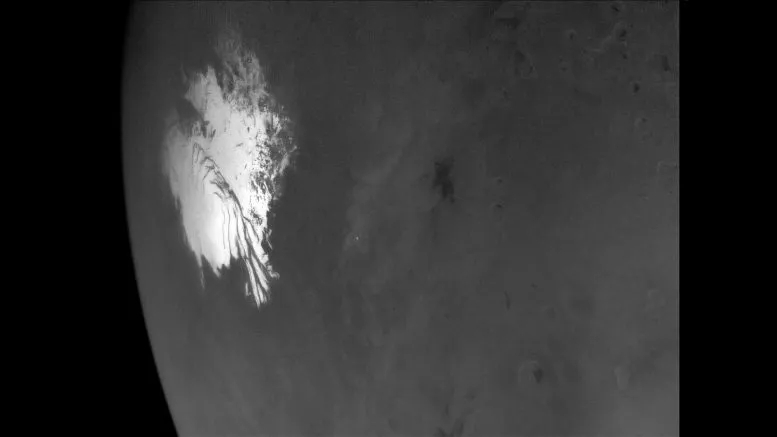
Jim Bell, the Psyche imager instrument lead at Arizona State University (ASU), highlighted the importance of the data. He said thousands of images were captured, offering unique opportunities to calibrate the cameras and test image processing tools for use at the asteroid. Calibration imaging of Mars will continue as the spacecraft moves away.
Other Mars missions, including NASA's Mars Reconnaissance Orbiter and Curiosity rover, also contributed observations to help with calibration.
Journey to a Metal World
Scientists also collected early calibration data from Psyche's other instruments. The magnetometers may have detected Mars' bow shock, where solar wind meets the planet's magnetic field. The gamma-ray and neutron spectrometer team gathered data to compare with existing Mars observations.
With the Mars flyby complete, Psyche will restart its solar electric propulsion system. It will then continue its journey to the asteroid belt, aiming to arrive at asteroid Psyche in August 2029.
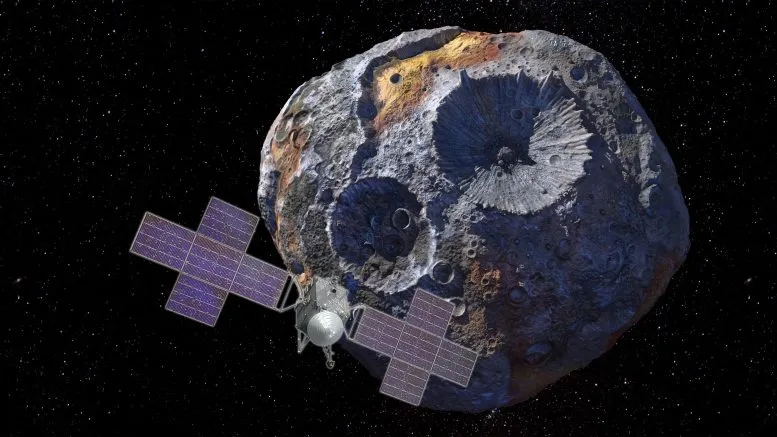
Scientists believe the asteroid Psyche might be the exposed partial core of a planetesimal. These are ancient building blocks that formed planets early in the solar system. Once in orbit, the spacecraft will map the asteroid's surface and collect scientific data. The asteroid is about 173 miles (280 kilometers) wide at its widest point.
If Psyche is indeed the metallic interior of an ancient world, it could offer a rare chance to study material usually hidden deep inside rocky planets like Earth. Lindy Elkins-Tanton, principal investigator for Psyche at the University of California, Berkeley, expressed excitement for the journey ahead.