Turns out, even baby stars are a bit dramatic. NASA’s James Webb Space Telescope just peered through a cosmic dust cloud so thick it would make a sandstorm blush, revealing the FS Tau star system, where brand-new stars are sparking to life. And apparently, they're already quite busy shaping their surroundings.
These aren't just any stars; they're protostars — hot, clumpy, low-mass objects barely one to three million years old. For context, our Sun is a seasoned 4.6 billion years old. These stellar toddlers are still forming from dense clouds of gas and dust, eventually destined to burn hydrogen like proper grown-up stars. Because they're so small, they don't cause too much cosmic fuss, making the FS Tau region a perfect, relatively quiet nursery for astronomers to observe.
Cosmic Outbursts and Accretion Disks
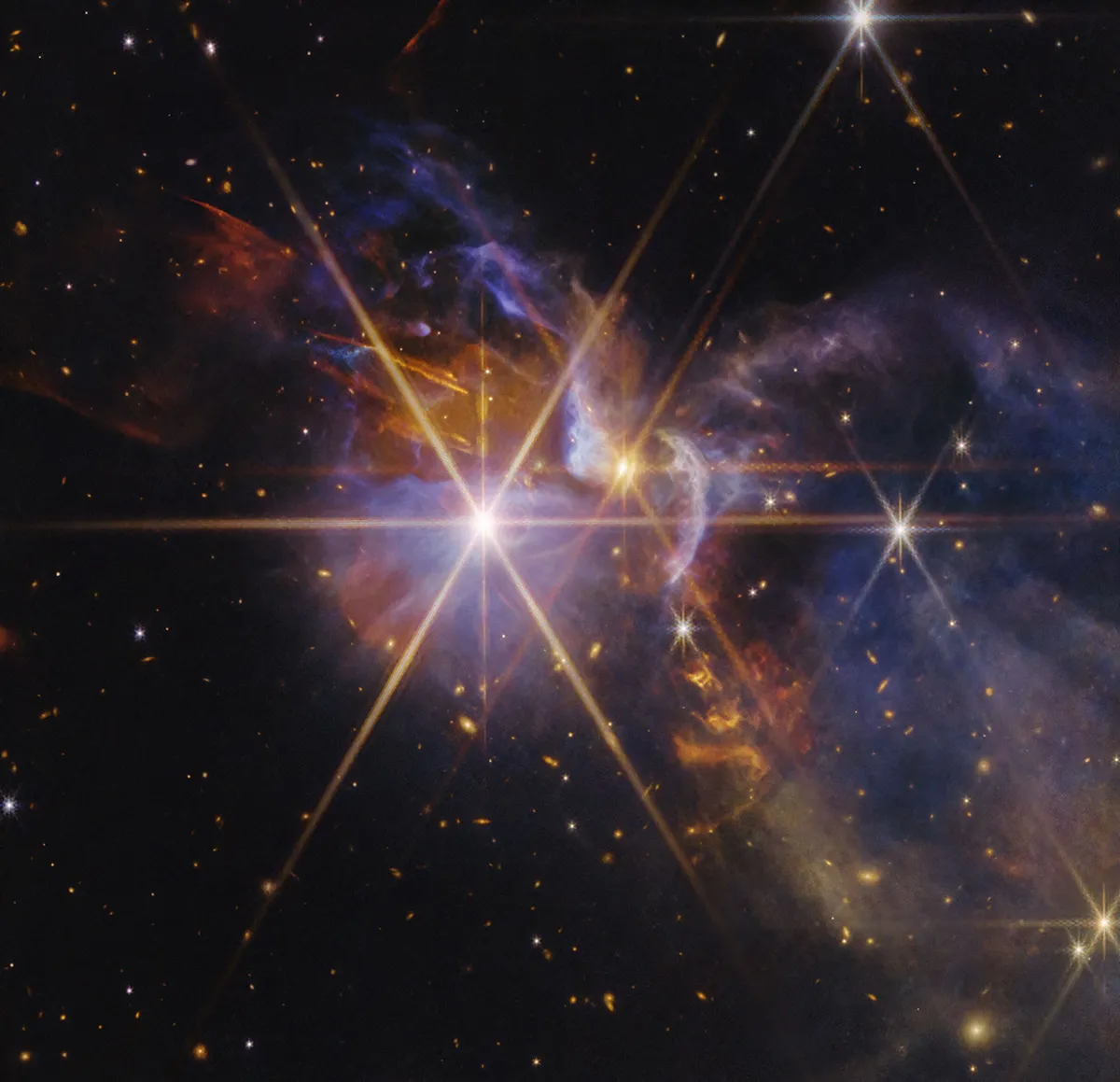
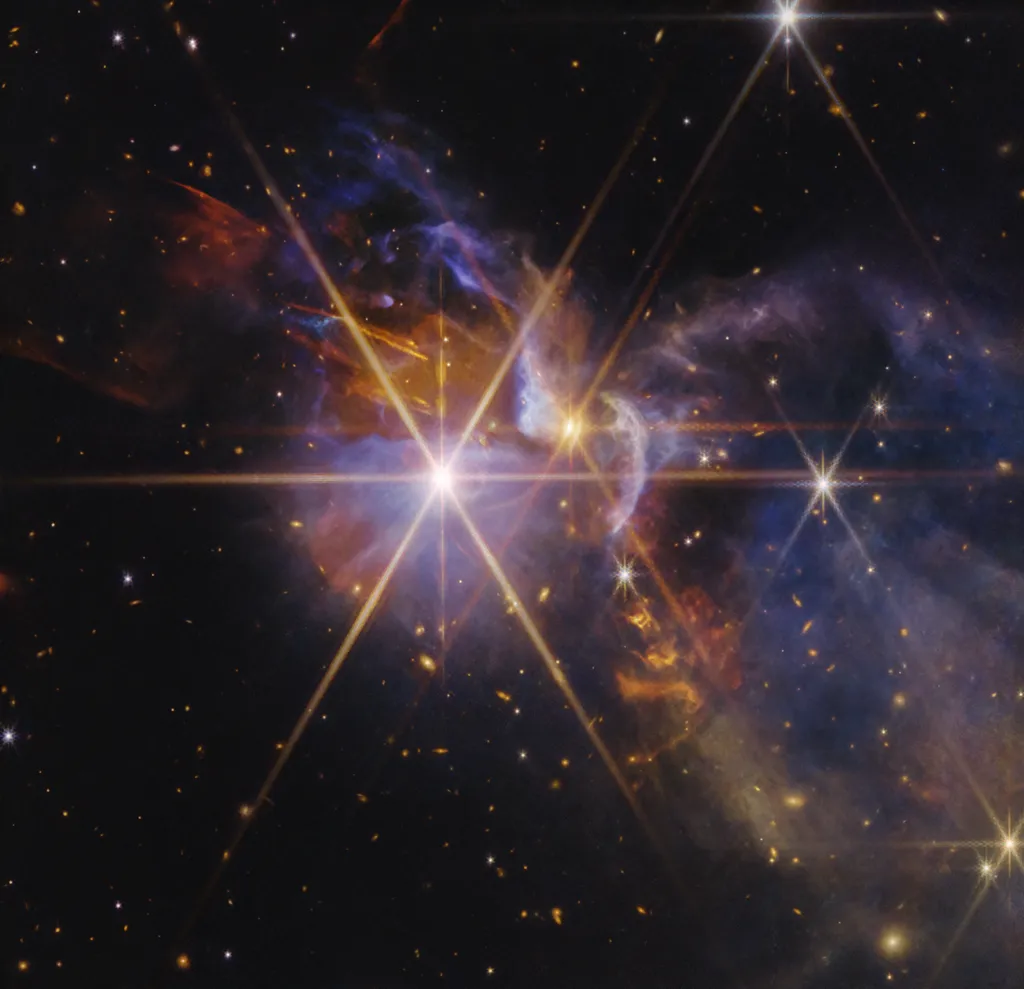
At the heart of the action are FS Tau A, a pair of protostars about half the Sun's mass, and FS Tau B, an orange protostar that’s basically a cosmic firehose. Webb's infrared vision lets us see the bright protostars and a dizzying number of background galaxies, all previously hidden.
We're a new kind of news feed.
Regular news is designed to drain you. We're a non-profit built to restore you. Every story we publish is scored for impact, progress, and hope.
Start Your News DetoxIt’s FS Tau B that's causing all the bright orange and red wisps and wide sheets of gas. As this baby star pulls in dust and gas to grow (via something called an accretion disk, which looks like a dark band cutting across the image), it also inexplicably shoots some of that material right back out. Think of it as a stellar burp, but with superheated matter and magnetic fields. The gaps in these outflows, a brand-new discovery thanks to Webb, suggest that protostars don't just gently sip matter; they gobble it in bursts, ejecting material in different directions before taking a quiet break.
Comparing Webb's view to what the Hubble Space Telescope saw is like upgrading from a grainy flip phone to a 4K display. Hubble showed a blurry, dust-obscured mess. Webb cuts right through the cosmic fog, revealing the intricate ways these protostars are literally sculpting their environment. The light-blue ridges of dust and gas near FS Tau B? Those are likely formed when the protostar's energetic outbursts slammed into and compressed surrounding matter. It's like watching a cosmic potter at work, but with explosions.
The different colors in Webb's image are also telling a story. Bluer light gets scattered by dust, while redder light can punch through. So, those distant galaxies looking extra red? They're behind the thickest dust. The yellow ones have a clearer view. And the few white stars are just chilling in the foreground, probably wondering what all the fuss is about.
The James Webb Space Telescope, a collaboration between NASA, ESA, and CSA, continues to deliver cosmic postcards that are equal parts stunning and mind-bending. It's solving mysteries from our own solar system to the very edges of the universe, one dramatic baby star at a time.