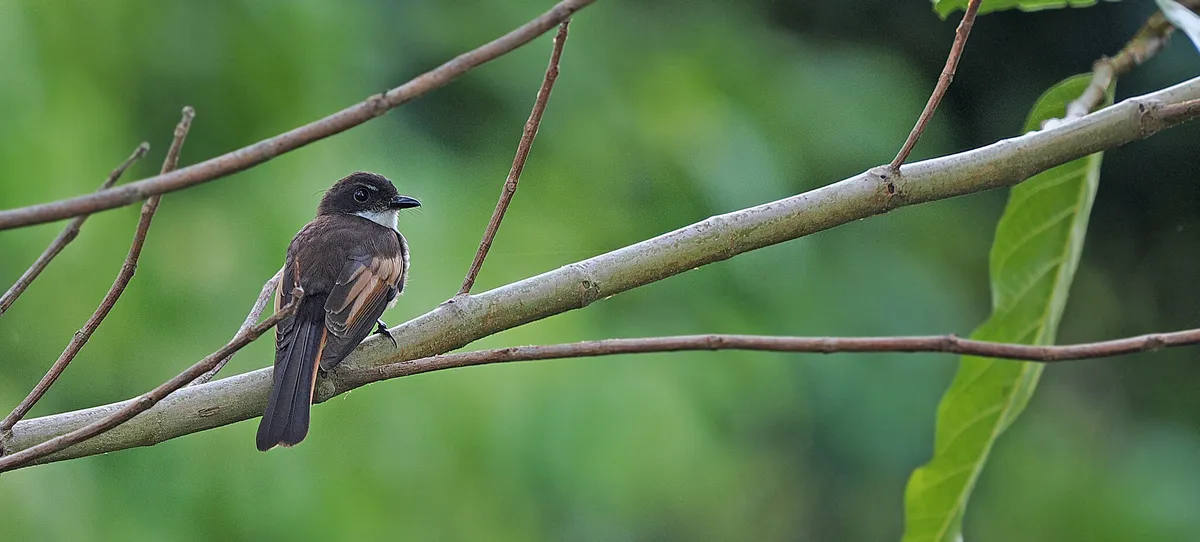
For over a century, scientists were convinced a certain cinnamon-tailed fantail was living its best life on two separate Indonesian islands, Babar and Tanimbar. A cozy 84 miles apart in the Banda Sea, these islands supposedly hosted the same feathered friend. Turns out, everyone was just a little off.
A team led by James A. Eaton and Alex J. Berryman recently dropped a scientific bombshell: the bird on Babar Island is, in fact, an entirely different species. Meet the cheerful fantail (Rhipidura laguceria), because apparently, that’s where we are now. And honestly, who doesn't need more cheerful fantails in their life?

The Great Fantail Unmasking
How does one correct 120 years of ornithological oversight? With a deep dive into history and a whole lot of bird song. The researchers meticulously examined 19 museum specimens, all dutifully labeled as the original cinnamon-tailed fantail, but collected from both Tanimbar and Babar.
We're a new kind of news feed.
Regular news is designed to drain you. We're a non-profit built to restore you. Every story we publish is scored for impact, progress, and hope.
Start Your News DetoxThen came the musical interlude. They recorded the birds' calls on both islands and, in a move that feels both dedicated and slightly unhinged, played these recordings back to wild birds 132 times over several years. Because nothing says 'science' like repeatedly serenading a bird with its own potential doppelgänger's tunes.
Physically, the differences are subtle enough that you'd need a very good pair of binoculars and possibly a magnifying glass. The cheerful fantail has slightly darker upper feathers and a bit less cinnamon on its underside. Think of it as a very understated wardrobe change.

But the songs? Ah, the songs are where the plot thickens. The cheerful fantail, living up to its name, belts out "single whistles that rise in pitch towards the end." The Tanimbar birds, however, prefer a more complex composition, mixing short and long whistles into something "much more rhythmic," with pitches doing a delightful up-and-down dance. It's the difference between a simple, sweet melody and a jazz solo. And after 120 years, someone finally noticed.