Flowering plants, also known as angiosperms, now cover most of Earth. However, many biologists thought these plants only truly thrived after an asteroid hit Earth 66 million years ago. New fossil evidence, dubbed a "botanical Pompeii," shows that flowering plants were already prospering 10 million years earlier.
This discovery comes from a unique collection of plant fossils found in volcanic deposits in New Mexico. These fossils challenge the idea that flowering plants were minor parts of Earth's forests until dinosaurs vanished.
A Forest Frozen in Time
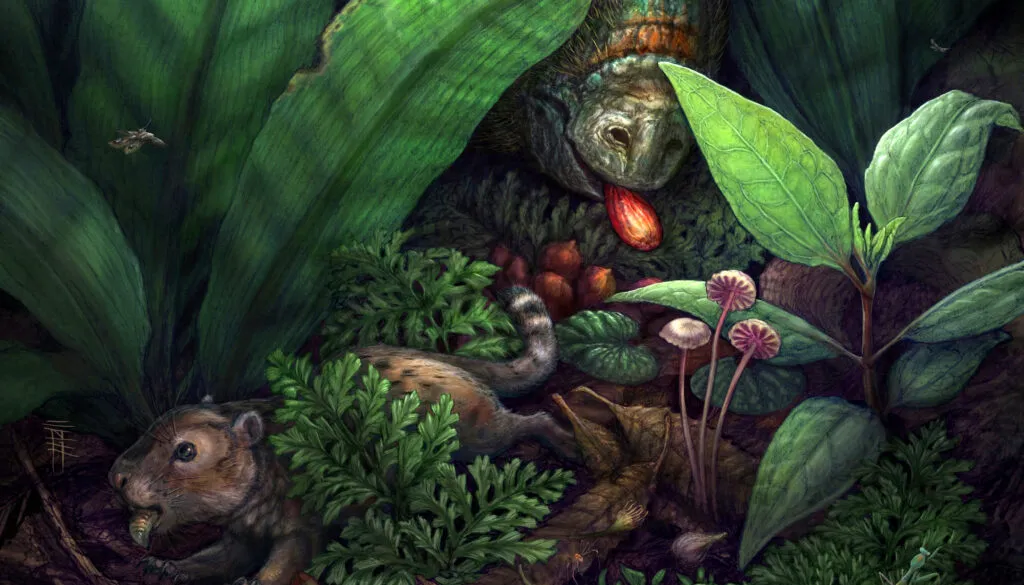
Paleobotanists from UC Berkeley studied large seeds buried under volcanic ash about 74.6 million years ago. This was nearly 10 million years before the asteroid impact that killed the dinosaurs. Their findings reveal a mature, thriving forest dominated by flowering plants. Many of these plants produced relatively large, fleshy fruits or diaspores.
We're a new kind of news feed.
Regular news is designed to drain you. We're a non-profit built to restore you. Every story we publish is scored for impact, progress, and hope.
Start Your News DetoxThis discovery questions the idea that angiosperms took over the planet only after dinosaurs died out. The old theory suggested that the rise of mammals like rodents and bats after the extinction made it beneficial for plants to grow large, fleshy fruits for dispersal. After the extinction, angiosperms did dominate, forming dense forests. Modern fruit- and seed-eating birds and mammals then spread these large diaspores.
Jaemin Lee, the lead author and a UC Berkeley doctoral student, explained that their results show something different. "At least in some hot and humid environments during the Late Cretaceous, well before the extinction boundary by 10 million years, angiosperms were already investing more resources into individual diaspores and forming dense forests," Lee said.
Flowering plants first appeared about 135 million years ago. They were initially small and produced tiny seeds dispersed by wind or without help. The common story was that by the Late Cretaceous, they had diversified in size, leaves, and flowers, but their seed dispersal methods hadn't changed much.
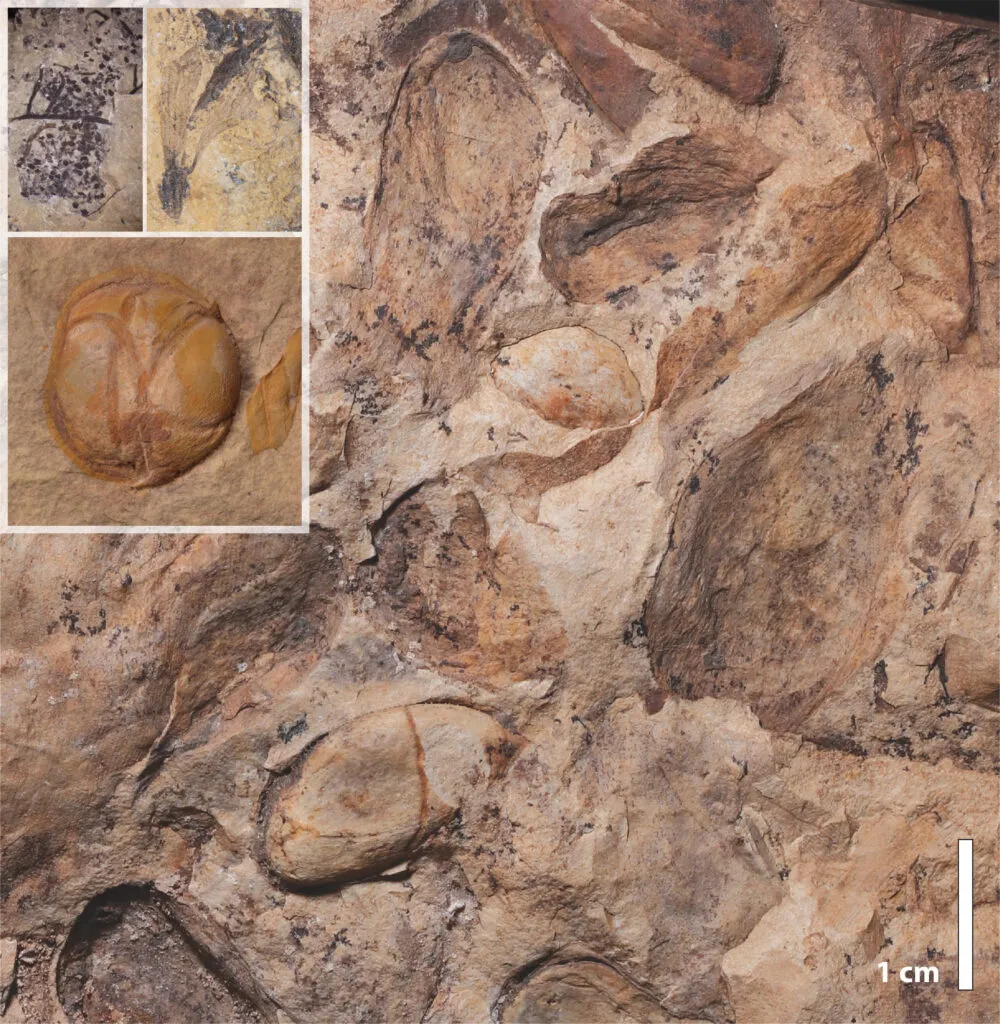
This new evidence contradicts that idea. The ancient fossilized forest included large-trunked flowering trees, like laurel relatives and palms. It also had a wide variety of other flowering plants growing alongside older ferns and redwoods. In other Cretaceous plant sites, angiosperm seeds were typically tiny, similar to poppy seeds. But in this fossil forest, the average seed size was like a large blueberry, over a hundred times bigger.
Lee noted that today's large fruits are the result of centuries of breeding. Wild watermelons, for example, were once only 2 inches wide.
A Botanical Pompeii
Cindy Looy, a Berkeley professor of integrative biology, highlighted the uniqueness of the New Mexico site. It captured an ancient environment at a single moment in time when ashfall buried an inland forest. Most fossil plant sites contain material that settled in lakes, rivers, or coastal areas, which often mix material from different times and places.
"This ash came down within days, because ash doesn’t stay in the air very long. It’s really a snapshot in time," Looy said. "At the base of the solidified ash layer you can still find ground cover plants. And then a little bit higher up you just see leaves in all kinds of orientations because they were brought down by the ash."
Lee described it as a "botanical Pompeii." The ashfall preserved everything in place, allowing researchers to reconstruct the forest structure. The diaspores, leaves, and flowers were all preserved together, having been brought down from the canopy by the ash.
The team, including Looy, Lee, and former doctoral student Dori Contreras, published their findings in Science. Contreras is now director of paleontology at the Perot Museum of Nature and Science.
The Significance of Diaspores
Flowering plants now dominate Earth's plant life and provide all our food. Biologists call fruits, grains, and nuts "diaspores." These are the seeds and structures that help them spread. Their size gives clues about a plant's ecological strategies. Tiny poppy seeds, for instance, are dispersed by wind or without help.
Plants that produce large, fleshy fruits, like peaches, invest many resources per seed. They often need large animals, such as humans, to spread them.
Today, angiosperm diaspore sizes vary greatly. They range from tiny, dust-like orchid seeds to the giant double coconut, which can weigh up to 55 pounds. The more a parent plant invests, the better the chance of seedling survival and dispersal.
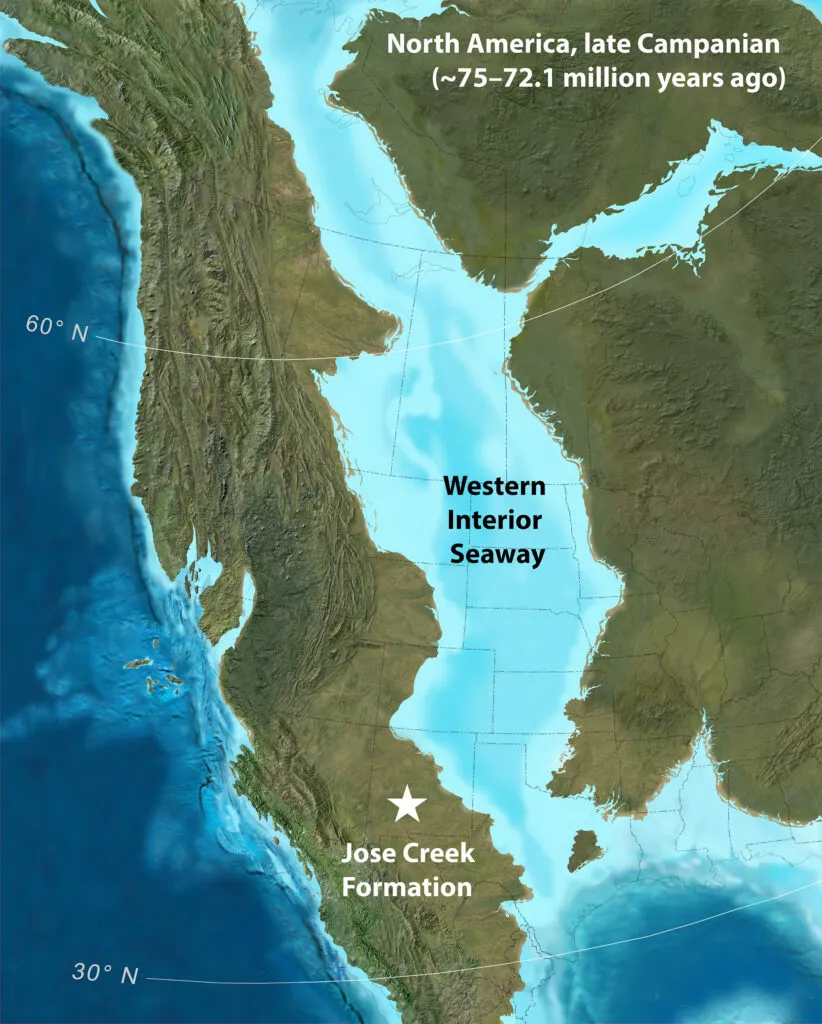
The solidified ash deposit, called Dori’s tuff, is about three-quarters of a mile long. It is part of the Jose Creek Formation in New Mexico, near Truth or Consequences. When the ash fell after a volcanic eruption, the site was about 120 miles west of the Western Interior Seaway. This seaway once divided eastern and western North America.
Lee noted that the forest was in the mid-latitudes at the time. However, Earth was much warmer then, making the site resemble a tropical forest.
While dinosaurs, including a large Tyrannosaurus species, have been found in the area, Dori’s tuff is known for its abundant fossilized plants. Contreras excavated thousands of fossilized leaves, fruits, and flowers during her doctoral studies. She is now analyzing the leaves, many from extinct plants.
Contreras explained that the rock layer containing the fossils was exposed over a long distance. This allowed them to study the plant community across a large area, not just one spot. "In essence, we took a 1.2 kilometer walk through a buried forest, dug up the plants along the way and pieced together what lived where," she said.
The seeds and fruits collected helped Lee study animal-plant interactions in the Cretaceous period. Co-author Garland Upchurch of the University of Colorado Museum of Natural History is analyzing the wood fossils, which include some of the largest known Cretaceous angiosperm trunks.
Earlier fossil sites from the Late Cretaceous led paleobotanists to believe that many angiosperms were still low-growing and produced small seeds. One theory suggested that dinosaur disturbances, like trampling, prevented angiosperms from forming dense forests and suppressed the evolution of mammals that eat and disperse diaspores.
However, Lee and his team found large fruits from flowering trees in the tuff. Many of these trees formed the canopy, based on fossilized trunks. They grew alongside mature conifers, including redwoods.
"This is the first record of pretty sizable fruits and seeds at the assemblage level—with a total of nearly 80 distinct types including several forms reaching about an inch in length — in the Cretaceous," Lee said. "This suggests that plant-animal interactions and the formation of angiosperm-dominated dense forests likely evolved before the end-Cretaceous extinction and subsequent ecological restructuring."
Looy added that animals eating large fleshy diaspores during that time isn't surprising. Other seed plants, like ginkgos, had been producing them for a long time. "This fossil flora suggests that these animals were already moving over to eating bigger seeds produced by angiosperms 75 million years ago. This is a surprise, because people thought they didn’t exist yet. And here they are," Looy noted.
Lee said they still don't know what caused the initial increase in angiosperm diaspore size. It was likely due to many ecological factors, and different groups of angiosperms might have developed larger diaspores for different reasons. "But at least now we know that it wasn’t the end-Cretaceous extinction and the following emergence of more modern groups of frugivores that led to the diversification of angiosperm reproductive strategies," Lee concluded.
This diversification coincided with the broader Late Cretaceous ecological radiation of flowering plants. This new perspective sheds light on the evolutionary ecology of angiosperms, which make up 90% of today's land plants, and their interactions with animals before the age of mammals.
Lee emphasized that this forest is the earliest known angiosperm-dominated forest with much larger diaspores. It also has one of the most diverse Cretaceous leaf floras ever described. The immediate preservation of everything allowed for a detailed reconstruction of the landscape. It reveals more about the complex ecological interactions of groups that no longer exist.
James Saulsbury of the University of Kansas, a former Berkeley undergraduate, also co-authored the paper. The National Science Foundation and the UC Museum of Paleontology funded the research.
Deep Dive & References
Diversification of angiosperm reproductive strategies predated the end-Cretaceous extinction - Science, 2026