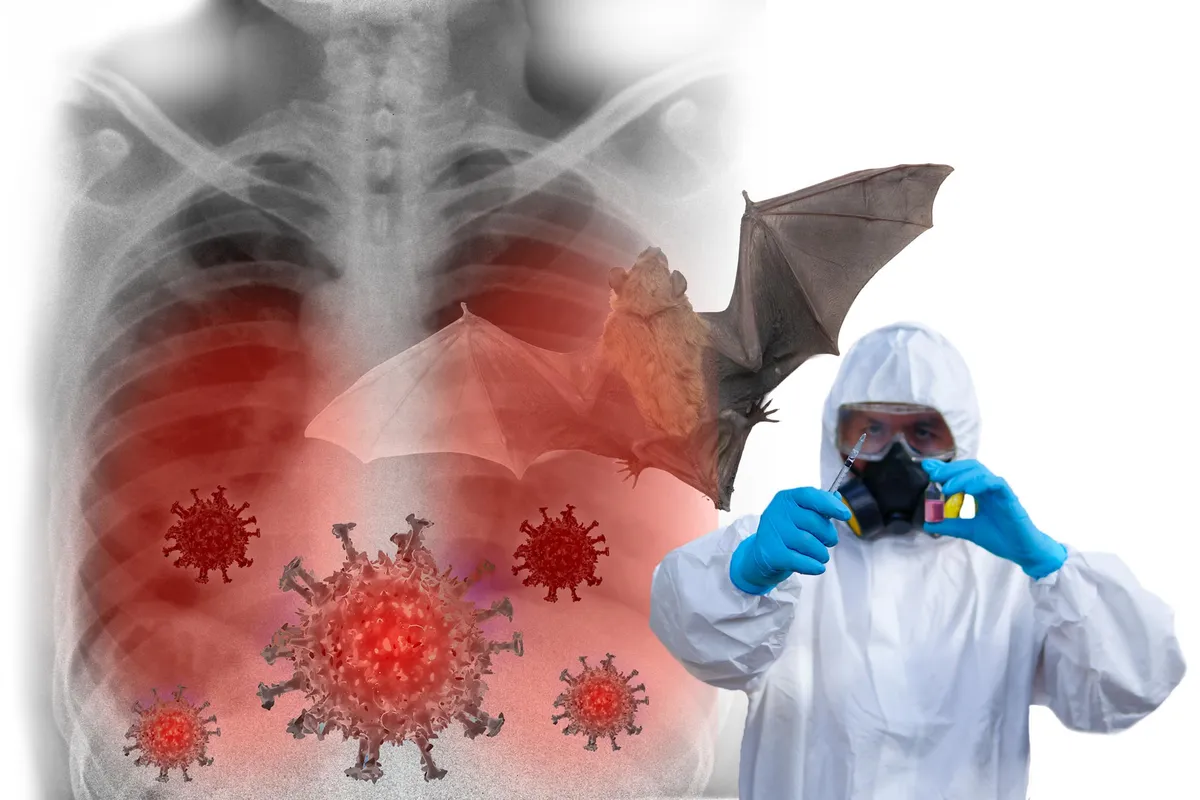
Turns out, the difference between a bat virus minding its own business and one that shuts down the global economy might come down to a single, almost imperceptible tweak. Scientists have just pinpointed a tiny genetic switch that could explain how some viruses make the leap from winged mammals to us.
Most infectious diseases, the ones that really get around, start with a virus deciding it prefers humans to, say, a pangolin. We're talking about the big ones, like COVID-19, which likely began its world tour as a bat coronavirus.
Now, a new study in Cell Host & Microbe reveals that just one amino acid change in a coronavirus protein can drastically alter how the virus interacts with the immune systems of both bats and humans. Which, if you think about it, is both impressive and slightly terrifying.
We're a new kind of news feed.
Regular news is designed to drain you. We're a non-profit built to restore you. Every story we publish is scored for impact, progress, and hope.
Start Your News DetoxThe Butterfly Effect of One Tiny Change
To figure out why some coronaviruses cause a global panic while others just hang out in a cave, researchers put SARS-CoV-2 (the human-bad-news one) side-by-side with RaTG13 (its bat-only cousin). They even grew lung cells from a greater horseshoe bat, because apparently that's where we are now.
The star of this microscopic drama? A viral protein called OrfB9. SARS-CoV-2's version and RaTG13's version differ by just one out of a hundred amino acids. Yet, this minuscule variation had vastly different outcomes.
In human lung cells, the SARS-CoV-2 OrfB9 effectively hit the mute button on a critical immune warning system. This allowed the virus to replicate with glee. In bat lung cells, however, RaTG13's OrfB9 did the opposite, activating an immune protein that kept the virus nicely in check.
This discovery is a stark reminder that the line between a harmless animal virus and a human pathogen can be remarkably thin. It's like flipping a single pixel on a massive image and suddenly it's a completely different picture.
According to Nevan J. Krogan, PhD, a senior author of the study, mapping these protein interactions across different viruses and species could give us an early warning system. Imagine being able to spot the molecular equivalent of a virus packing its bags for a human vacation before it gets on the plane.
By understanding these subtle molecular changes, scientists hope to get better at predicting which animal viruses are most likely to make the jump, ideally before they decide to introduce themselves to the rest of humanity.