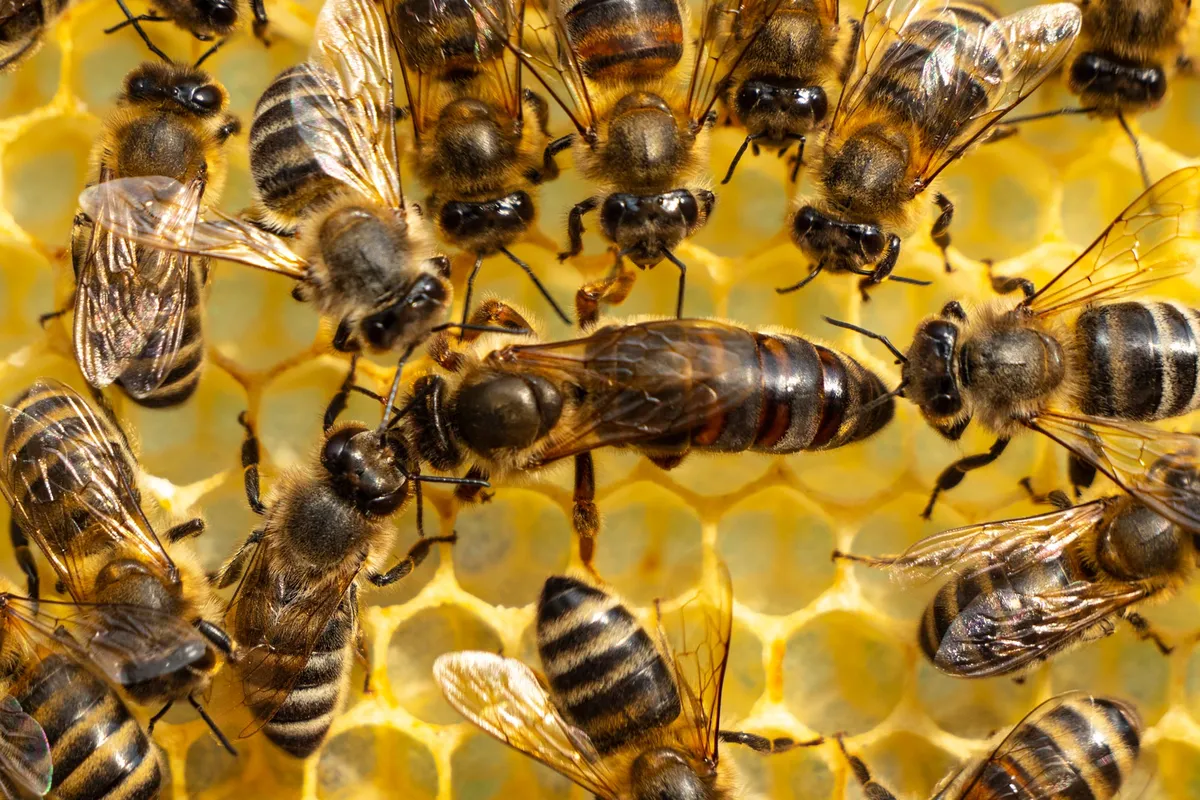
For years, scientists thought royal jelly was the only thing that made a queen honeybee. But new research shows it's much more complex. The entire colony works together to create a special nursery for their future queen.
Royal Nurseries and Special Builders
Scientists found that young worker bees build unique "royal cribs" for queen larvae. These chambers are made with special wax and kept warmer than other cells. This careful environment helps healthy queens develop.
The study, published in Nature, also identified a new group of young worker bees called "queen cell builders." These bees seem specially made to build and care for these royal chambers.
We're a new kind of news feed.
Regular news is designed to drain you. We're a non-profit built to restore you. Every story we publish is scored for impact, progress, and hope.
Start Your News DetoxBoris Baer, an entomologist at the University of California, Riverside, explained that the old idea was too simple. He said there's a whole complex system behind making a queen.
Queen bees and worker bees start as almost identical eggs. But queens grow bigger, develop faster, live much longer, and are the only bees that lay eggs. For a long time, royal jelly was thought to be the main reason for these differences. However, this new study suggests food alone isn't enough.
Custom Wax and Warmth
Researchers used thermal imaging, behavioral tracking, and chemical analysis to understand the process. They found big differences between queen cells and the hexagonal cells where worker bees grow.
Queen cells are peanut-shaped and made from wax that is less dense and more flexible. This special wax holds heat and moisture better, which is perfect for developing queens. It also contains different fatty acids and chemical signals.
To test if the nursery itself mattered, the team raised queen larvae in chambers made from either queen wax or regular worker wax. Even with the same diet, larvae in worker wax were more likely to die and grew into smaller queens. This shows the environment is as important as the food.
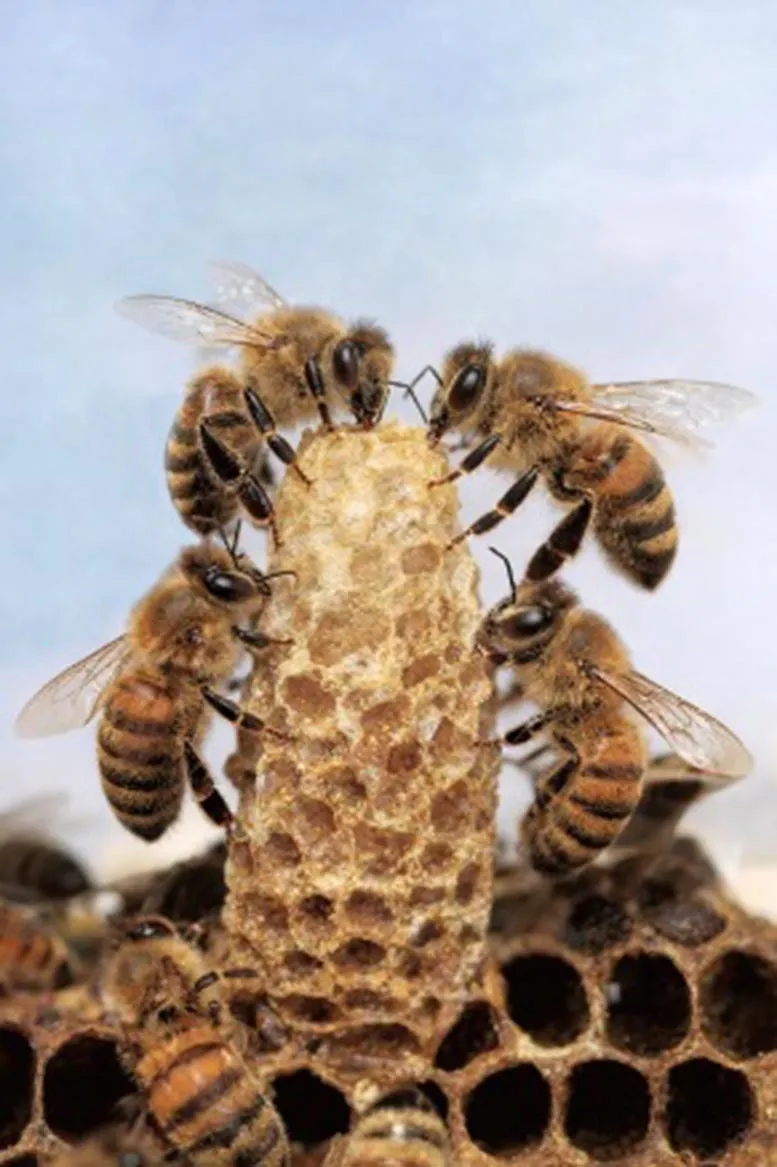
The "queen cell builders" are usually younger workers. They keep their bodies unusually warm while caring for future queens. This extra warmth helps queens develop faster. A queen bee becomes an adult in about 16 days, while a worker bee takes about 21 days. This allows the colony to replace its queen quickly if needed.
These bees don't just reuse old wax. They actively collect, change, and enrich materials specifically for queen chambers. They even change how their own bodies work to produce this special wax. Researchers tracked wax movement in the hive, showing that workers deliberately gather and transform wax for these royal chambers.
A Colony's Coordinated Effort
Baer compared the process to a royal court. Making a queen needs an organized effort from many bees in the colony. He noted that if they don't get it right, the colony can't reproduce.
This behavior was seen in both Asian and European honeybee species. This suggests that this queen-making strategy developed a long time ago and is fundamental to honeybees.
The project involved experts in behavior, physiology, materials science, chemistry, and genomics. Former UCR postdoctoral researchers Yu Fang and Yahya Al Naggar led the work.
Beyond Honeybees
These findings might change how scientists think about development in general. They highlight how much surroundings, social interactions, and built environments can shape biology.
The research shows that a queen emerges from the coordinated work of an entire colony. The colony carefully creates the perfect conditions for her development.
Baer emphasized the sophistication within insect societies. He said honeybee colonies are not just groups of individuals. They act as integrated biological systems that can engineer their own environments.
Deep Dive & References
Queen cell architecture shapes honey bee queen development - Nature, 2026