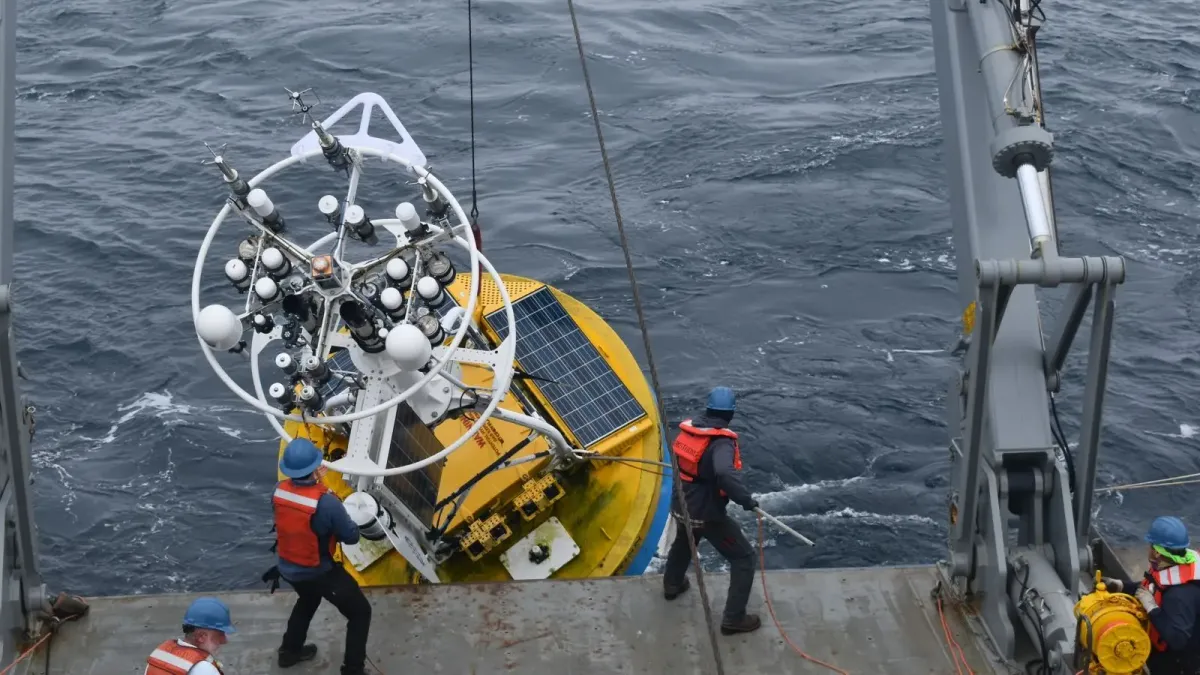
For a moment there, it looked like hundreds of vital ocean sensors were headed for the great scientific landfill in the sky. These crucial instruments, bobbing off the Pacific Northwest, North Carolina, and near Greenland, were slated for removal by the Trump administration as part of a rather aggressive budget diet for climate research.
Then, a minor miracle: a bipartisan group of senators — yes, really — stepped in, pushed back, and passed a measure to block the agency. The National Science Foundation (NSF) not only halted the dismantling but promised to put back any equipment it had already yanked. Because apparently, that’s where we are now: saving scientific instruments with legislative heroics.

A Bipartisan Rescue Mission for the Deep
Oregon Democrat Senator Jeff Merkley, who co-sponsored the measure with Alaska Republican Senator Lisa Murkowski, didn't mince words, calling the attempt to dismantle the Ocean Observatories Initiative (OOI) “supreme stupidity.” Which, if you think about it, is both accurate and wonderfully succinct. He vowed to keep fighting to ensure scientists, fishermen, and coastal communities still get their hands on OOI's critical data.
We're a new kind of news feed.
Regular news is designed to drain you. We're a non-profit built to restore you. Every story we publish is scored for impact, progress, and hope.
Start Your News DetoxThis isn't OOI's first rodeo with the chopping block. Lawmakers have quietly rescued it twice before from proposed 2025 and 2026 funding cuts. The program, which kicked off in 2016, is now set for at least another decade of data collection. A small victory, but one worth noting in the ongoing saga of science funding.
The Ocean's Other Orphans
But before we break out the champagne, here's the kicker: OOI isn't the only U.S.-led effort watching the tide go out on its funding. Researchers are warning that other cutting-edge ocean and climate programs are staring down a funding cliff with no safety net.
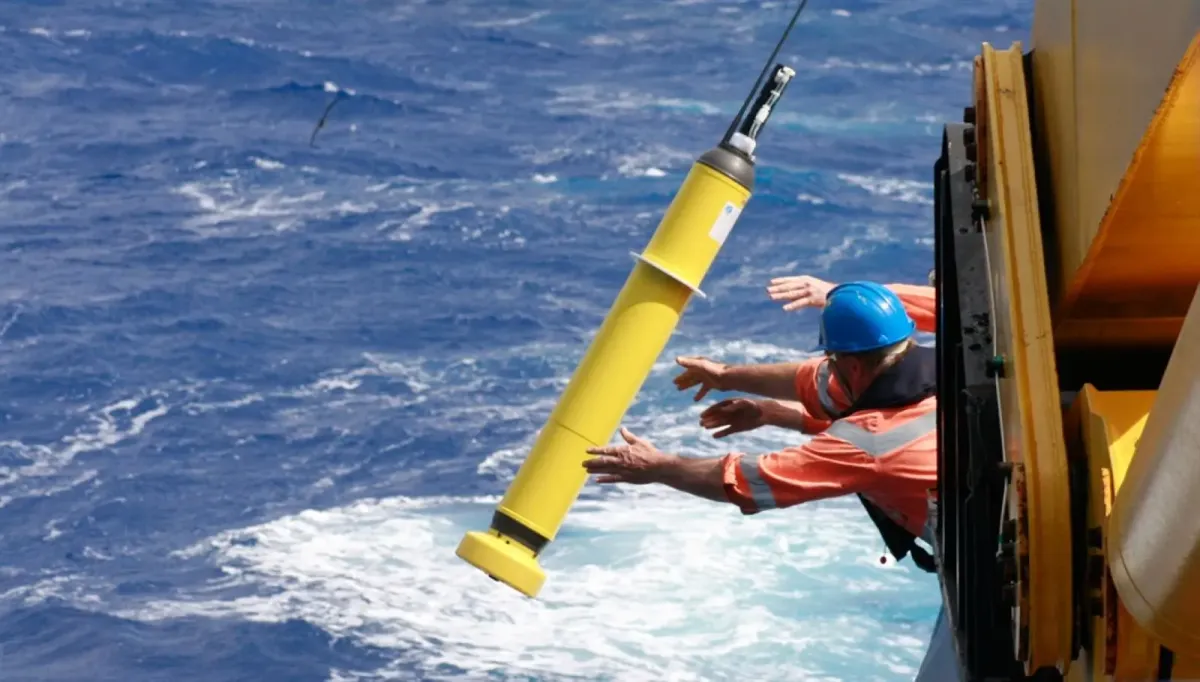
Lynne Talley, a professor at the Scripps Institution of Oceanography, helps run the international Argo program, which has deployed thousands of underwater floats to measure temperature, salinity, and heat. Her prognosis? "We are seriously looking at the possibility of going dark." Which, for a program that's been tracking ocean changes for over 25 years and provides data scientists rely on, is less than ideal.
The U.S. has deployed about half of Argo's floats, but stagnant funding to the National Oceanic and Atmospheric Administration (NOAA) means deployment is slowing. And the network's biogeochemical sensors, which measure things like oxygen and acidity to understand the ocean's carbon cycle, are expected to run out of funding by year-end. No plan for continuation. Let that sink in.
The Slowing Heart of the Atlantic
Then there's the Atlantic Meridional Overturning Circulation (AMOC) — a massive ocean current that essentially keeps Europe from freezing solid like Quebec, despite similar latitudes. Scientists are worried climate change could slow or even collapse this system, leading to drastic weather shifts and faster sea level rise on North America's east coast. It's happened before, 12,000 years ago, at the end of the last Ice Age. Not exactly a comforting precedent.
Two U.S.-led initiatives, OSNAP and RAPID, are crucial for understanding AMOC. They've peppered the North Atlantic with instruments, offering the best chance to track this vital current. But their federal grants are set to expire after next year.
Susan Lozier, an oceanographer at Georgia Tech and co-lead of OSNAP, sums it up perfectly: "We’re on pins and needles, waiting for what happens after that." A proposal for more funding has been with the NSF for over a year, with no definitive response. Because nothing says "critical research" like a year of bureaucratic limbo.
While the OOI's reprieve is heartening, the uncertain future for programs like Argo and AMOC means we can't exactly declare victory. As oceanographer Jaime Palter wisely noted, "Destroying those capabilities can happen swiftly. Rebuilding would be the work of a generation." And frankly, we don't have a generation to spare.