Remember Schrödinger's cat, the one that's famously both alive and dead until you peek inside the box? Well, physicists at the University of Oxford have just cooked up a new version of that quantum paradox. Only this time, the cat's components are already so weird, they make the original look positively quaint.
Think of it as taking something that's already incredibly nonclassical and then superimposing that into even more states. Because apparently, that's where we are now. This isn't just a mind-bending thought experiment; it's a leap forward that could lead to quantum computers far more powerful than current designs, and even hyper-sensitive new sensors.
Building a Better Quantum Paradox
Quantum mechanics is all about systems existing in multiple states simultaneously. For a standard qubit, that means being both a '0' and a '1' at the same time. But quantum systems can get way more complicated. Enter the quantum harmonic oscillator — think of it as a tiny, vibrating energy system that can hold many different energy levels, not just two.
We're a new kind of news feed.
Regular news is designed to drain you. We're a non-profit built to restore you. Every story we publish is scored for impact, progress, and hope.
Start Your News DetoxTraditionally, a "cat state" for one of these oscillators involves a superposition of two wave packets moving in opposite directions. These packets are still pretty close to what we'd call classical motion. But the Oxford team decided to go full quantum weirdo. They built their cat-like states from components that are already highly nonclassical. These are called "squeezed-state superpositions," where quantum uncertainty itself is distributed in an entirely new way across the state.
To pull this off, they used a single trapped ion. These ions are fantastic because they combine two quantum systems: their internal states act like qubits, and their motion acts like a quantum harmonic oscillator. It's like getting two quantum toys in one tiny package.
They carefully linked the ion's internal state with several possible motion states, then measured the internal state mid-process. This nudged the ion's motion into a chosen superposition of these new, nonclassical components. Lead author Dr. Sebastian Saner noted this method allowed them to sculpt the quantum superposition in almost any way imaginable. Which, if you think about it, is both impressive and slightly terrifying.
Proving the Quantum Weirdness
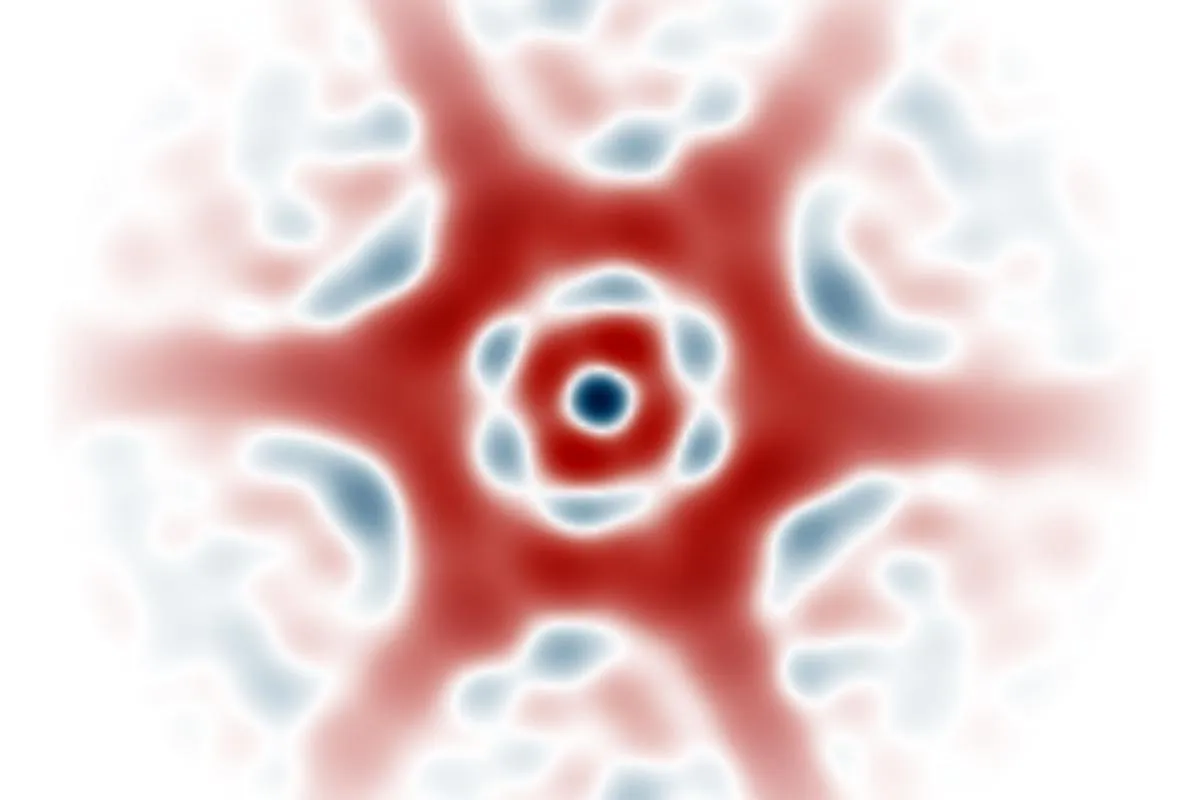
The team's control was so precise, they could tweak the size, direction, and spacing of these components, creating a whole menagerie of unusual motion superpositions. To prove they hadn't just made a fancy light show, they rebuilt the quantum states and measured them. What they saw were interference patterns and something called "Wigner negativity" — both definitive proof that classical physics had officially left the building.
Their measurements confirmed: they had successfully created true quantum superpositions from nonclassical motion states. The next step is working with theorists to better measure just how quantum these new states really are. Dr. Raghavendra Srinivas, who oversaw the work, mentioned that colleagues were genuinely impressed. He suspects they've only just scratched the surface of what's possible, both for practical applications and for understanding the fundamental rules of the universe. This new approach offers a fresh path for quantum technologies, especially those that rely on quantum oscillators. Imagine quantum computers that are more resistant to errors, or simpler, stronger error-correction methods. It's a fascinating new frontier for exploring that fuzzy line between what's classical and what's just plain quantum.