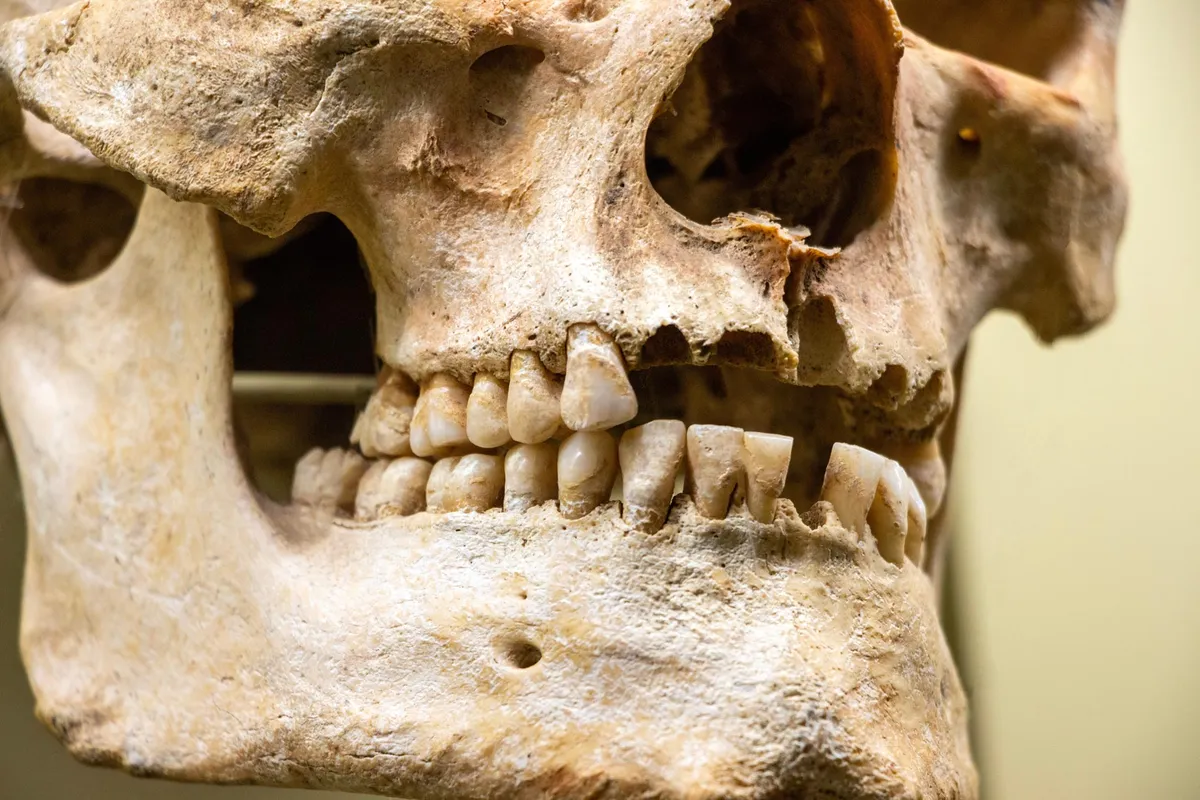
Imagine the early 1800s: no Netflix, no TikTok, and definitely no Invisalign. If you were wealthy enough to worry about your smile, your options were... creative. Case in point: a recently discovered 19th-century dental prosthetic from Porto, Portugal, which is basically the historical equivalent of a bespoke grill for the Gilded Age elite.
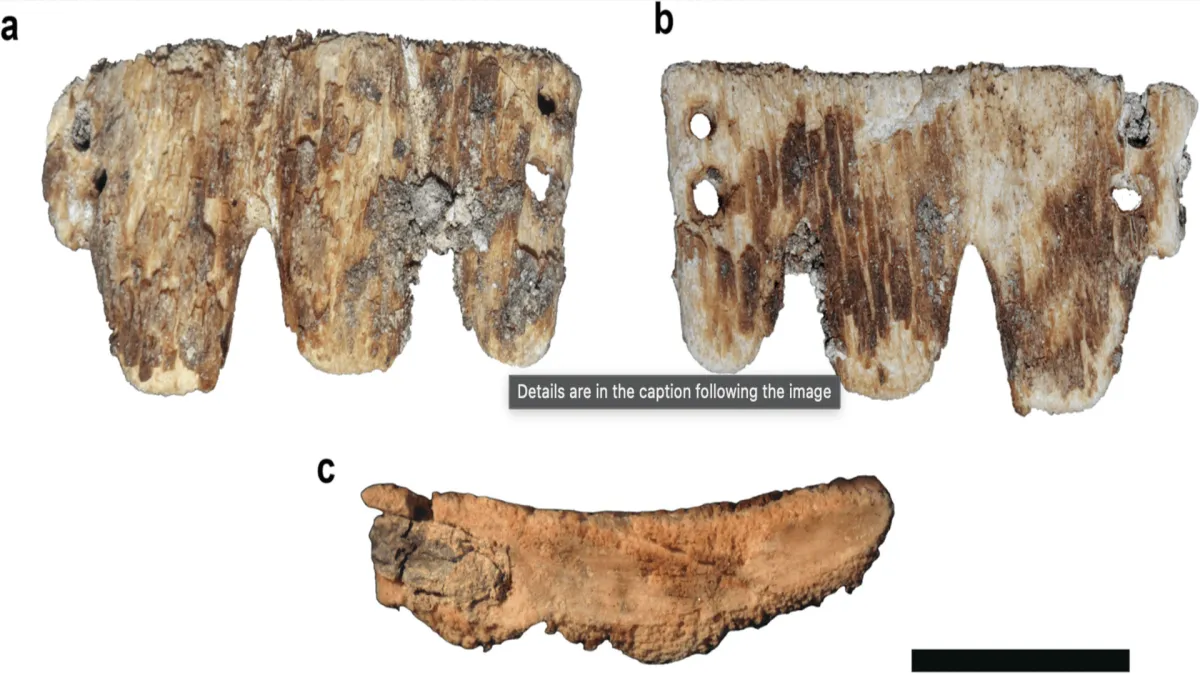
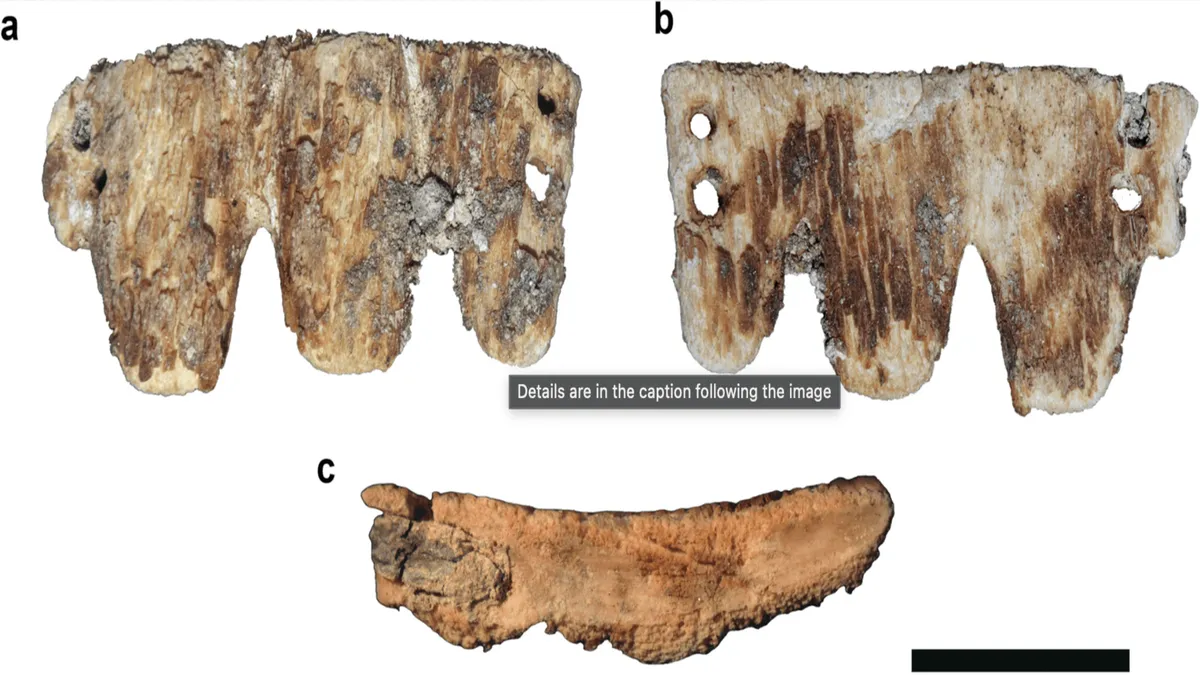
This isn't just any old tooth replacement; it's the first fixed bone dental bridge ever found in Portugal. It measures a petite 24 millimeters long, 6 millimeters wide, and 12 millimeters high. Carved into three U-shaped teeth, it sports holes on each end, suggesting it was meticulously tied into place. And because apparently, dental fashion was a thing, it even had a tiny, lead-based cube attached to one corner. Very subtle.
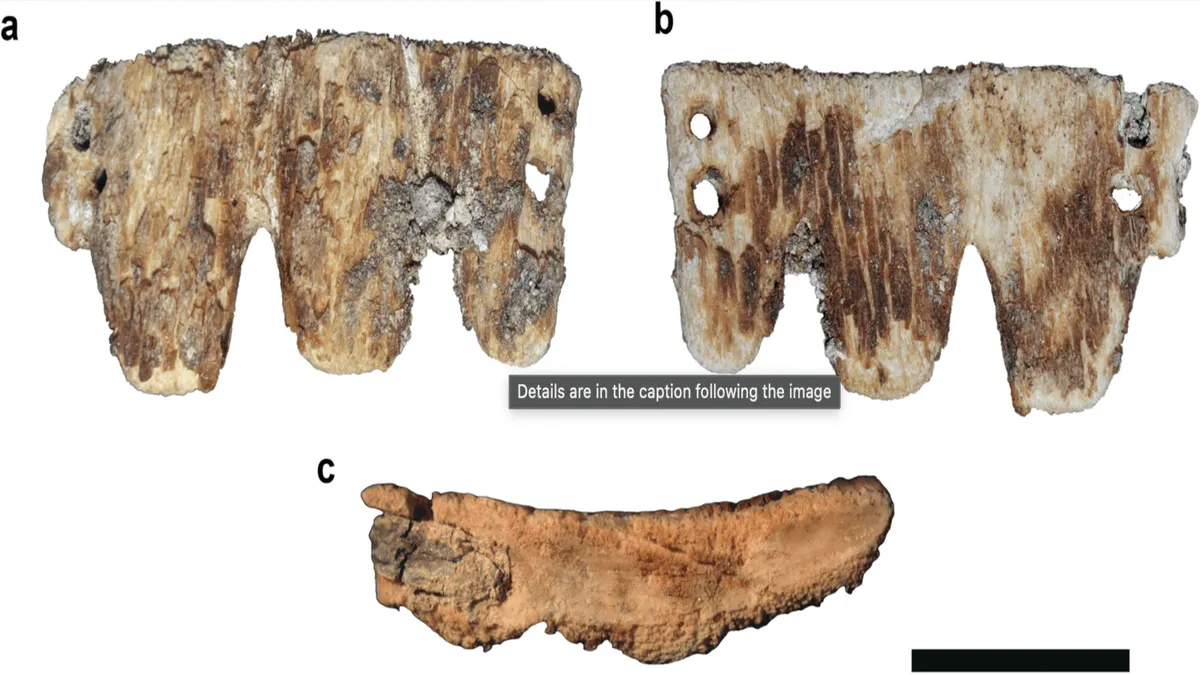
Researchers, using techniques so advanced they didn't even touch the thing, deduced that this bone bridge likely belonged to a young adult woman buried in the early 1800s. She clearly had some serious tooth loss in her upper jaw, and her solution was a custom-made piece of Bovidae bone. That's right, cattle or bison. Or, given the trade routes of the time, perhaps even an African antelope. Because nothing says "I'm rich" like a bit of exotic animal bone in your mouth.
We're a new kind of news feed.
Regular news is designed to drain you. We're a non-profit built to restore you. Every story we publish is scored for impact, progress, and hope.
Start Your News DetoxA Smile Worth Its Weight in Antelope
This isn't just about vanity, though let's be real, a good chunk of it probably was. Experts believe the bridge, which would have sat over the lower right incisors and canine teeth, helped with chewing and even improved speech. But mostly? It was there to hide those pesky gaps and damage in the front teeth. A historical cosmetic procedure, if you will.
What makes this find particularly juicy is its rarity. While other antique dental devices exist – a wire ligature from the late 1400s, an ivory bridge from the 1500s – this Porto bridge represents a more advanced, fixed version that only started appearing in the 1800s. And the cost? Astronomical. This wasn't a trip to the local dentist; this was a high-status investment in looking presentable.
So, next time you complain about the price of your dental work, spare a thought for the wealthy folks of 19th-century Portugal. They were literally putting animal bone in their mouths to keep up appearances. And probably paying a small fortune for the privilege. Suddenly, that root canal doesn't seem so bad.