Turns out, one of Australia's most beloved (and endangered) amphibians, the green and golden bell frog, has been holding out on us. For years, it's been quietly sporting a dazzling, iridescent secret on its inner thighs that only now, researchers are truly appreciating.
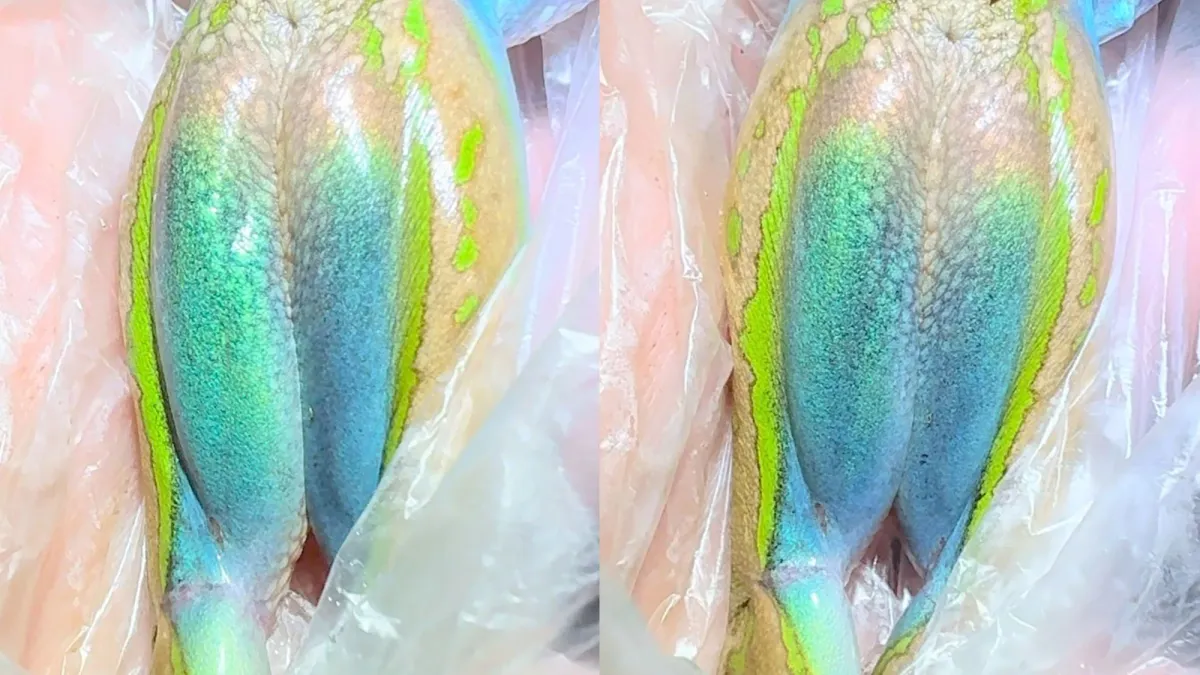
Imagine looking at a frog's leg, seeing blue, then your friend next to you sees green. That's the magic trick this little amphibian pulls off. Scientists at the University of Newcastle recently confirmed that the frog's normally hidden blue skin can actually shift to green depending on your viewing angle or the frog's movement. Which, if you think about it, is both impressive and slightly terrifying if you're a bug trying to get a clear visual.
The Frog's Very Own Disco Ball
We're talking about iridescence, the same optical sorcery that makes a butterfly's wings shimmer or a hummingbird's throat flash. It's rare in frogs, making this discovery a big deal. Dr. John Gould, a conservation biologist on the team, put it best: two people looking at the exact same spot could see different colors. Let that sink in for a moment.
We're a new kind of news feed.
Regular news is designed to drain you. We're a non-profit built to restore you. Every story we publish is scored for impact, progress, and hope.
Start Your News DetoxThis isn't just some trick of the light. The researchers snapped photos that definitively showed the color transformation from blue to green. The real kicker? This vibrant, shifting patch is usually tucked away, only flashing into view when the frog stretches, jumps, or makes a quick getaway.
A Flashy Escape Plan
Why bother with such a flamboyant display? Scientists suspect it's a defense mechanism, a kind of "flash coloration." Think of it as a tiny, unexpected rave that momentarily blinds or distracts a predator, giving the frog precious seconds to vanish. Dr. Gould suggests the iridescence might make this visual signal even more effective, really grabbing a predator's attention at just the right (or wrong, for the predator) moment.
This finding also sheds new light on frog skin itself. Blue is surprisingly uncommon in nature, and animals rarely produce it with blue pigments. Instead, it's usually structural coloration – microscopic structures that reflect and interfere with light. Before this, the prevailing wisdom was that blue frog skin was mostly due to randomly arranged light-scattering structures.
But true iridescence? That requires order. These structures have to be precisely positioned to manipulate light reflection at different angles, much like the intricate scales on a butterfly's wing. Dr. Gould explained that this organized arrangement of reflective platelets is what creates the shifting, structural blue color, proving that amphibian skin is far more complex than we ever gave it credit for.
So, the next time you see a frog, remember: there might be a hidden, shimmering secret just waiting for the right angle to reveal itself. Who knows what other optical illusions are out there, just waiting for a sharp-eyed scientist (or maybe just you, with a really good flashlight) to spot them.