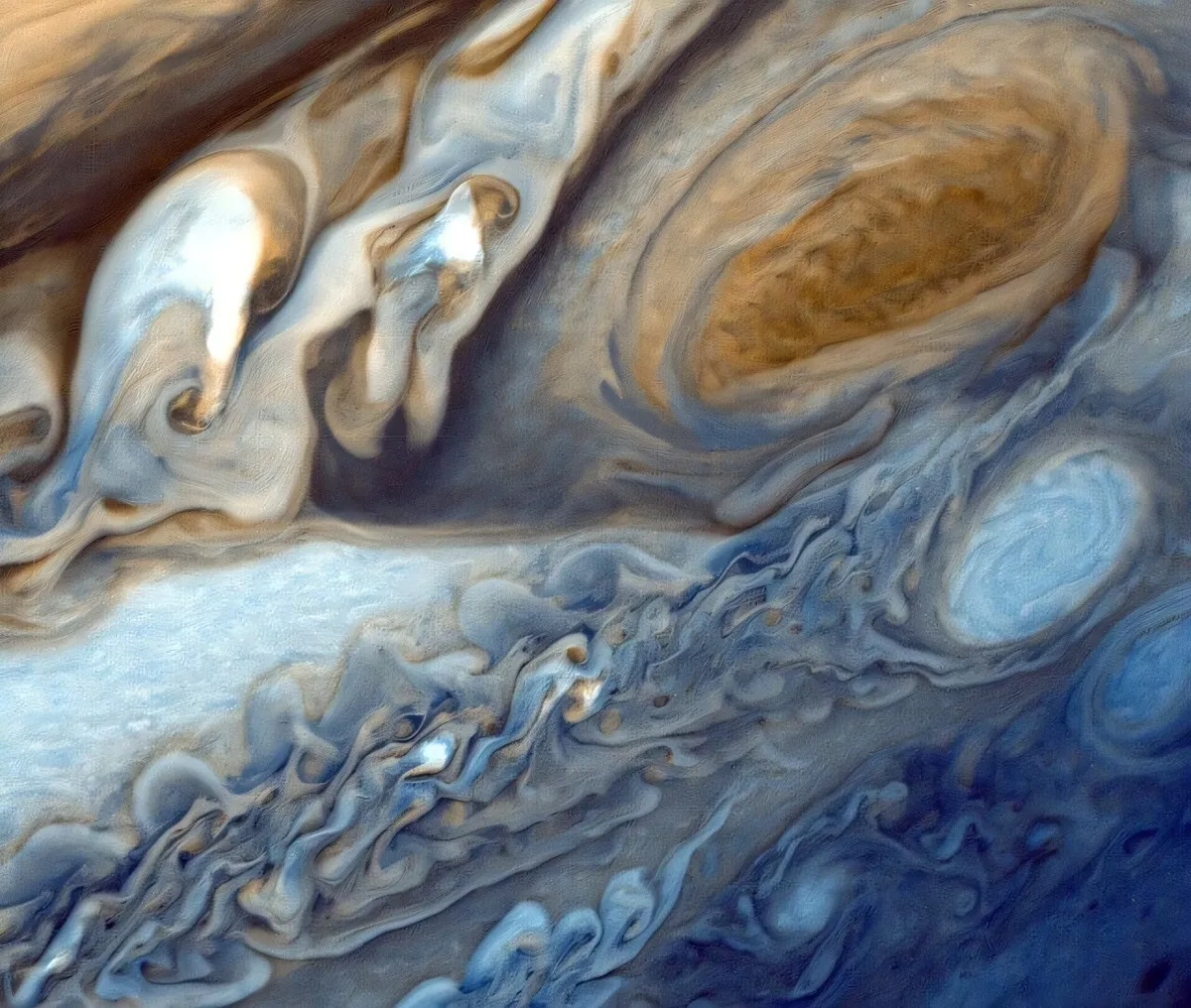
Astronomers have long believed that a planet's mass affects how fast it spins. For example, Jupiter and Saturn in our solar system spin very quickly, completing a full rotation in about ten hours. These two planets hold most of the solar system's rotational energy.
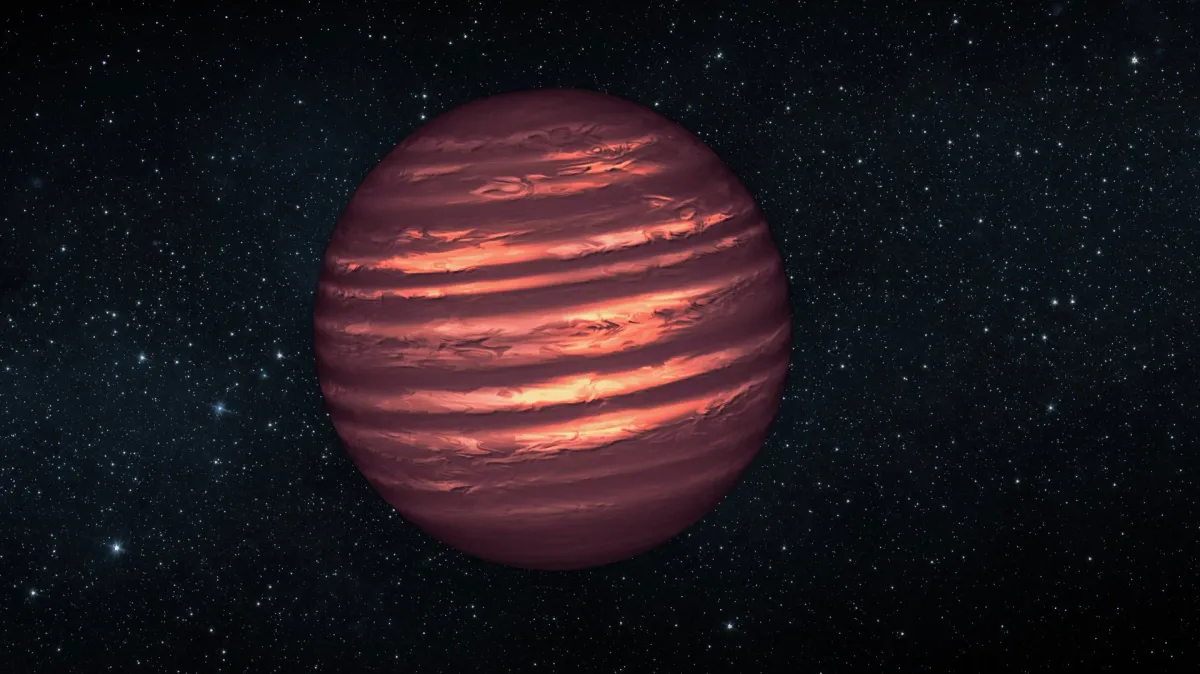
To investigate this idea, researchers used the W. M. Keck Observatory in Hawaii. They studied 32 distant gas giants and brown dwarfs, including six giant planets larger than Jupiter and 25 brown dwarf companions.
Measuring Exoplanet Spin
The team used a tool called the Keck Planet Imager and Characterizer (KPIC). They found that gas giant planets spin faster than more massive objects, even when accounting for their mass, size, and age. They combined these findings with earlier spin measurements, creating a sample of 43 stellar and substellar companions and giant planets, plus 54 free-floating brown dwarfs and planetary-mass objects.
We're a new kind of news feed.
Regular news is designed to drain you. We're a non-profit built to restore you. Every story we publish is scored for impact, progress, and hope.
Start Your News DetoxThis research was led by scientists at Northwestern University’s Center for Interdisciplinary Exploration and Research in Astrophysics (CIERA). Their study was published in The Astronomical Journal.
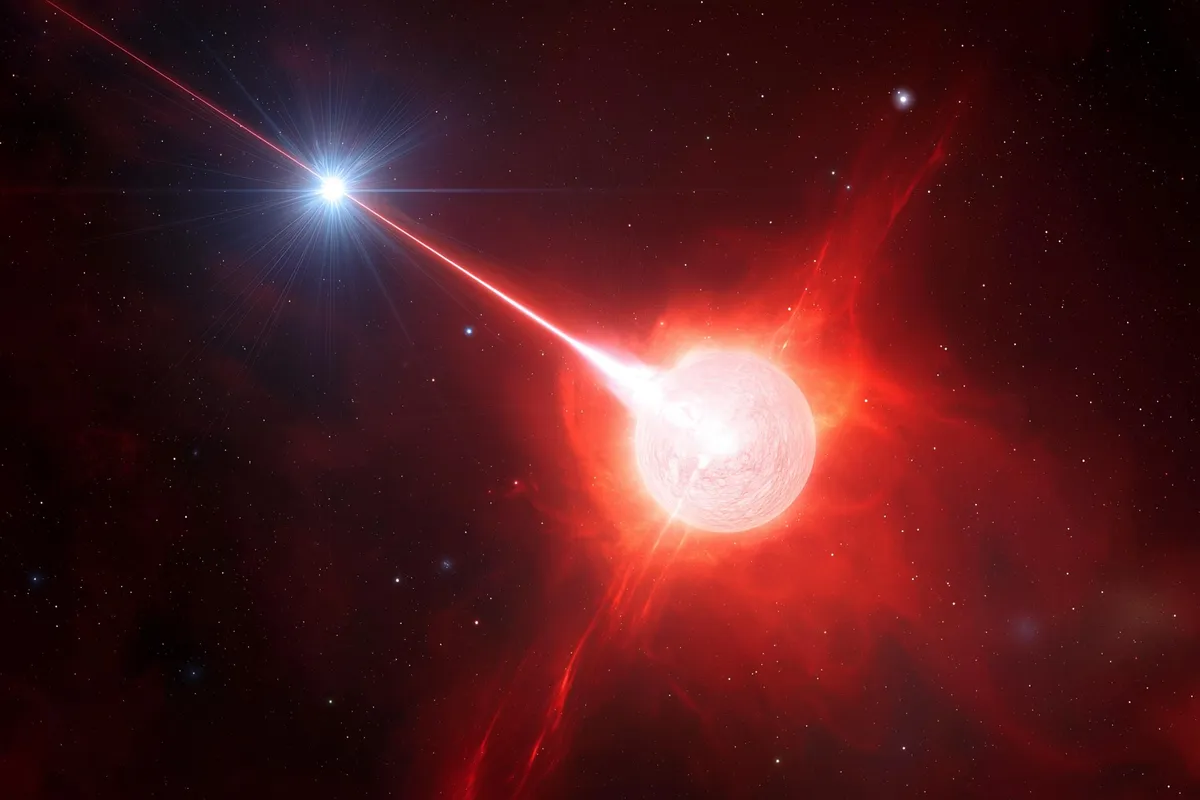
Many of the planets observed orbit their stars at great distances, tens to hundreds of times the distance between Earth and the Sun. Scientists are still debating how these distant worlds form. It could be a slow process within a disk of gas and dust, or a rapid collapse like how stars form.
The KPIC instrument helps isolate light from these spinning planets. This light shows broadened atmospheric features, which scientists can analyze to determine how fast a planet is spinning.
Dino Chih-Chun Hsu, the lead author and a researcher at CIERA, explained that a planet's spin is like a "fossil record" of its formation. By measuring how quickly these worlds rotate, scientists can understand the physical processes that shaped them millions of years ago.
Hsu noted that the planet's mass and its mass compared to its star both influence its final spin rate. This helps narrow down the physics of how these systems form.
Planetary Mass, Magnetic Fields, and Rotation
The study highlighted a complex relationship between mass and spin. For example, in the HR 8799 system, a gas giant about seven times Jupiter's mass spins six times faster than a brown dwarf companion that is 24 times Jupiter's mass.
This difference can be explained by magnetic field interactions. The more massive brown dwarf likely had a much stronger magnetic field when it was young. This field interacted with the disk of material around it, causing it to lose rotational speed.
Understanding how size, mass, and spin are related also helps scientists learn about our own solar system's history. Hsu said that how angular momentum is distributed among planets affects the entire structure of a planetary system. Even Earth’s rotation and magnetic field are connected to how spin was divided when the solar system formed.
KPIC is a groundbreaking instrument that has opened new ways to study exoplanets. It allowed researchers to measure properties like spin that were previously very difficult to detect.
Future Exoplanet Research
The research team plans to expand their studies to include "Rogue Planets," which are planets that float freely in space. They also want to investigate the composition of these planets' atmospheres.
Future instruments will help with this research, such as the Keck Observatory’s upcoming HISPEC (High-resolution Infrared Spectrograph for Exoplanet Characterization), which will start operating in 2027.
Jason Wang, an assistant professor at Northwestern University and co-author, explained that HISPEC will have better sensitivity, higher spectral resolution, and wider wavelength coverage than KPIC. This will allow them to measure the spins of many more planets, including those similar to our own Jupiter, to see if Jupiter is typical.
Hsu concluded that scientists are just beginning to understand what planetary spin can reveal. With future instruments and larger telescopes, they will be able to measure spins for even more worlds and connect rotation, chemistry, and formation history across entire planetary systems.
Deep Dive & References
Distinct Rotational Evolution of Giant Planets and Brown Dwarf Companions - The Astronomical Journal, 2026