Ever feel like your body's on a different timeline than the rest of the world? Blame your internal clock. And now, scientists have found a way to read that personal timeline from just a few strands of hair. Which, if you think about it, is both impressive and slightly terrifying.
Researchers at Charité – Universitätsmedizin Berlin have developed a new test that promises to usher in an era of "circadian medicine." This fancy term means doctors could soon time treatments to your personal 24-hour rhythm, not just the clock on the wall. Think about it: a world where your medication is given when it's most effective for your body, not just when the nurse makes rounds.
Why Your Body Clock Is Such a Big Deal
Most of us only notice our internal rhythm when it's utterly derailed — like that jet lag after a red-eye to, say, Tokyo, or the annual existential crisis known as Daylight Saving Time. But this isn't just about feeling sleepy. Your body's natural 24-hour cycle orchestrates everything from hormones and digestion to body temperature and even how well medicines work.
We're a new kind of news feed.
Regular news is designed to drain you. We're a non-profit built to restore you. Every story we publish is scored for impact, progress, and hope.
Start Your News DetoxProfessor Achim Kramer, head of Chronobiology at Charité, points out that some cancer immunotherapies are more effective when administered at specific times of day. Why? Because your immune system, like most of your organs, is on a schedule. And that schedule is uniquely yours.
For years, measuring this rhythm meant a tedious lab process: collecting saliva samples over several hours to track melatonin levels. Not exactly convenient for your average human. Now, Kramer's team has found a hair-raisingly simpler method.
The Hair Test: Your Future Medical Crystal Ball?
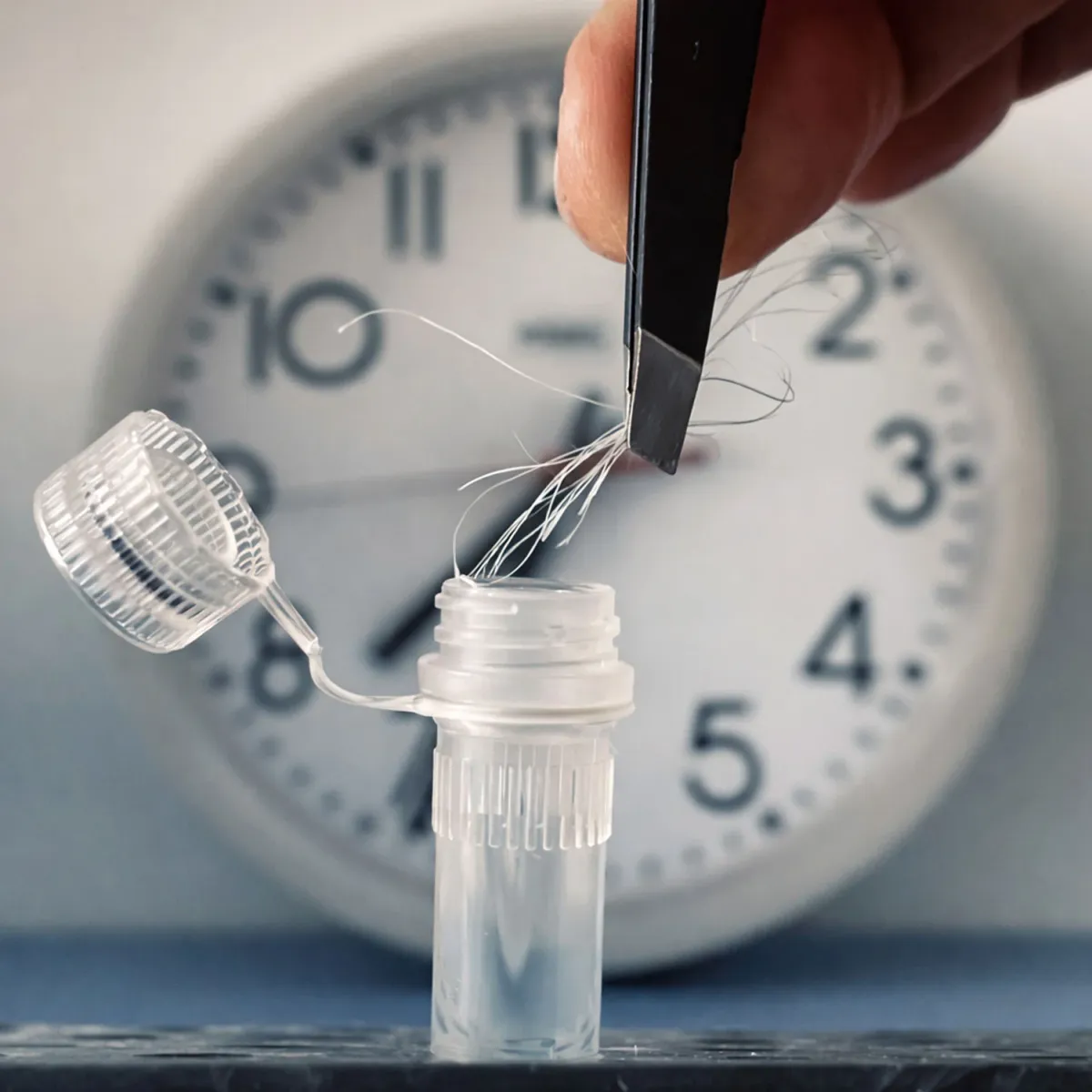
The new test uses cells from a few hair follicles. Inside these cells, scientists measure the activity of 17 genes linked to your body's molecular clock. Then, a dash of machine learning helps them calculate exactly where you are in your daily rhythm. "A single sample is sufficient for this," Kramer explains. Let that satisfying number sink in.
In a study of 4,000 people who collected hair samples at home, this new test proved almost as accurate as the old, cumbersome lab method. But it's infinitely more practical. Suddenly, personalized medicine based on your body's internal clock isn't just a sci-fi dream.
So, what shapes this internal clock of yours? Age, for one: people in their mid-20s tend to hit the hay about an hour later than the over-50 crowd. Women, on average, have slightly earlier internal timing than men, though the difference is a surprisingly small six minutes. Kramer suspects sex hormones play a role there.
But here's the kicker: lifestyle choices might be even bigger players. The study found that people who work tend to have internal clocks that run about half an hour earlier than those who are not employed. Because apparently, even your job has an opinion on your circadian rhythm.
The research team is now working to make this test widely available. Imagine a world where sleep counseling is tailored to your biology, or treatments are precisely timed for maximum impact and minimum side effects. Your hair, it turns out, might just be the key.