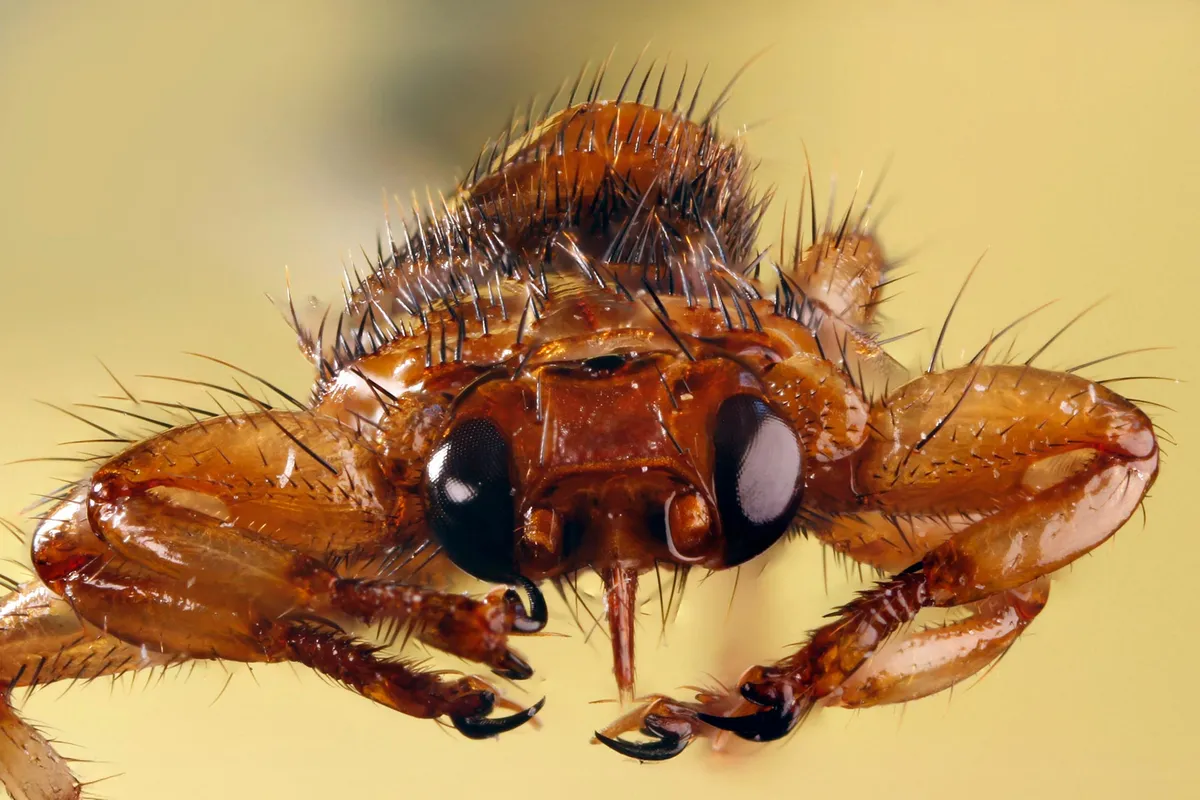
Imagine landing your dream job, then immediately throwing away your car keys, half your glasses, and committing to a life of perpetual freeloading. That's essentially the life strategy of the deer ked, a tiny, blood-sucking fly with a surprisingly dramatic flair for transformation.
These little aerial assassins start their lives with perfectly good wings and sharp eyesight, using both to hunt down a warm-blooded host – usually a deer, because they're not called human keds, thankfully. But the moment they land, it's curtains for flight. Off come the wings, like a tiny, biological mic drop. Then, for an encore, they start to dial down their vision, because apparently, who needs to see clearly when you're just clinging to a deer for the rest of your days?
The Ultimate Energy Saver
Researchers from Aberystwyth University and the University of Florence dove into this bizarre behavioral shift, discovering that it’s not just about convenience; it’s a full-blown sensory makeover. Once a deer ked commits to its parasitic lifestyle, its body decides that maintaining hawk-like vision is, frankly, a waste of good energy.
We're a new kind of news feed.
Regular news is designed to drain you. We're a non-profit built to restore you. Every story we publish is scored for impact, progress, and hope.
Start Your News DetoxDr. Roger Santer, who led the study, put it plainly: vision is a high-cost luxury. Evolution, ever the pragmatist, favors creatures that optimize their senses for their specific grind. Some blood-feeders are all about the visual hunt, while others are permanent residents, making eyesight less of a priority. Deer keds, however, get to experience both worlds, making their mid-life optical downgrade particularly fascinating.
The team looked at genes called opsins, which are the VIPs of vision. By comparing opsin activity in flying keds versus their wingless, host-dwelling counterparts, they saw a stark difference. A flying deer ked's vision is on par with a tsetse fly – a formidable hunter. But after the wings are jettisoned, opsin gene activity nosedives by about half.
So, no, they don't go completely blind. They just get, shall we say, significantly less discerning. Scientists believe this sacrifice in visual acuity frees up energy for more pressing parasitic concerns, like digestion (all that blood isn't going to process itself) and, of course, reproduction. Because even tiny, wing-shedding, partially-blind flies have priorities.
The study, published in the Journal of Experimental Biology, offers a compelling look at how parasites fine-tune their senses for a life that shifts dramatically. And perhaps, understanding this extreme adaptability could help us come up with better ways to manage these persistent little bloodsuckers. Because if they’re willing to sacrifice their own eyesight, you know they mean business.