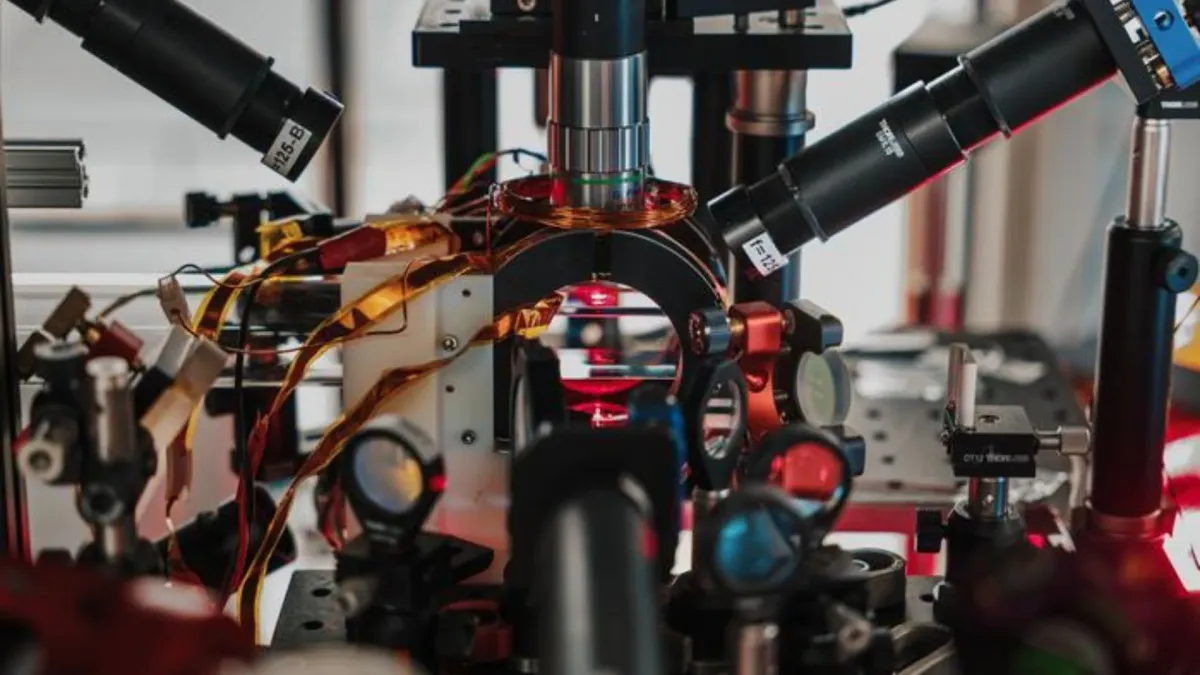
Imagine a universe, but tiny. Like, 24,000 atoms tiny. Now imagine that mini-universe generates its own sense of time without needing a single clock. Because apparently, that's where we are now.
Scientists at the University of Birmingham just pulled off an experiment that suggests time isn't some fundamental, unyielding river we're all floating in. Instead, it might simply be a consequence of things changing within a system. Which, if you think about it, is both impressive and slightly terrifying.
Big Bang, Little Lab
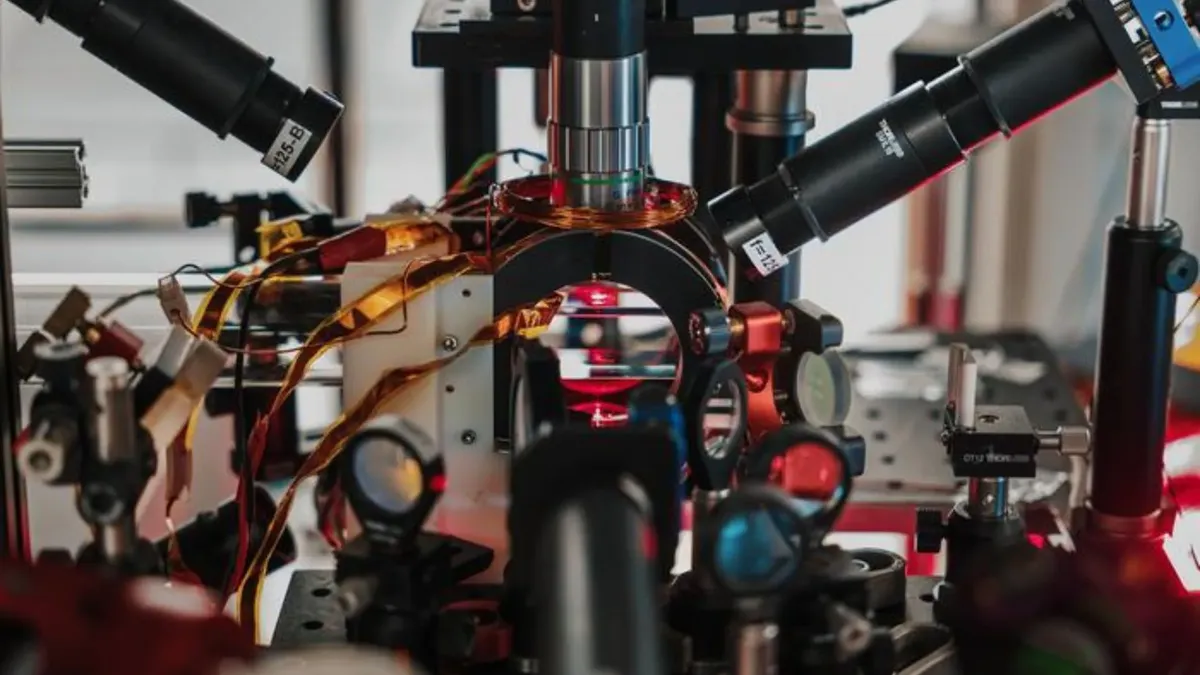
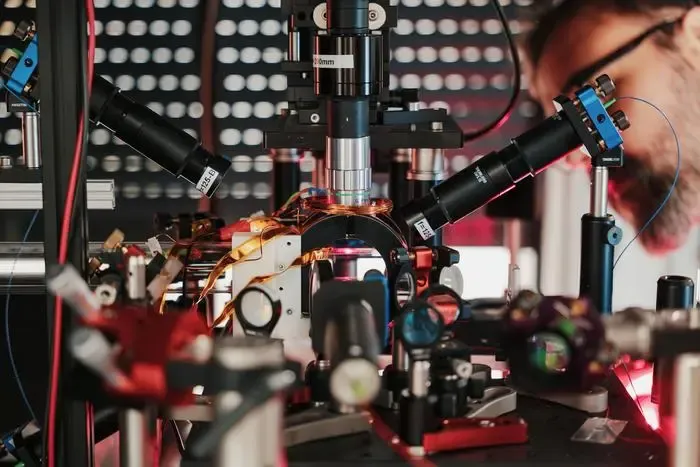
Professor Giovanni Barontini and his team cooked up this minuscule cosmos using 24,000 ultracold atoms, chilled to just billionths of a degree above absolute zero. Because, obviously, you can't have a universe without a serious chill factor.
We're a new kind of news feed.
Regular news is designed to drain you. We're a non-profit built to restore you. Every story we publish is scored for impact, progress, and hope.
Start Your News DetoxThey trapped these atoms in an isolated quantum system, then split it with lasers into two regions: one bright, one dark. Inside this simplified reality, the bright region expanded and contracted in a cycle that mimicked a Big Bang followed by a Big Crunch – the theoretical reversal of the universe's expansion. All without anyone checking their watch.
The beauty of this sealed system? Researchers could track the sequence of events purely by observing internal shifts. No external clock needed to say, "Okay, now this happened." The universe was its own stopwatch.
Time Through Disorder
This whole setup points to something called "entropic time." Forget time as a backdrop; here, its passage is tied directly to changes in entropy – essentially, how particles spread out and get messy. As atoms shuffled between the bright and dark zones, their distribution changed, and boom, time marched forward. When the shuffling stopped, time effectively stood still. Let that sink in.
Even cooler, this internal time always flowed in one direction and correctly ordered events, even during those mini-Big Bang/Big Crunch cycles. Its speed, it turns out, was negotiable, depending on how quickly entropy shifted. So, some days, time really does fly.
Barontini noted that in some quantum gravity theories, time isn't built-in. Yet, here we are, always moving from past to future. This experiment offers a controlled peek into how that everyday experience of time might emerge from a universe that, at its most fundamental level, doesn't really care about clocks.
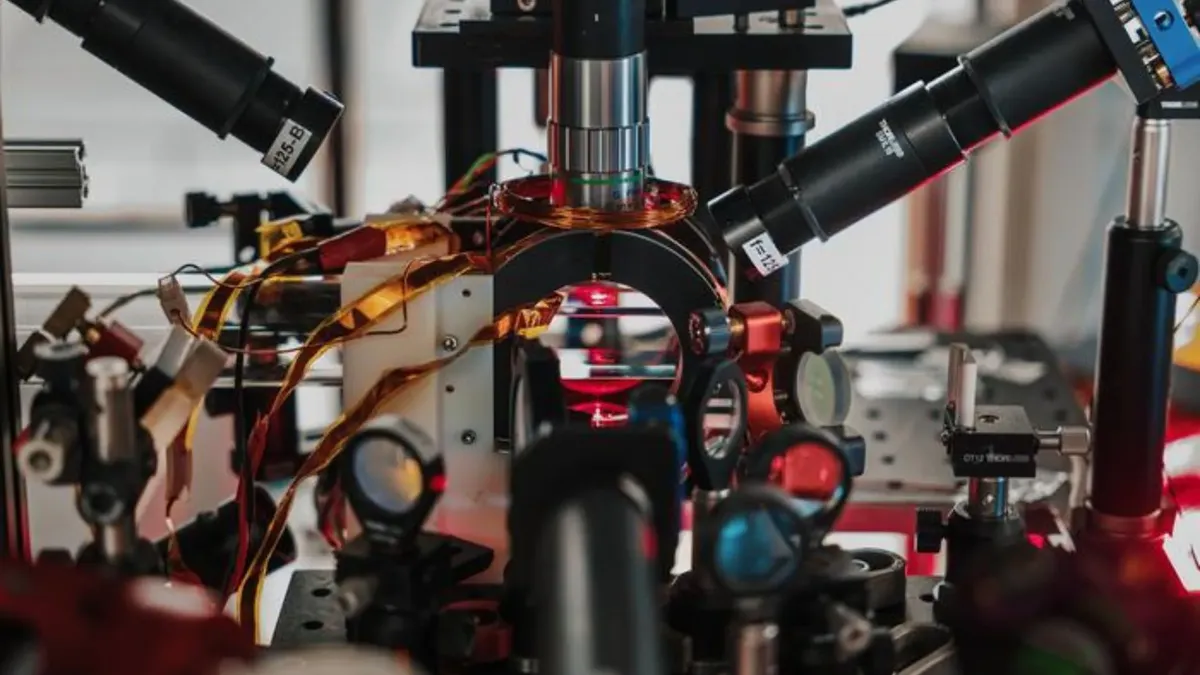
This miniature universe isn't just a parlor trick. It's a platform that could let researchers simulate conditions from the early universe, test different quantum gravity theories, or even conjure up tiny black holes in the lab. For decades, these were just scribbles on a chalkboard. Now, physicists might finally have a way to actually test some of the deepest questions about reality. Which is a pretty good way to spend a Tuesday, if you ask us.