Scientists have found all five basic "letters" of DNA and RNA on the asteroid Ryugu. This discovery supports the idea that the building blocks of life formed in space before reaching Earth.
The samples from Ryugu were brought back to Earth in 2020 by Japan's Hayabusa2 mission. These tiny asteroid grains hold important chemical clues about how life might have started on our planet.
In 2023, researchers found uracil, one of the nucleobases, in the Ryugu samples. Now, a new study from March 2026, published in Nature Astronomy, confirms that all five nucleobases are present in the asteroid material. This suggests these life-related ingredients were likely common throughout the early Solar System.
We're a new kind of news feed.
Regular news is designed to drain you. We're a non-profit built to restore you. Every story we publish is scored for impact, progress, and hope.
Start Your News DetoxWhy Nucleobases Matter
Nucleobases are organic molecules that contain nitrogen. They are the "letters" that make up the genetic information in DNA and RNA. The five main nucleobases are adenine, guanine (called purines), cytosine, thymine, and uracil (called pyrimidines).
These molecules combine with sugars and phosphates to form nucleotides. Nucleotides are the basic units that build genetic material. Without nucleobases, the genetic code needed for organisms to grow, reproduce, and evolve would not exist.
By studying these molecules in Ryugu samples, scientists can learn about the chemical history of early asteroids. This helps us understand how the building blocks of life might have formed and spread across the Solar System.
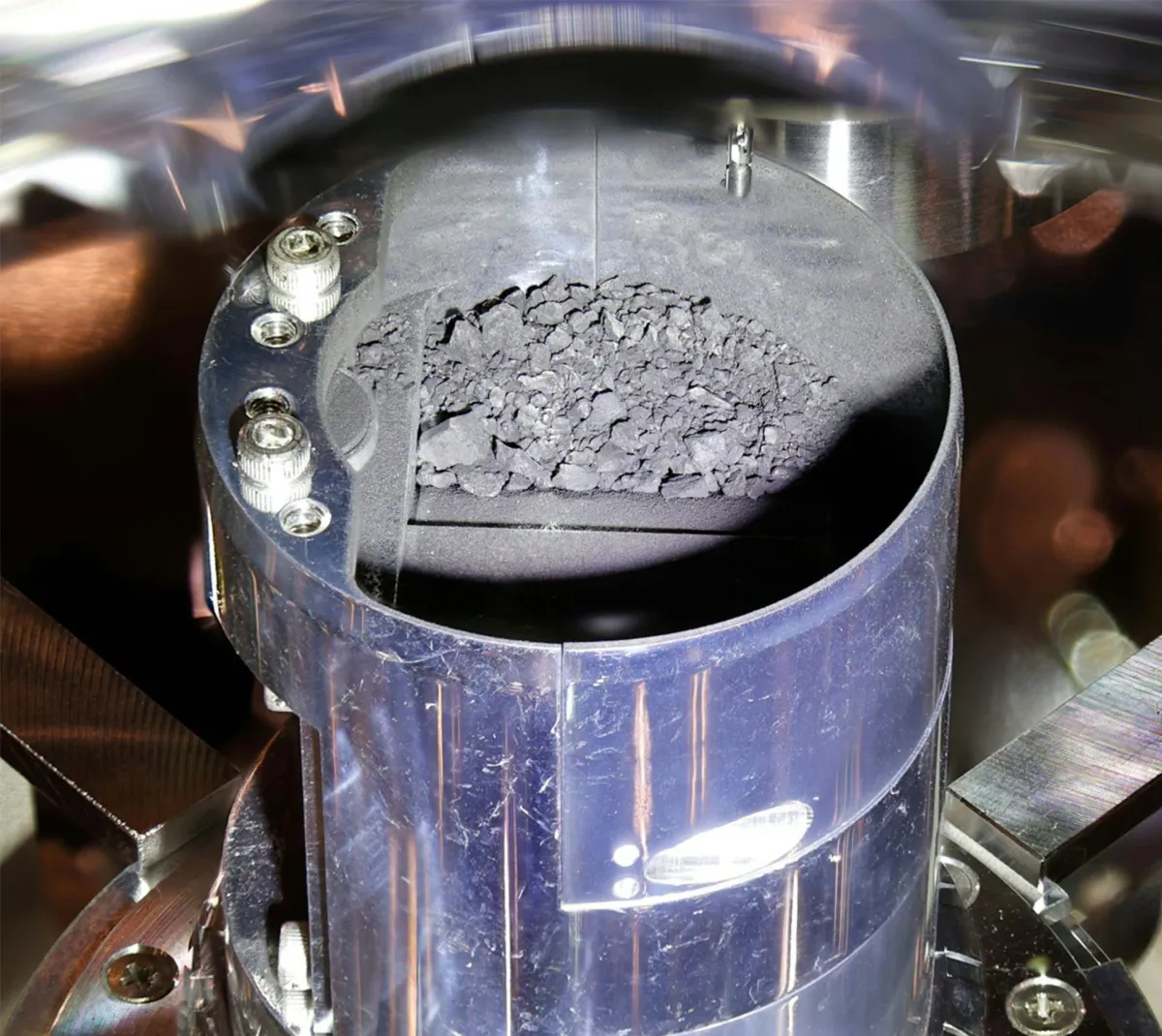
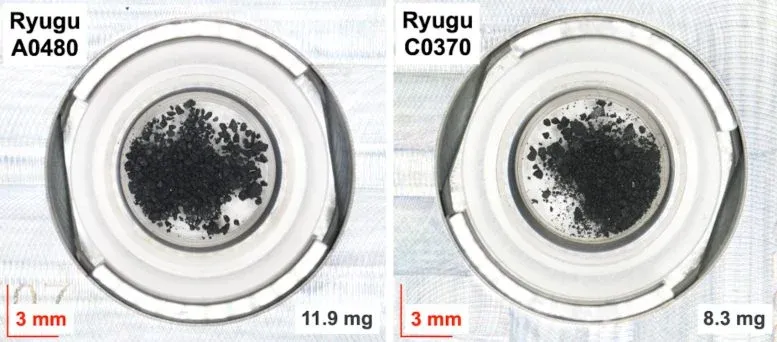 Microscope images of Ryugu samples collected from the first and second touchdown sites of the Hayabusa2 mission. Credit: JAXA/JAMSTEC
The Hayabusa2 mission collected 5.4 grams of asteroid material. Researchers had to use extremely clean lab conditions to prevent contamination. They extracted organic molecules using water and hydrochloric acid, then purified them for analysis. They found all five nucleobases in similar amounts in the two Ryugu samples they studied.
Genetic Material Components Found in Space
These new findings match what scientists have found in other space rocks. The Murchison meteorite, which fell in Australia in 1969, and the Orgueil meteorite, which fell in France in 1864, also contained many organic molecules, including nucleobases.
Meteorites that land on Earth can get contaminated. However, pristine samples from NASA's mission to asteroid Bennu also showed all five nucleobases in 2025.
Asteroids like Ryugu and Bennu are leftovers from the early Solar System. They can preserve materials almost unchanged for about 4.5 billion years.
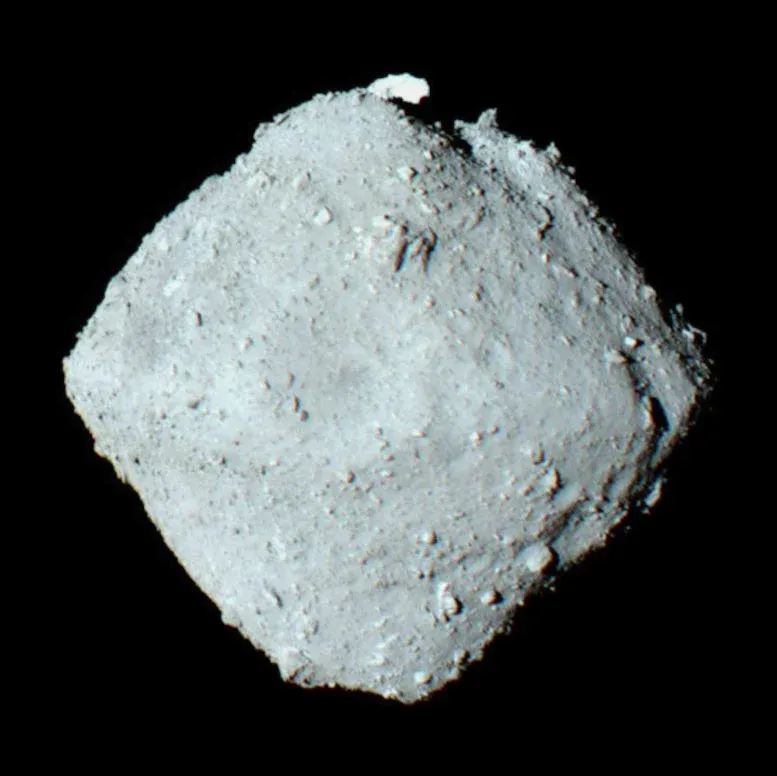 A coloured view of 162173 Ryugu taken by JAXA’s space probe Hayabusa2 in 2018. Credit: JAXA/Hayabusa2
Interestingly, these asteroids have different chemical makeups. Murchison has more purines, while Bennu and Orgueil have more pyrimidines. This balance might be affected by ammonia, a molecule that can influence which nucleobases form.
By studying Ryugu's clean samples and comparing them to meteorites, researchers are tracing the cosmic journey of life's molecular ingredients. Their work suggests that key components of genetic material might have formed in space and then been delivered to early Earth. This means the story of life on our planet could be deeply connected to the chemistry of ancient asteroids.
A Cosmic Path for Life's Ingredients
These discoveries show that carbon-rich asteroids across the Solar System contain diverse chemicals that are important for life. However, the exact mix of molecules, like the balance between purines and pyrimidines, changes depending on the asteroid's chemical environment and history.
Because the Ryugu samples were collected directly in space and protected from Earth's contamination, they offer a very clear look at the chemistry of the early Solar System.
The finding of all five nucleobases on Ryugu suggests that the molecular ingredients for life might have been forming in space billions of years ago. Asteroids could have helped bring these ingredients to early Earth, making the origin of life part of a much larger cosmic chemical story.
Deep Dive & References
- A complete set of canonical nucleobases in the carbonaceous asteroid (162173) Ryugu - Nature Astronomy, 2026