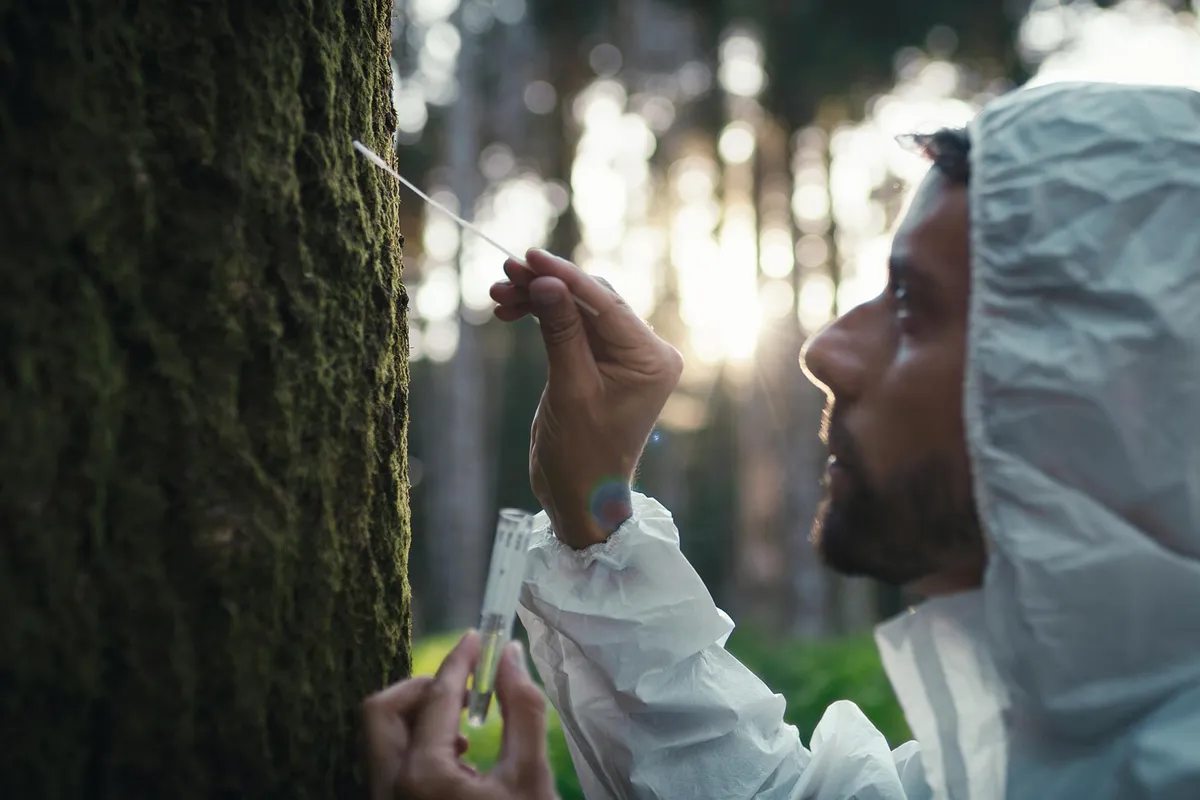
Mosses are known for surviving harsh conditions. New research suggests they might not be doing it alone. Scientists found fungi living inside desert mosses, a discovery that could change how we understand plant evolution.
A Hidden Partnership in Desert Mosses
In Earth's driest places, the ground can be a living ecosystem. This "biological soil crust" contains mosses, fungi, bacteria, and tiny animals. These crusts help keep landscapes stable, trap dust, and store nutrients.
Mosses are especially tough. They can dry out and then revive after rain. Some even grow on bare rock and survive extreme heat and long periods without water. Scientists have even considered if mosses could help support life in space.
We're a new kind of news feed.
Regular news is designed to drain you. We're a non-profit built to restore you. Every story we publish is scored for impact, progress, and hope.
Start Your News DetoxNow, researchers at UC Riverside found that desert mosses might use fungi inside their tissues to survive. This relationship has not been seen in mosses before.
This finding could change basic ideas about moss biology. It might also offer clues about when plants first spread across land about 470 million years ago.
Why Mosses Were Thought to Be Different
Most land plants work with fungi to get nutrients from the soil. In return, fungi get sugars from the plants.
Arbuscular mycorrhizal fungi (AMF) are a key part of these partnerships. They are found with about 75% of plant species. They form tiny branching structures inside plant roots where nutrients are exchanged.
Mosses were thought to be an exception. They don't have true roots like flowering plants or trees. For decades, scientists believed that all 10,000 moss species lived without this type of fungal partnership.
Jason Stajich, a UCR professor, said the model was that mosses simply didn't need fungi.
Searching the Desert for Clues
Kian Kelly, a UCR doctoral researcher, collected mosses from the Mojave and Sonoran deserts. Temperatures there can go above 100 degrees Fahrenheit. These deserts are tough places, perfect for studying how things survive when water is scarce and heat is intense.
Kelly focused on mosses in biological soil crusts. These crusts are like the living skin of deserts, stabilizing soil and supporting ecosystems. They are also very fragile.
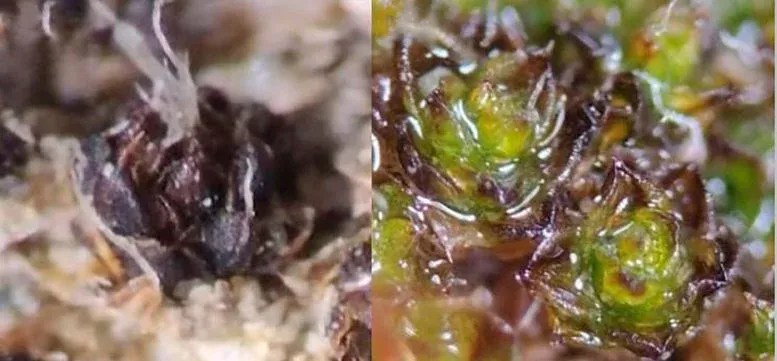
The researchers wanted to see if mosses from different climates had different fungi. This is important because drylands are growing worldwide. If certain fungi help mosses handle hot, dry conditions, they could affect how desert ecosystems respond to climate change.
Fungal DNA Reveals a Surprise
In the lab, the team found fungal DNA inside the moss samples.
The most surprising discovery was mycorrhizal fungi, which need plant partners. These fungi were not just the same ones found in the nearby soil. The fungi inside desert mosses were also different from those in mosses from less harsh places.
Kelly suspects that certain fungi are more helpful for surviving hotter, drier climates. This pattern suggested a specific relationship, not just dirt stuck to the mosses.
Microscopy Strengthens the Case
To find physical proof, Kelly stained moss tissue with a blue dye that binds to fungi. He then looked at the samples under a microscope.
Inside the moss cells, he saw branching fungal structures. These looked like arbuscules, the tree-like shapes mycorrhizal fungi usually build inside plant roots. But mosses don't have true roots, and these structures were in the leaves.
The researchers call them "arbuscule-like." They look like nutrient exchange sites in other plants. However, scientists still need to confirm if mosses and fungi are actually trading resources. Until then, it can't be officially called a true symbiosis.
A Possible Link to Early Land Plants
This discovery could have wider implications. Mosses are ancient plants, related to the first plants that lived on land.
When plants first moved from water to land, they faced big challenges. They needed ways to get nutrients and avoid drying out. Fungal partners might have helped early plants overcome these problems. Evidence of plant and fungal partnerships is found in old fossils, suggesting they were key to plants spreading across Earth.
If mosses can host mycorrhizal fungi in a way scientists missed, it could change how researchers think about the early evolution of plant-fungal relationships.
Why It Matters for Desert Recovery
These findings might also lead to new ways to restore damaged drylands. Biological soil crusts are threatened by warming temperatures, drought, and human activity. Since these communities grow slowly, recovery can take years.
For now, the study doesn't prove that fungi help mosses survive. But it does show a hidden connection that scientists didn't expect.
Kelly noted that the desert is full of overlooked things. Sometimes, the biggest surprises are growing quietly beneath our feet.
Deep Dive & References
Novel Glomeromycotina–moss associations identified in California dryland biocrusts - New Phytologist, 2026