For over a century, we thought we had inheritance pretty much figured out. Gregor Mendel and his pea plants laid down the law: DNA passes from parent to child, dominant traits win, recessive traits hide. Simple. Elegant. And, as it turns out, not the whole story.
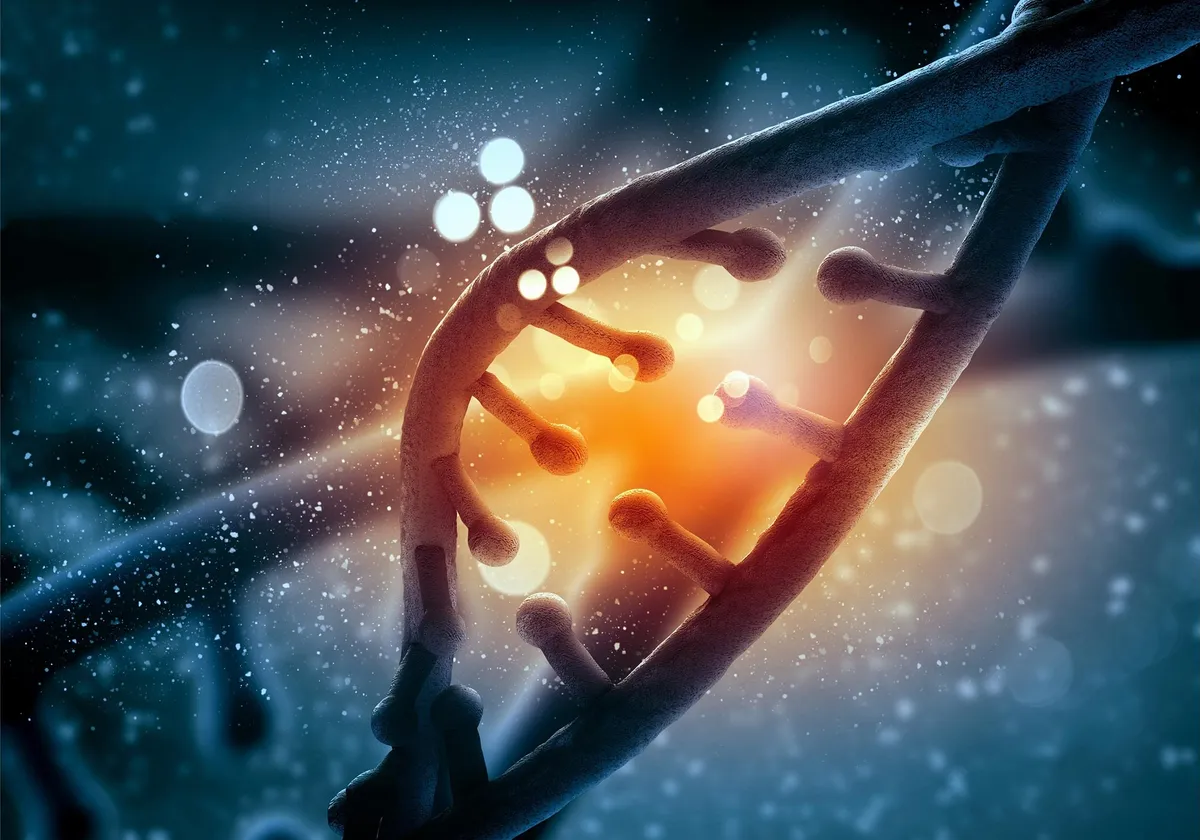
New research has just dropped a genetic bombshell, revealing that some traits are playing by an entirely different set of rules. We’re talking about inheritance that bypasses DNA altogether, sneaking in through something called "epigenetic marks." Think of them as sticky notes on your genes, telling them what to do without actually changing the underlying code. And apparently, these sticky notes can get passed down too.
The Rebel Genes
In a study involving mice (because of course, it was mice), scientists discovered that about 7% of the epigenetic inheritance they tracked simply refused to follow Mendel's classic playbook. Even wilder? They found entirely new forms of inheritance never before seen in mammals, including a natural example of "paramutation" – a phenomenon previously only observed in plants and fruit flies. Which, if you think about it, is both impressive and slightly terrifying.
We're a new kind of news feed.
Regular news is designed to drain you. We're a non-profit built to restore you. Every story we publish is scored for impact, progress, and hope.
Start Your News DetoxAndrew Feinberg, a co-leader of the research at Johns Hopkins, points out that this non-Mendelian epigenetic inheritance could be evolution's fast track. When the environment throws a curveball, these chemical changes could help organisms adapt far quicker than waiting for a DNA mutation. Because, you know, sometimes you need to evolve now.
The Uninvited Traits
Traditionally, a trait appears because you got a gene from mom and one from dad, and the dominant one won the genetic popularity contest. But the new study found that some epigenetic patterns just... appeared. Like a surprise guest at a family reunion, these inherited patterns showed up in offspring even when neither parent had them.
Imagine: two mice without a specific methylation pattern breed, and their pups suddenly have it on both copies of the allele. Feinberg perfectly summed it up: the methylation "seemingly appeared out of nowhere." Which sounds less like science and more like magic, but here we are.
The team also stumbled upon paramutation in a mammalian gene called Capn11, which is crucial for normal sperm development. In humans, mutations in this gene are linked to infertility. Paramutation is when methylation on one allele somehow causes methylation in another. It’s "almost like the methylation is transferred to another allele," Feinberg explained. And these regions are often sensitive to environmental factors like stress, trauma, or even your diet.
So, what does this mean? Basically, our understanding of heredity just got a whole lot more complex, and frankly, a lot more interesting. To truly understand how traits, diseases, and health play out across generations, we might need to start looking beyond just DNA and paying much closer attention to those sneaky epigenetic sticky notes. Turns out, the apple doesn't just fall from the tree – sometimes, it spontaneously sprouts a whole new branch.