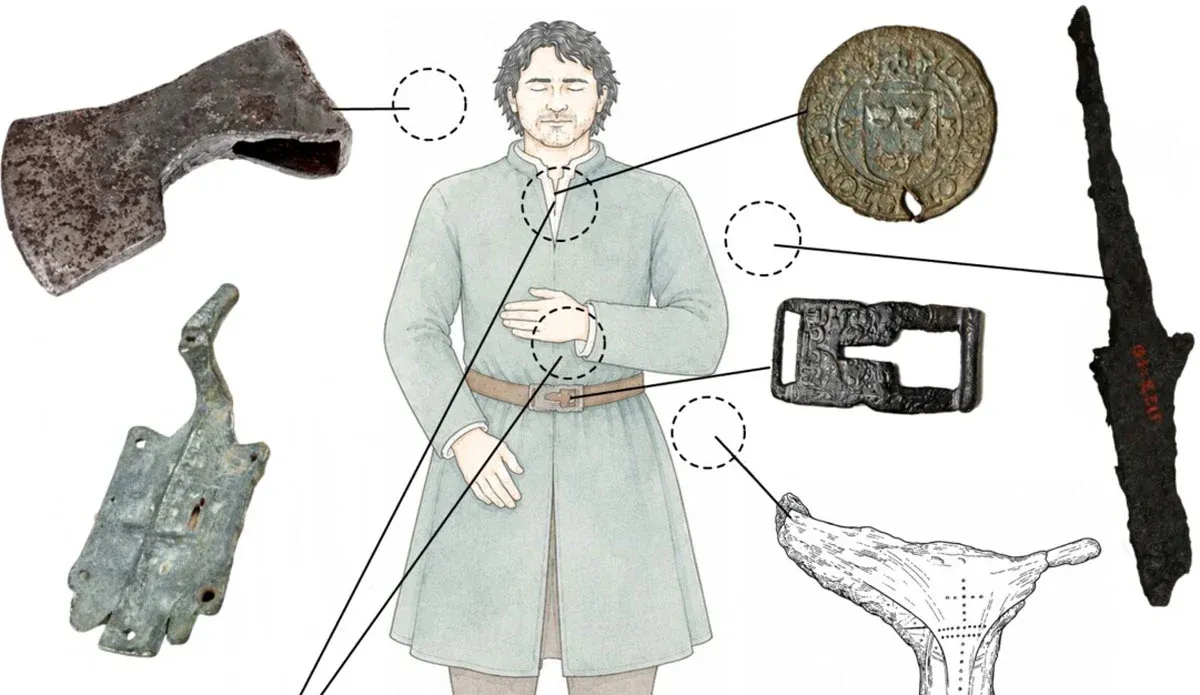
Imagine being buried in Finland 400 years ago, only for scientists to unearth your teeth and reconstruct a life story that sounds like a historical travelogue. That's precisely what happened to a man found near Lake Kitka in Kuusamo, whose 16th-century grave was discovered back in the 1970s.
Now, thanks to some serious detective work involving DNA and isotope analysis from the University of Turku, we know this fellow wasn't exactly a homebody.
Turns out, our Kitka man was about 40 when he shuffled off this mortal coil. His DNA profile lights up with connections to both ancient and modern Sámi people, with a dash of modern Finn thrown in, especially from northern Lapland. Less so from the immediate Kuusamo area or southern Finland, which tells a story of long-standing interactions between Sámi and Finnish groups. (Though, as researcher Sanni Peltola wisely reminds us, DNA can't define ethnicity — Sámi identity is a whole cultural and social package.)
We're a new kind of news feed.
Regular news is designed to drain you. We're a non-profit built to restore you. Every story we publish is scored for impact, progress, and hope.
Start Your News DetoxBut here's where it gets wild: his teeth, those tiny time capsules, spill the beans on his diet and travels. As a kid, he was chowing down on land animals, freshwater fish, and marine foods. Then, marine foods took center stage, and freshwater fish vanished from the menu. Which, if you think about it, is both impressive and slightly terrifying for a dental record.
Even more intriguing are the isotopes in his drinking water. They point to a childhood spent in a place with volcanic rock. Volcanic rock. Not exactly Finland's geological claim to fame. Senior Researcher Ulla Nordfors is pretty sure this means he spent his formative years in Iceland. Because apparently, in the 16th century, people were just casually hopping between northern Fennoscandia and the North Atlantic.
Earlier theories had pegged him as a noaidi, a Sámi spiritual leader. While the new findings don't completely rule out a spiritual side gig, they paint a picture of a life far more complex and well-traveled than previously imagined. It’s a good reminder that history, much like our Kitka man, rarely stays in one place. And that a few old teeth can really spill the ancestral tea.