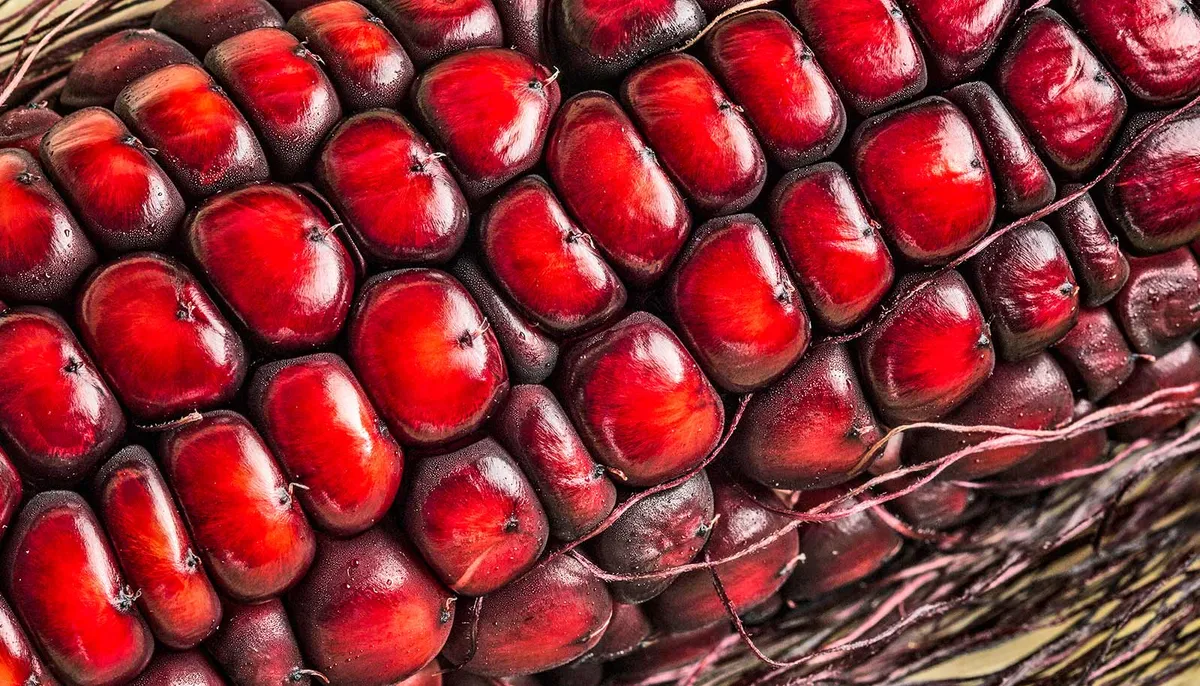
You know that tiny, translucent bit of corn kernel that always, always gets stuck in your teeth after a particularly enthusiastic bite? Well, scientists at the University of Missouri have news for you: that stubborn little layer might just be the secret to ditching artificial food dyes for good.
They're not just looking at any corn, though. They're focused on purple corn, a vibrant variety traditionally grown in South America. The brilliant hues come from anthocyanins, the same natural pigments that make blueberries blue and red cabbage, well, red. Unlike the artificial stuff — which, fun fact, often comes from petroleum — anthocyanins are packed with antioxidants, the cellular bodyguards that help with inflammation and heart health.
And where do these magical pigments hang out in corn? Mostly in the pericarp. That's the technical term for the very layer that becomes an unwelcome guest between your molars. As researcher Pavel Somavat dryly points out, that's precisely where the most valuable parts of purple corn reside. Apparently, our teeth-picking annoyance has been missing the point all along.
We're a new kind of news feed.
Regular news is designed to drain you. We're a non-profit built to restore you. Every story we publish is scored for impact, progress, and hope.
Start Your News DetoxThe Unsung Hero of Natural Colors
For years, food manufacturers have been locked in a losing battle trying to replace synthetic dyes like Red No. 40. Most natural colors are about as durable as a house of cards in a hurricane, wilting under heat, light, and oxygen. Not exactly ideal when your product needs to survive a processing plant and then sit on a shelf for months.
The Mizzou team, however, has found a tiny, purple-hued warrior. They put purple corn colorants through the ringer, exposing them to high temperatures used in food processing. After an hour, a respectable 75% of the key color compounds were still standing. When they coated the pigments in protective, food-grade materials, that retention jumped to nearly 97% for some compounds. Let that satisfying number sink in. This means they can create stable powders that last, making storage and transport surprisingly easy.
Then came the ultimate test: drinks. Natural dyes typically crumble in the acidic, light-exposed, long-shelf-life world of beverages. But the purple corn pigments held their own in both acidic and basic conditions. Even after seven weeks chilling in the fridge, very little color was lost. Your fruit juices and sports drinks might soon owe their vibrant good looks to a humble, tooth-sticking corn layer.
Missouri, being the corn-belt powerhouse it is, is now working to adapt purple corn for local growth. Researchers are crossbreeding the most colorful varieties with types that already thrive in the area. Because apparently, we can have our vibrant, healthy corn and grow it too. Which, if you think about it, is both impressive and slightly terrifying for anyone who prefers their corn without a side of dental floss.