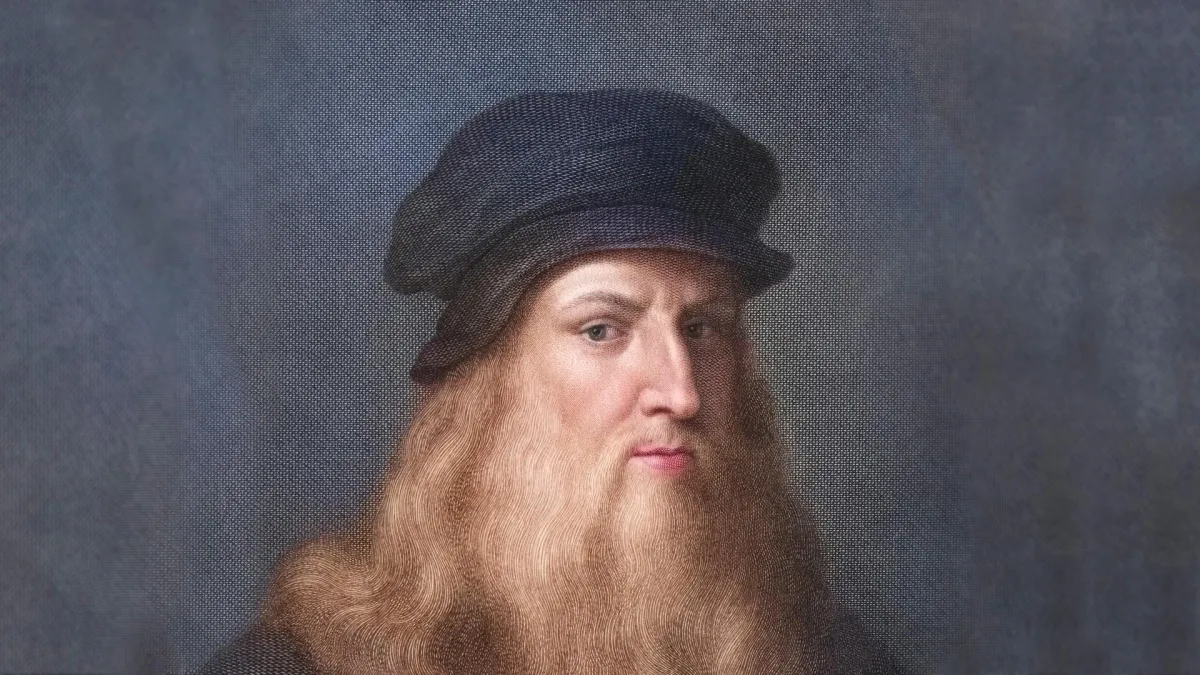
For 500 years, Leonardo da Vinci has been the original Renaissance Man — painter, inventor, thinker, all wrapped up in a package that seemed impossibly ahead of his time. Now, an international squad of scientists is closing in on the biological secrets behind that genius. They're trying to reconstruct his DNA. Because apparently, that's where we are now.
The mission, dubbed the Leonardo DNA Project, just released a new book detailing three decades of detective work. Led by Alessandro Vezzosi and Agnese Sabato, the team dove deep into dusty archives, tracing da Vinci's family tree all the way back to 1331. That's 21 generations and over 400 people, just to get a handle on who was related to whom.
Their biggest win? Identifying 15 living male descendants directly linked through the paternal line to Leonardo's father and his half-brother. Talk about a family reunion.
We're a new kind of news feed.
Regular news is designed to drain you. We're a non-profit built to restore you. Every story we publish is scored for impact, progress, and hope.
Start Your News DetoxThe Y Chromosome Never Lies
With living relatives in hand, the geneticists got to work. David Caramelli and Elena Pilli from the University of Florence analyzed DNA from six of these descendants. The results? Matching segments of the Y chromosome, that stubborn little piece of genetic code that passes from father to son with almost no changes. It's basically a genetic timestamp, confirming an unbroken male lineage in the da Vinci family for at least 15 generations.
But the hunt doesn't stop there. Researchers also uncovered a da Vinci family tomb at the Church of Santa Croce in Vinci, Leonardo's hometown. Excavations are underway, hoping to unearth the remains of his grandfather, Antonio, his uncle Francesco, and a few half-brothers. Anthropologists have already found bone fragments, with one sample radiocarbon-dated to the right era and confirmed as male. If the DNA from these bones matches the living descendants' Y chromosomes, it's game on.
This could open the door to analyzing biological traces from Leonardo himself — a fingerprint on a manuscript, a smudge on a drawing. Imagine: sequencing the DNA of the man who painted the Mona Lisa. Which, if you think about it, is both impressive and slightly terrifying.
Unlocking Leonardo's World (and His Mother's Story)
The project isn't just about DNA. The new book also paints a richer picture of Leonardo's life. They've pinpointed seven da Vinci family homes in his village and two properties he owned, which, naturally, sparked a long dispute with his half-brothers. Because some things never change.
They've also shed new light on his family, revealing his grandfather Antonio as a traveling merchant, not just a simple farmer. And in a fascinating twist, new evidence suggests Leonardo's mother, Caterina, might have been a slave for a wealthy banker. Old wills from 1449 connect the banker to Leonardo's father, adding another layer of intrigue to his origins.
Then there's the charcoal drawing. Found on a fireplace mantle in an old Vinci building, it depicts a fantastical "Unicorn Dragon" with a spiral horn, hooked teeth, and wings. Some parts hint at Leonardo's later studies of flight, and comparisons to a known drawing from the 1470s suggest it could be an early work by the master himself. More analysis is planned, but for now, it's a delightful mystery.
Jesse H. Ausubel, the project's director, puts it simply: "21st-century biology is making the previously unknowable, known." If they can reconstruct enough of Leonardo's genetic profile, they hope to learn about his appearance, health, and even the biological predispositions that made him, well, him. For his hometown of Vinci, the idea of hearing Leonardo's "genetic voice" centuries later is a source of immense pride. It's a story that continues to unfold, proving that some legends never truly rest.