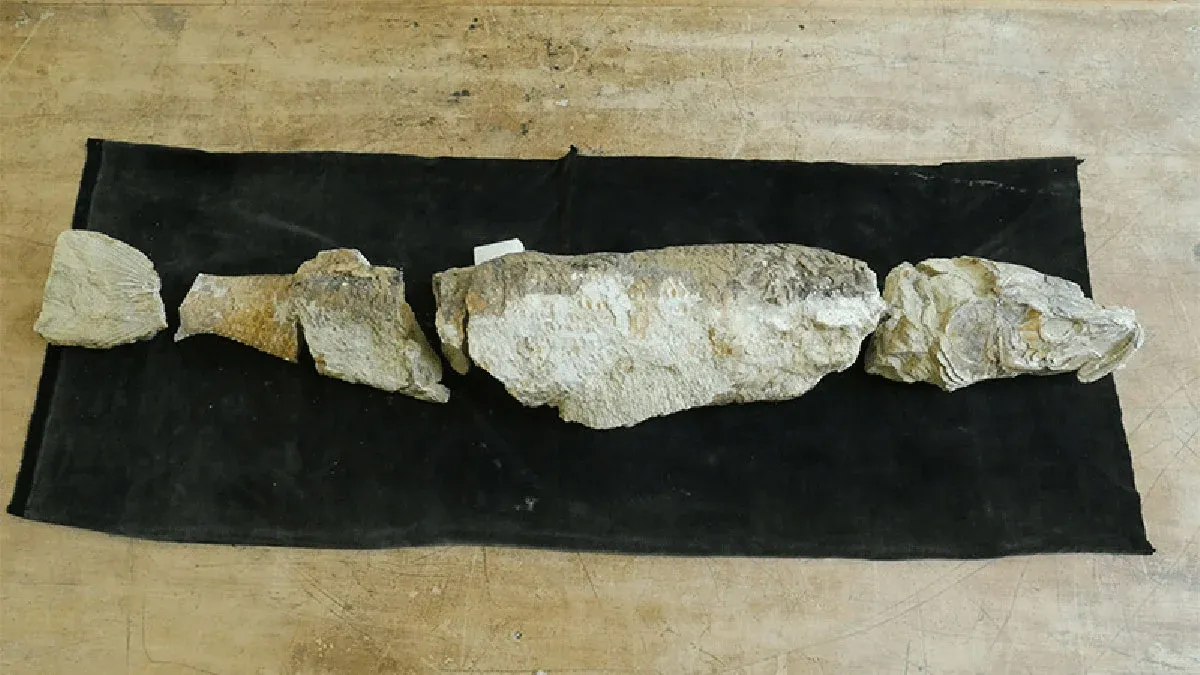
Recently, notebooks from a late paleontologist helped researchers solve a 25-year-old mystery. These notebooks provided the missing details needed to finish a study on a remarkable fossil fish found almost 30 years ago.
The Discovery of a Unique Fossil
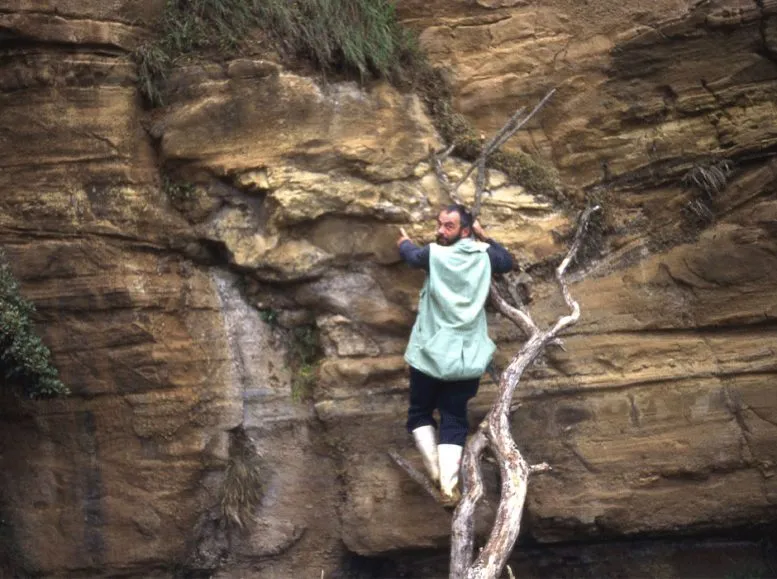
Dr. Richard Köhler found the fossil fish in 1999 during a trip to Pitt Island in the Chatham Islands. He spotted the well-preserved fossil, which was mummified in three dimensions, in a hard-to-reach cliff above Waihere Bay.
Richard walked 3 kilometers to borrow a ladder. He then returned to the site and carefully removed the fossil in several large, heavy pieces. He brought it back to Dunedin and gave it to the University of Otago’s Department of Geology. Emeritus Professor Daphne Lee and the late Professor Ewan Fordyce were very impressed by his find.
We're a new kind of news feed.
Regular news is designed to drain you. We're a non-profit built to restore you. Every story we publish is scored for impact, progress, and hope.
Start Your News DetoxDaphne Lee noted that this fossil was unlike any other fish fossil known from Aotearoa New Zealand. The late preparator Andrew Grebneff carefully prepared the fossil. It stayed in the Department until Professor Mike Gottfried, a fossil fish expert from Michigan State University, noticed it years later. Mike, who had worked with Ewan on other fossil fish studies, began to investigate the specimen.
An Ancient Predator Revealed
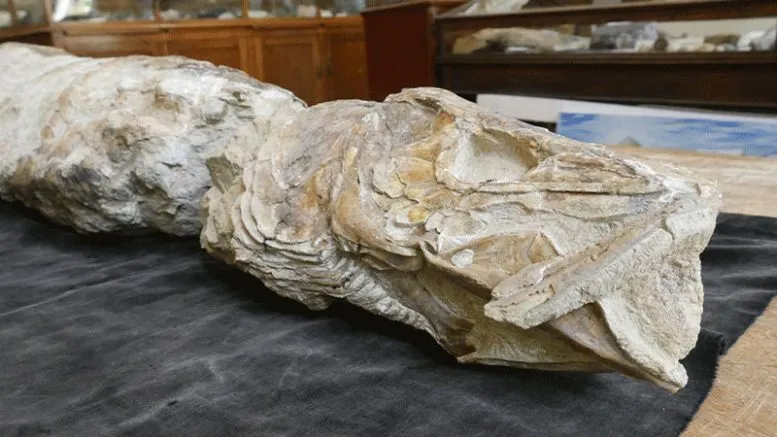
The mummified fossil was 1.2 meters long. It was identified as a tarpon, a type of fish not found in New Zealand waters today. Modern tarpons are large, strong predators that eat smaller fish whole.
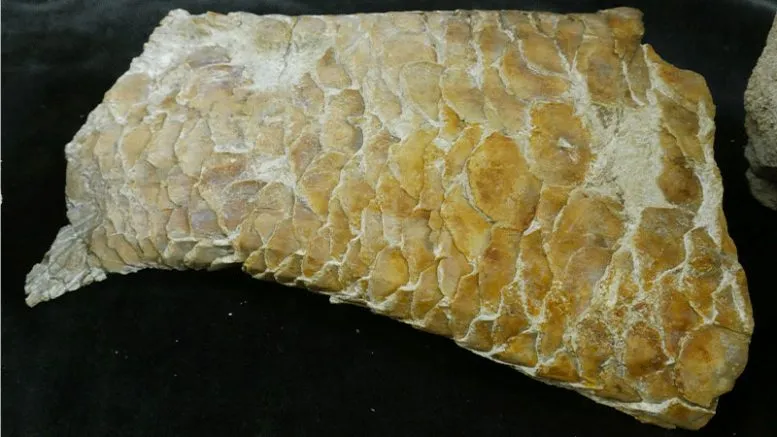
The fossil's long, powerful body, thick scales, strong tail fin, and large upward-facing mouth suggest it lived similarly. However, researchers lacked important geological details about the exact discovery site because Richard had passed away years earlier.
When Ewan Fordyce died in November 2023, a draft of the research paper existed, but work had stopped. The team needed more information about the fossil's discovery.
Notebooks Provide the Missing Pieces
The solution came in early 2025. One of Richard’s children, studying at Otago, visited the Department looking for photos of his father. After meeting Daphne, Richard’s family donated his field notebooks, including those from his Pitt Island trip.
Daphne said these notebooks provided enough specific location information to properly catalog the fossil. The research paper was then published in the New Zealand Journal of Geology and Geophysics. It is the first report of a Paleogene age bony fish, about 55 million years old, from Aotearoa that was a top predator.
The fossil was named Ikawaihere koehleri. This name honors Richard and the place where it was found. The study authors thanked Heidi Lanauze and the Hokotehi Moriori Trust for approving the name.
Mike Gottfried called it a privilege to work on this "remarkable fossil." He noted it greatly expands our understanding of tarpons' evolutionary history and shows unique features in amazing 3D detail. He believes it is one of the most important fossils found in Aotearoa, New Zealand.
Daphne Lee is very pleased the paper is finally complete. She sees it as a fitting tribute to Richard, Ewan, and Andrew. She expressed gratitude to Richard’s family for donating his notebooks, stating the research could not have been done without them.
Deep Dive & References
A New Tarpon-Like Fish (Elopomorpha, Megalopidae) With Exceptional Preservation and Unusual Features From the Paleogene of Pitt Island, Chatham Islands, New Zealand - New Zealand Journal of Geology and Geophysics, 2026