Imagine a world where your phone never overheats, your computer hums along without a fan, and your electricity bill takes a dramatic dive. That's the promise of room-temperature superconductors, and for decades, finding them has been like searching for a needle in a cosmic haystack. Now, scientists have pulled out a magnet.
A new consortium, SuperC, is combining the brute force of machine learning with the elegant complexity of quantum physics. Their goal? To find those elusive materials that can conduct electricity with zero resistance, and do it without needing to be frozen to nearly absolute zero.
The Quantum-AI Speed Dating Service
Superconductors are a big deal. They're the secret sauce for quantum computers, MRI machines, and those ridiculously fast maglev trains. But the catch is, they only work when they're colder than a polar bear's toenails. Finding one that works at room temperature would be a game-changer for energy consumption globally, potentially slashing the massive heat output from our data centers and devices.
We're a new kind of news feed.
Regular news is designed to drain you. We're a non-profit built to restore you. Every story we publish is scored for impact, progress, and hope.
Start Your News DetoxThe problem has always been the sheer number of chemical element combinations possible. It's an astronomical number, and only a tiny fraction of them show any superconducting properties. Traditionally, this meant a lot of expensive, time-consuming trial and error.
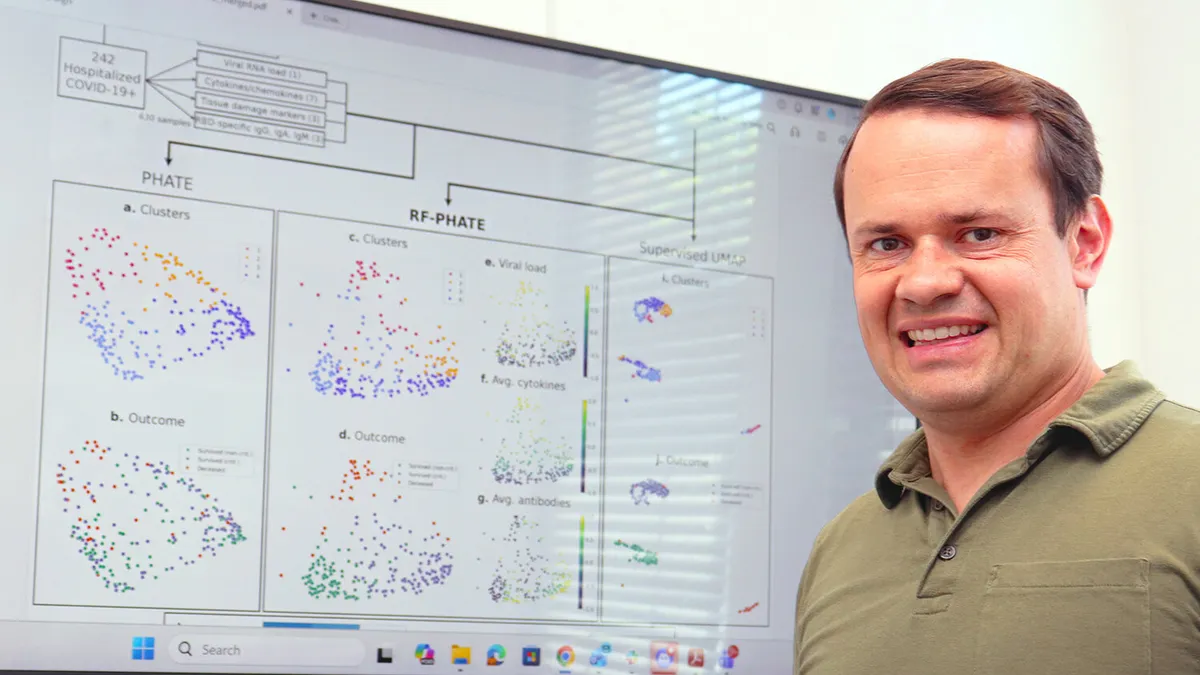
Enter SuperC, launched in 2023 with the ambitious goal of finding a room-temperature superconductor by 2033. Led by Professor Päivi Törmä from Aalto University, it's the first global effort of its kind, and they're not messing around.
Their secret weapon? A two-pronged attack. First, machine learning acts as a hyper-efficient bouncer, screening billions of potential material combinations and kicking out the unlikely candidates. Then, the most promising ones get passed to quantum geometry for detailed theoretical calculations. It's like a high-tech speed-dating service for atoms.
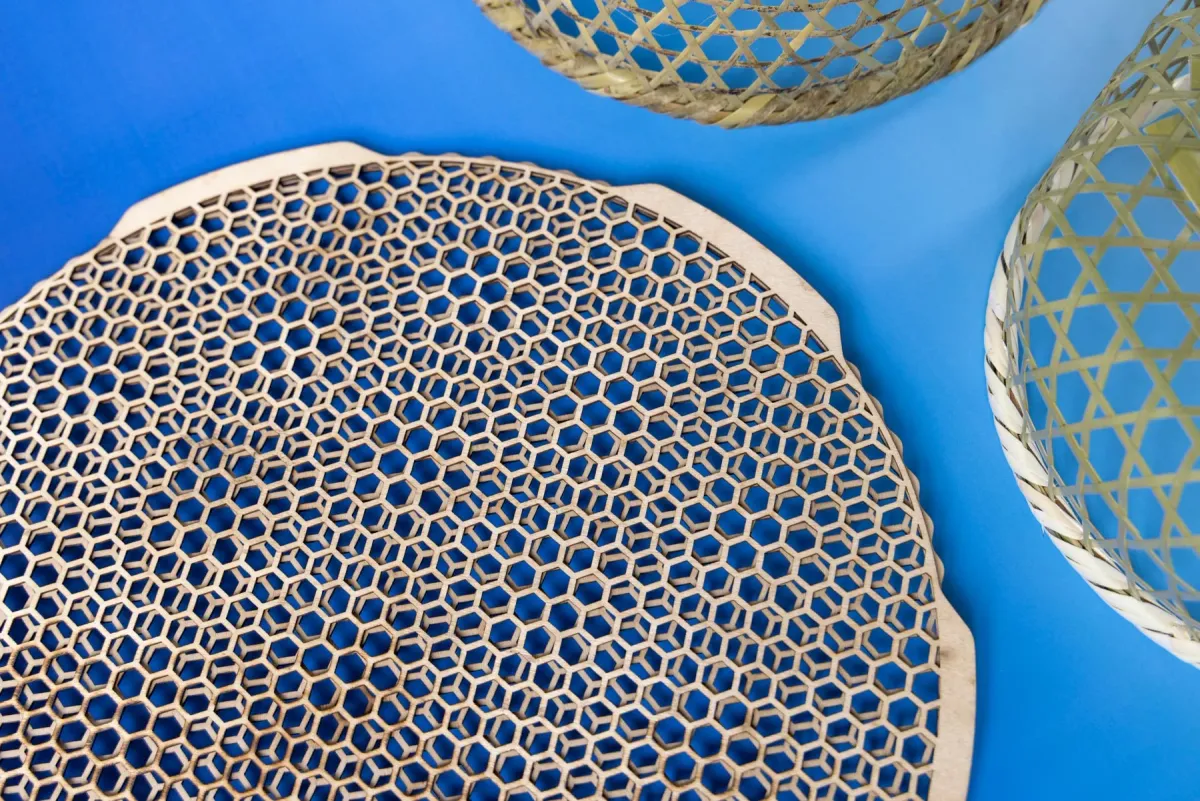
This method has already led to the discovery of two new superconducting materials: YRu3B2 and LuRu3B2. Their superconductivity comes from electrons forming flat bands in a "kagome lattice" – a pattern inspired by traditional Japanese basket weaving. Which, if you think about it, is both impressive and slightly adorable.
After the AI and quantum calculations did their thing, collaborators at Rice University, led by Professor Emilia Morosan, actually synthesized these materials. Lab tests confirmed both were, in fact, superconductors. This proof-of-concept study was published in Physical Review Research.
From Chance to Certainty
For decades, most of the 7,000+ known superconductors were found by pure luck. Only about 20 were ever predicted theoretically before being discovered. The quantum physics involved is so mind-bendingly complex that it made systematic discovery almost impossible.
The SuperC team's method flips this on its head. By pre-screening with AI, they drastically reduce the computational power needed for those demanding quantum calculations. Professor Törmä puts it simply: "With machine learning, we might process billions of materials." That's billions, with a 'B'.
This isn't just a scientific curiosity; it's a direct shot at climate change. Imagine the energy savings. The reduced heat. The sheer efficiency of a world running on zero-resistance electricity. It's the kind of innovation that makes you want to tell someone about it.
If you're in Greater Helsinki, you can dive deeper into SuperC's research at Aalto University's Designs for a Cooler Planet exhibition, running from September 1 to October 30, 2026. Because apparently, that's where we are now.